




Filters
SORT
Product Availability –
Category –
Connection Size –
Connection Type –
Voltage –
Body Pattern –
Flow Capacity (Cv) –
Review Score –
 --%3E %3Csvg version='1.1' id='Fill' xmlns='http://www.w3.org/2000/svg' xmlns:xlink='http://www.w3.org/1999/xlink' x='0px' y='0px' viewBox='0 0 100 100' enable-background='new 0 0 100 100' xml:space='preserve'%3E %3Cpath fill='%23F15C02' d='M79.44,0.95H20.56C9.78,0.95,0.95,9.78,0.95,20.56v58.87c0,10.79,8.82,19.61,19.61,19.61h58.87 c10.79,0,19.61-8.83,19.61-19.61V20.56C99.05,9.78,90.22,0.95,79.44,0.95z M65.38,58.24l9.38,29.58L49.69,69.78L24.5,87.82 l9.34-29.6L8.8,39.6l30.73-0.17c0,0,6.98-19.61,10-28.93c0.54,1.36,9.88,29.1,9.88,29.1H91.2L65.38,58.24z'/%3E %3C/svg%3E)
 --%3E %3Csvg version='1.1' id='With-RB' xmlns='http://www.w3.org/2000/svg' xmlns:xlink='http://www.w3.org/1999/xlink' x='0px' y='0px' viewBox='0 0 100 100' enable-background='new 0 0 100 100' xml:space='preserve'%3E %3Cpath fill='%23FBC8B4' d='M79.44,0.95H20.56C9.78,0.95,0.95,9.78,0.95,20.56v58.87c0,10.79,8.82,19.61,19.61,19.61h58.87 c10.79,0,19.61-8.83,19.61-19.61V20.56C99.05,9.78,90.22,0.95,79.44,0.95z M65.38,58.24l9.38,29.58L49.69,69.78L24.5,87.82 l9.34-29.6L8.8,39.6l30.73-0.17c0,0,6.98-19.61,10-28.93c0.54,1.36,9.88,29.1,9.88,29.1H91.2L65.38,58.24z'/%3E %3C/svg%3E)
Price Range –
Emerson Flow Controls Solenoid Valves

 --%3E %3Csvg version='1.1' id='No-RB' xmlns='http://www.w3.org/2000/svg' xmlns:xlink='http://www.w3.org/1999/xlink' x='0px' y='0px' viewBox='0 0 100 100' enable-background='new 0 0 100 100' xml:space='preserve'%3E %3Cpath fill='%23CECECE' d='M79.44,0.95H20.56C9.78,0.95,0.95,9.78,0.95,20.56v58.87c0,10.79,8.82,19.61,19.61,19.61h58.87 c10.79,0,19.61-8.83,19.61-19.61V20.56C99.05,9.78,90.22,0.95,79.44,0.95z M65.38,58.24l9.38,29.58L49.69,69.78L24.5,87.82 l9.34-29.6L8.8,39.6l30.73-0.17c0,0,6.98-19.61,10-28.93c0.54,1.36,9.88,29.1,9.88,29.1H91.2L65.38,58.24z'/%3E %3C/svg%3E)

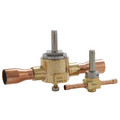
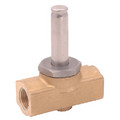
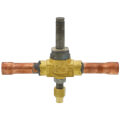



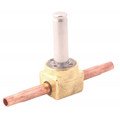


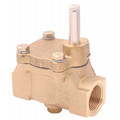
Emerson Flow Controls Solenoid Valves are electrically actuated valves used throughout refrigeration and air conditioning systems to start, stop, or redirect the flow of refrigerant at specific points in the circuit. A solenoid coil surrounds the valve body and, when energized by a control signal, lifts or moves an internal plunger that opens the port, allowing refrigerant to pass; removing power lets the plunger return and the valve closes. Refrigeration technicians rely on these valves for tasks like isolating a section of a system during defrost, controlling liquid line flow to an evaporator, or managing hot gas bypass in commercial refrigeration racks. Emerson's Flow Controls line covers a range of body styles and port sizes to fit different pipe diameters and refrigerant types found across commercial refrigeration and HVAC equipment. Selecting the correct valve involves matching refrigerant compatibility, pipe connection size, and coil voltage to the application, since a mismatch in any of these areas can lead to a valve that leaks, fails to seal, or does not respond correctly to the control signal.
Subcategories
- Liquid Line Solenoid Valves: Liquid line solenoid valves control refrigerant flow in the liquid line, most commonly installed just ahead of an expansion valve to shut off refrigerant flow to the evaporator when a compressor cycles off. This prevents liquid refrigerant from migrating into the evaporator or compressor during the off cycle, which helps protect the compressor from a liquid slugging event on the next startup. Technicians select these valves based on line size, refrigerant type, and the pressure differential the valve needs to hold when closed. Proper orientation during installation, with the flow direction arrow on the valve body matching actual refrigerant flow, is critical for correct operation.
- Hot Gas Bypass Solenoid Valves: Hot gas bypass solenoid valves route a portion of hot discharge gas from the compressor directly to the low side of the system, a technique used to maintain minimum compressor loading and prevent short cycling under low load conditions. These valves see higher operating temperatures than liquid line valves, so material selection and seal compatibility need to account for that added thermal stress. Commercial refrigeration racks and systems with variable load conditions rely on hot gas bypass valves to keep the compressor operating within its designed capacity range. Technicians check valve response time and seat condition during routine maintenance, since a slow or leaking valve reduces the effectiveness of the bypass strategy.
- Defrost Solenoid Valves: Defrost solenoid valves direct hot gas to the evaporator coil during a scheduled or demand-based defrost cycle, melting accumulated frost so the coil can return to normal cooling operation. These valves cycle frequently in systems that run frequent defrost cycles, such as walk-in freezers, making valve durability and consistent sealing especially important. A defrost valve that fails to open fully can leave frost buildup on the coil, reducing airflow and system efficiency over time, while one that leaks when closed can send unwanted hot gas into the evaporator outside the defrost cycle. Technicians verify defrost timer or controller signals reach the valve correctly when troubleshooting an incomplete defrost.
- Replacement Coils: Replacement coils are the electrical component that creates the magnetic field needed to actuate the valve's internal plunger, and they are commonly replaced separately from the valve body when only the coil has failed. A burned-out coil typically shows up as a valve that does not open despite receiving a control signal, while the valve body itself may still be mechanically sound. Coils are rated for specific voltages and must match the control circuit exactly, since an incorrect voltage rating can cause premature coil failure or unreliable operation. Replacing just the coil rather than the entire valve assembly is a common cost-saving repair when the valve body and seat are still in good condition.
Buying Guide
Choosing the correct Emerson Flow Controls Solenoid Valve starts with confirming refrigerant compatibility, since valve seals and internal materials are rated for specific refrigerant types and are not universally interchangeable across the full range of refrigerants used in commercial refrigeration and HVAC systems. Installing a valve rated for the wrong refrigerant can lead to seal degradation and eventual leaks, so checking the system's refrigerant against the valve's documented compatibility list is a necessary first step.
Pipe connection size and type need to match the existing line set exactly, whether that connection is a solder, flare, or threaded fitting. Coil voltage is the next critical specification, since it must match the control circuit's output voltage precisely; a mismatch either prevents the valve from actuating at all or causes premature coil failure from overvoltage. Technicians confirm all three specifications, refrigerant compatibility, connection size, and coil voltage, against the failed part or the system's design documentation before placing an order.
Application also drives selection beyond basic specifications. A liquid line shutoff application calls for a different valve configuration than a hot gas bypass or defrost application, even when pipe size and refrigerant type are identical, since each application places different demands on response time, seat material, and temperature tolerance. Confirming the specific application alongside the physical specifications narrows the selection down to the correct valve for the job rather than one that merely fits the pipe.
Frequently Asked Questions
How does a refrigeration solenoid valve work?
A coil wrapped around the valve body creates a magnetic field when energized by a control signal, and that field lifts or moves an internal plunger that opens a port to let refrigerant flow through. Removing power from the coil allows the plunger to return to its resting position, closing the port. This simple electromechanical action lets a control system open and close specific points in a refrigeration circuit automatically.
Can just the coil be replaced without replacing the entire valve?
When only the coil has failed and the valve body and internal seat are still in good condition, replacing just the coil is a common and cost-effective repair. A burned-out coil typically shows up as a valve that will not open despite receiving a proper control signal. Confirming the replacement coil's voltage rating matches the control circuit exactly is essential for a successful repair.
What happens if a solenoid valve is installed with the wrong flow direction?
Most solenoid valves are designed to seal correctly only when refrigerant flows in the direction indicated by an arrow on the valve body, and installing it backward can prevent proper sealing or cause the valve to fail to open under system pressure. Checking the flow direction arrow against the actual refrigerant flow path before installation avoids this problem. A valve installed in reverse is one of the more common causes of a new valve failing to perform as expected.
Why do hot gas bypass valves need different specifications than liquid line valves?
Hot gas bypass valves handle higher temperature refrigerant gas directly from the compressor discharge, which places more thermal stress on seals and internal components than the cooler liquid refrigerant a liquid line valve handles. Material selection accounts for that added heat exposure to maintain a reliable seal over the valve's service life. Using a liquid line valve in a hot gas bypass application can lead to premature seal failure.
How often should solenoid valves be inspected during routine maintenance?
Valves that cycle frequently, such as defrost solenoid valves in walk-in freezers, benefit from inspection during each routine service visit, since frequent cycling accelerates wear on the seat and seals. Less frequently cycled valves, like some liquid line shutoffs, can generally be checked on a longer interval as part of overall system maintenance. Watching for symptoms like incomplete defrost cycles, unexpected pressure readings, or unusual valve noise helps catch a failing valve before it causes a larger system issue.
