



Filters
SORT
Product Availability –
Brand –
Airflow –
BTU Input –
Efficiency –
Max Airflow (CFM) –
Ton –
Review Score –
 --%3E %3Csvg version='1.1' id='Fill' xmlns='http://www.w3.org/2000/svg' xmlns:xlink='http://www.w3.org/1999/xlink' x='0px' y='0px' viewBox='0 0 100 100' enable-background='new 0 0 100 100' xml:space='preserve'%3E %3Cpath fill='%23F15C02' d='M79.44,0.95H20.56C9.78,0.95,0.95,9.78,0.95,20.56v58.87c0,10.79,8.82,19.61,19.61,19.61h58.87 c10.79,0,19.61-8.83,19.61-19.61V20.56C99.05,9.78,90.22,0.95,79.44,0.95z M65.38,58.24l9.38,29.58L49.69,69.78L24.5,87.82 l9.34-29.6L8.8,39.6l30.73-0.17c0,0,6.98-19.61,10-28.93c0.54,1.36,9.88,29.1,9.88,29.1H91.2L65.38,58.24z'/%3E %3C/svg%3E)
 --%3E %3Csvg version='1.1' id='With-RB' xmlns='http://www.w3.org/2000/svg' xmlns:xlink='http://www.w3.org/1999/xlink' x='0px' y='0px' viewBox='0 0 100 100' enable-background='new 0 0 100 100' xml:space='preserve'%3E %3Cpath fill='%23FBC8B4' d='M79.44,0.95H20.56C9.78,0.95,0.95,9.78,0.95,20.56v58.87c0,10.79,8.82,19.61,19.61,19.61h58.87 c10.79,0,19.61-8.83,19.61-19.61V20.56C99.05,9.78,90.22,0.95,79.44,0.95z M65.38,58.24l9.38,29.58L49.69,69.78L24.5,87.82 l9.34-29.6L8.8,39.6l30.73-0.17c0,0,6.98-19.61,10-28.93c0.54,1.36,9.88,29.1,9.88,29.1H91.2L65.38,58.24z'/%3E %3C/svg%3E)
Price Range –
Gas Furnaces

 --%3E %3Csvg version='1.1' id='No-RB' xmlns='http://www.w3.org/2000/svg' xmlns:xlink='http://www.w3.org/1999/xlink' x='0px' y='0px' viewBox='0 0 100 100' enable-background='new 0 0 100 100' xml:space='preserve'%3E %3Cpath fill='%23CECECE' d='M79.44,0.95H20.56C9.78,0.95,0.95,9.78,0.95,20.56v58.87c0,10.79,8.82,19.61,19.61,19.61h58.87 c10.79,0,19.61-8.83,19.61-19.61V20.56C99.05,9.78,90.22,0.95,79.44,0.95z M65.38,58.24l9.38,29.58L49.69,69.78L24.5,87.82 l9.34-29.6L8.8,39.6l30.73-0.17c0,0,6.98-19.61,10-28.93c0.54,1.36,9.88,29.1,9.88,29.1H91.2L65.38,58.24z'/%3E %3C/svg%3E)
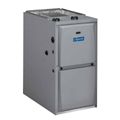

Gas furnaces are forced-air heating appliances that burn natural gas or propane to warm air, which a blower then pushes through supply ductwork to heat a home or building. A furnace's efficiency rating describes how much of the fuel it burns converts to usable heat rather than escaping through the flue, and higher-efficiency models typically use a sealed combustion design with PVC intake and exhaust venting instead of a traditional metal flue. Contractors select a furnace based on the heating load of the space it serves, the type of venting already available or planned, and whether the installation is a straightforward replacement or part of a larger system change involving new ductwork. Furnaces are often paired with a matching air conditioner coil in the same cabinet, so the blower and cabinet size also need to work for cooling airflow requirements, not just heating.
Subcategories
- Single-Stage Furnaces: Single-stage furnaces operate at one fixed firing rate, running at full output whenever the thermostat calls for heat. They are a straightforward, lower-cost option suited to smaller homes or moderate climates where precise temperature modulation is less critical. Installers often choose these for simple replacement jobs where the existing ductwork and load do not call for staged heating.
- Two-Stage and Variable-Speed Furnaces: Two-stage and variable-speed furnaces adjust their firing rate or blower speed to match the actual heating demand rather than running at full output every cycle. This allows longer, gentler heating cycles that can improve comfort and reduce temperature swings compared to single-stage operation. These furnaces suit larger homes or climates with more variable heating demand throughout the season.
- Furnace Filters and Accessories: Furnace filters and accessories include the air filters, blower access panels, and other components needed for routine maintenance and proper operation. Regular filter replacement protects the blower motor and heat exchanger from dust buildup that can reduce airflow and efficiency. Technicians stock common filter sizes to handle service calls without needing a special order.
Buying Guide
Calculate the heating load for the specific space rather than matching the size of the furnace being replaced, since older systems were sometimes oversized for the home they served. An oversized furnace short-cycles, wearing out components faster and creating uneven temperatures, while an undersized furnace struggles to keep up during the coldest weather.
Confirm the venting requirements for the efficiency level being installed. High-efficiency condensing furnaces typically use PVC intake and exhaust venting and produce condensate that needs a drain, while lower-efficiency furnaces vent through a traditional metal flue. Switching efficiency tiers during a replacement may require new venting work.
Check that the furnace cabinet and blower size are compatible with any existing or planned air conditioning coil, since the same blower handles airflow for both heating and cooling. A mismatch between furnace airflow capacity and coil requirements can reduce cooling performance even if the furnace itself heats properly.
Review the ductwork condition and sizing during a replacement rather than assuming the existing ducts are adequate. Undersized or leaky ductwork limits how well even a correctly sized furnace can heat the space, so addressing duct issues at the same time as a furnace replacement often improves overall system performance.
Plan for routine filter access and maintenance clearance around the installed unit. A furnace installed in a location with limited access makes routine filter changes and future service more difficult, which can lead to skipped maintenance over time.
Frequently Asked Questions
What is the difference between single-stage and two-stage furnaces?
A single-stage furnace runs at one fixed firing rate whenever heat is called for, while a two-stage furnace can adjust its output to match demand more closely, allowing longer and gentler heating cycles. Two-stage models often suit larger homes or climates with more variable heating needs.
How is a gas furnace properly sized for a home?
Sizing should be based on a heating load calculation for the specific space rather than matching the tonnage or output of the furnace being replaced. An oversized furnace short-cycles and wears out faster, while an undersized one struggles in cold weather.
Why do high-efficiency furnaces need different venting than standard furnaces?
High-efficiency condensing furnaces typically vent through PVC intake and exhaust piping and produce condensate that needs a drain, unlike lower-efficiency furnaces that vent through a traditional metal flue. Switching efficiency tiers during a replacement can require new venting work.
Does furnace blower size affect air conditioning performance?
Yes, the same blower and cabinet handle airflow for both heating and cooling, so a mismatch between the furnace's airflow capacity and the paired air conditioning coil can reduce cooling performance even if heating works properly.
How often should a furnace filter be replaced?
Filter replacement frequency depends on the filter type and household conditions, but checking it regularly protects the blower motor and heat exchanger from dust buildup that reduces airflow and efficiency. Keeping common filter sizes on hand helps technicians handle service calls without delay.
