




Filters
SORT
Product Availability –
Product Type –
Features –
Horse Power –
BTU –
BTU Output –
Depth (Inches) –
Energy Star Rated –
Width (Inches) –
Review Score –
 --%3E %3Csvg version='1.1' id='Fill' xmlns='http://www.w3.org/2000/svg' xmlns:xlink='http://www.w3.org/1999/xlink' x='0px' y='0px' viewBox='0 0 100 100' enable-background='new 0 0 100 100' xml:space='preserve'%3E %3Cpath fill='%23F15C02' d='M79.44,0.95H20.56C9.78,0.95,0.95,9.78,0.95,20.56v58.87c0,10.79,8.82,19.61,19.61,19.61h58.87 c10.79,0,19.61-8.83,19.61-19.61V20.56C99.05,9.78,90.22,0.95,79.44,0.95z M65.38,58.24l9.38,29.58L49.69,69.78L24.5,87.82 l9.34-29.6L8.8,39.6l30.73-0.17c0,0,6.98-19.61,10-28.93c0.54,1.36,9.88,29.1,9.88,29.1H91.2L65.38,58.24z'/%3E %3C/svg%3E)
 --%3E %3Csvg version='1.1' id='With-RB' xmlns='http://www.w3.org/2000/svg' xmlns:xlink='http://www.w3.org/1999/xlink' x='0px' y='0px' viewBox='0 0 100 100' enable-background='new 0 0 100 100' xml:space='preserve'%3E %3Cpath fill='%23FBC8B4' d='M79.44,0.95H20.56C9.78,0.95,0.95,9.78,0.95,20.56v58.87c0,10.79,8.82,19.61,19.61,19.61h58.87 c10.79,0,19.61-8.83,19.61-19.61V20.56C99.05,9.78,90.22,0.95,79.44,0.95z M65.38,58.24l9.38,29.58L49.69,69.78L24.5,87.82 l9.34-29.6L8.8,39.6l30.73-0.17c0,0,6.98-19.61,10-28.93c0.54,1.36,9.88,29.1,9.88,29.1H91.2L65.38,58.24z'/%3E %3C/svg%3E)
Price Range –
Goodman Gas Furnaces

 --%3E %3Csvg version='1.1' id='No-RB' xmlns='http://www.w3.org/2000/svg' xmlns:xlink='http://www.w3.org/1999/xlink' x='0px' y='0px' viewBox='0 0 100 100' enable-background='new 0 0 100 100' xml:space='preserve'%3E %3Cpath fill='%23CECECE' d='M79.44,0.95H20.56C9.78,0.95,0.95,9.78,0.95,20.56v58.87c0,10.79,8.82,19.61,19.61,19.61h58.87 c10.79,0,19.61-8.83,19.61-19.61V20.56C99.05,9.78,90.22,0.95,79.44,0.95z M65.38,58.24l9.38,29.58L49.69,69.78L24.5,87.82 l9.34-29.6L8.8,39.6l30.73-0.17c0,0,6.98-19.61,10-28.93c0.54,1.36,9.88,29.1,9.88,29.1H91.2L65.38,58.24z'/%3E %3C/svg%3E)
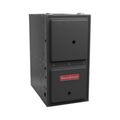
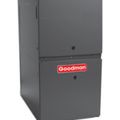
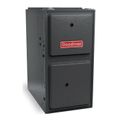

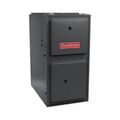
Goodman gas furnaces are forced-air heating units built for residential replacement and new-construction jobs across a wide range of home sizes. The lineup spans efficiency tiers from a standard 80% AFUE option up to 96% AFUE on the GC9S96 and GM9S96 series, which cover heating inputs from 40,000 to 120,000 BTU per hour. Multi-speed ECM blower motors and multi-position cabinets that install upflow, downflow, or horizontal give installers flexibility on jobs where duct layout or closet space limits equipment choice. Homeowners replacing an aging furnace often weigh AFUE rating against upfront equipment cost, since a higher-efficiency unit typically requires a different venting approach than a standard-efficiency furnace. For contractors quoting heating replacements, matching the furnace's BTU output to the home's calculated heat loss remains the first step before efficiency tier or blower speed even enter the conversation.
Subcategories
- 80% AFUE Furnaces: The 80% AFUE tier uses a standard atmospheric or induced-draft design and vents through a traditional metal flue in most installations. It remains a common, lower-cost choice on replacement jobs where the existing venting is already in place and doesn't need to change.
- 96% AFUE Furnaces: The GC9S96 and GM9S96 series step up to condensing technology, which lets the furnace vent with PVC pipe instead of a metal flue. Heating input on this series runs from 40,000 to 120,000 BTU per hour. The efficiency gain comes with a lower flue gas temperature, so proper condensate drainage becomes part of the installation.
- Two-Stage & Variable-Speed Furnaces: Two-stage models run at a lower firing rate during mild weather and only ramp to full output when the load calls for it, which can even out temperature swings compared with a single-stage unit. Pairing one with a variable-speed blower also helps with humidity control in cooling season. Contractors typically recommend this tier for homes with larger comfort complaints.
- Furnace Parts & Accessories: Igniters, flame sensors, blower motors, and circuit boards are stocked to keep an installed furnace running without a full unit swap. Having the correct part number on hand before a service call cuts the time a technician spends diagnosing a no-heat complaint. Filters and venting accessories round out the category for new installs.
Buying Guide
Sizing comes first when selecting a furnace: matching BTU output to the home's calculated heat loss keeps the equipment from short-cycling on mild days or running out of capacity during a cold snap. Contractors choosing between Goodman gas furnaces at 80% and 96% AFUE need to weigh venting on top of upfront cost, since the higher-efficiency condensing units require PVC intake and exhaust piping plus a condensate drain, while the 80% AFUE tier can often reuse an existing metal flue on a replacement job. Cabinet orientation matters just as much as efficiency: a multi-position furnace that installs upflow, downflow, or horizontal gives more flexibility when the mechanical closet or attic space dictates airflow direction. Blower selection affects comfort more than most homeowners expect, since a multi-speed ECM motor can move air more quietly at partial load than a single-speed PSC motor. Two-stage models add another layer of comfort by running at reduced output most of the time and reserving full capacity for extreme weather, though they cost more upfront than a single-stage furnace of the same BTU rating. Whatever tier gets specified, confirming that ductwork and existing venting can support the new unit before ordering it avoids a change order once installation is underway.
Frequently Asked Questions
What's the difference between 80% and 96% AFUE Goodman furnaces?
AFUE measures how much of the fuel's energy converts to usable heat over a season, so a 96% AFUE furnace wastes less fuel than an 80% AFUE model. The tradeoff is venting: the 96% AFUE condensing furnaces need PVC intake and exhaust piping and a condensate drain, while 80% AFUE models typically vent through a standard metal flue.
How is a replacement furnace sized correctly?
Furnace size should be based on a heat loss calculation for the specific home, not just matching the BTU rating of the unit being replaced. An oversized furnace short-cycles and wears out faster, while an undersized one can't keep up during the coldest days of the year.
Can an 80% AFUE furnace be swapped for a 96% AFUE model in the same closet?
It depends on whether the existing venting and condensate drainage can support a condensing furnace. Since the 96% AFUE tier vents with PVC instead of metal flue, the installation usually needs a new vent run and a way to route condensate, which can affect whether the swap is a straightforward retrofit.
What's the benefit of a two-stage furnace over single-stage?
A two-stage furnace runs at a lower firing rate during mild weather and only shifts to full capacity when the thermostat calls for more heat, which tends to even out temperature swings in the house. It generally costs more than a single-stage furnace with the same BTU rating.
Do multi-position furnace cabinets need special parts for horizontal installs?
A multi-position cabinet is built to install upflow, downflow, or horizontal without swapping the furnace itself, though the specific venting and condensate drainage details can change based on orientation. Confirming the planned orientation before ordering the unit avoids fit problems during installation.
