




Filters
SORT
Product Availability –
Size –
Connection Type –
Connection Method –
Flow Capacity (Cv) –
Material –
Used With –
Review Score –
 --%3E %3Csvg version='1.1' id='Fill' xmlns='http://www.w3.org/2000/svg' xmlns:xlink='http://www.w3.org/1999/xlink' x='0px' y='0px' viewBox='0 0 100 100' enable-background='new 0 0 100 100' xml:space='preserve'%3E %3Cpath fill='%23F15C02' d='M79.44,0.95H20.56C9.78,0.95,0.95,9.78,0.95,20.56v58.87c0,10.79,8.82,19.61,19.61,19.61h58.87 c10.79,0,19.61-8.83,19.61-19.61V20.56C99.05,9.78,90.22,0.95,79.44,0.95z M65.38,58.24l9.38,29.58L49.69,69.78L24.5,87.82 l9.34-29.6L8.8,39.6l30.73-0.17c0,0,6.98-19.61,10-28.93c0.54,1.36,9.88,29.1,9.88,29.1H91.2L65.38,58.24z'/%3E %3C/svg%3E)
Price Range –
Honeywell Three-Way Globe Mixing Valves

 --%3E %3Csvg version='1.1' id='Half' xmlns='http://www.w3.org/2000/svg' xmlns:xlink='http://www.w3.org/1999/xlink' x='0px' y='0px' viewBox='0 0 100 100' enable-background='new 0 0 100 100' xml:space='preserve'%3E %3Cg%3E %3Cpath fill='%23F15C02' d='M30.05,70.23l3.79-12.01L8.8,39.6l30.73-0.17c0,0,6.98-19.61,10-28.93c0.54,1.36,9.88,29.1,9.88,29.1h1.58 L93.71,7.18c-3.58-3.82-8.66-6.23-14.28-6.23H20.56C9.78,0.95,0.95,9.78,0.95,20.56v58.87c0,5.41,2.22,10.32,5.79,13.88 L30.05,70.23z'/%3E %3C/g%3E %3Cpath fill='%23FBC8B4' d='M93.71,7.18L60.98,39.6H91.2L65.38,58.24l9.38,29.58L49.69,69.78L24.5,87.82l5.55-17.59L6.75,93.32 c3.55,3.54,8.44,5.73,13.82,5.73h58.87c10.79,0,19.61-8.83,19.61-19.61V20.56C99.05,15.4,97.01,10.69,93.71,7.18z'/%3E %3C/svg%3E)

 --%3E %3Csvg version='1.1' id='No-RB' xmlns='http://www.w3.org/2000/svg' xmlns:xlink='http://www.w3.org/1999/xlink' x='0px' y='0px' viewBox='0 0 100 100' enable-background='new 0 0 100 100' xml:space='preserve'%3E %3Cpath fill='%23CECECE' d='M79.44,0.95H20.56C9.78,0.95,0.95,9.78,0.95,20.56v58.87c0,10.79,8.82,19.61,19.61,19.61h58.87 c10.79,0,19.61-8.83,19.61-19.61V20.56C99.05,9.78,90.22,0.95,79.44,0.95z M65.38,58.24l9.38,29.58L49.69,69.78L24.5,87.82 l9.34-29.6L8.8,39.6l30.73-0.17c0,0,6.98-19.61,10-28.93c0.54,1.36,9.88,29.1,9.88,29.1H91.2L65.38,58.24z'/%3E %3C/svg%3E)
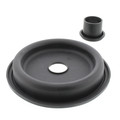
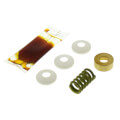
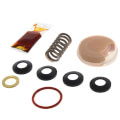
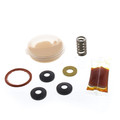
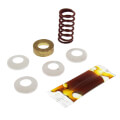
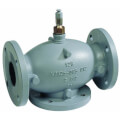
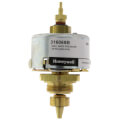
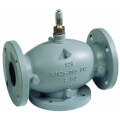
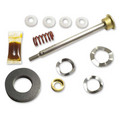
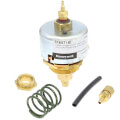
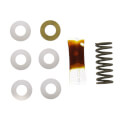
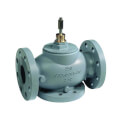
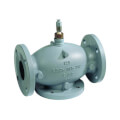
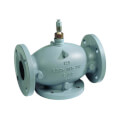
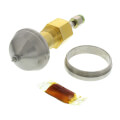
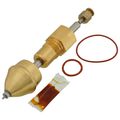
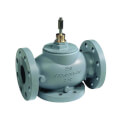
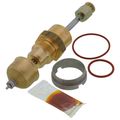
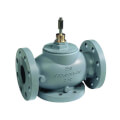
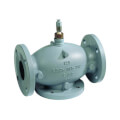
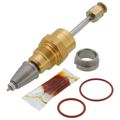
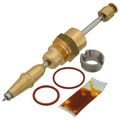

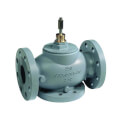
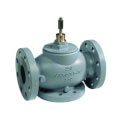
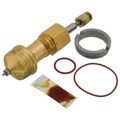
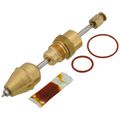

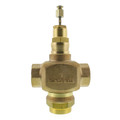
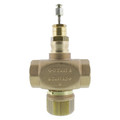
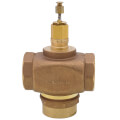
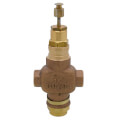
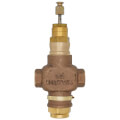
Honeywell Three-Way Globe Mixing Valves are red brass valves that blend two water or glycol streams, typically hot and cold supply, into one outlet for two-position or modulating temperature control. The V5013N series handles glycol solutions up to 50 percent concentration alongside standard hot and cold water, which makes it a common choice for hydronic heating and snowmelt loops. Flow capacity is rated in Cv and ranges from 7.3 on the 3/4 inch size to 46.8 on the 2 inch size, so the valve size has to match the loop's design flow rate rather than just the pipe diameter. Threaded NPT connections cover residential and light commercial sizing, while flanged versions step up to larger commercial loops. A stainless steel stem and spring-loaded packing keep the valve sealing consistently through repeated stem travel. Picking the right size and connection type keeps mixed water temperature stable across the full range of the actuator's stroke.
Subcategories
- Small Threaded Valves (3/4 in to 1-1/4 in): Small threaded valves cover the 3/4 inch through 1-1/4 inch sizes, with Cv ratings running from 7.3 to 18.7. Red brass construction with NPT connections makes these a straightforward swap into residential and light commercial hydronic zones. A stainless steel stem and brass plug handle the mixing action between the two inlet ports. Zone valves feeding radiant loops and small fan coil units account for most of the use on these sizes.
- Large Threaded Valves (1-1/2 in to 2 in): Large threaded valves step up to the 1-1/2 inch and 2 inch sizes, with Cv ratings of 29.3 and 46.8 respectively. The larger port opening handles higher flow hydronic loops without adding the pressure drop a smaller valve would create at the same flow rate. Connections stay NPT threaded, so installation follows the same threaded approach as the smaller sizes in the series. Commercial boiler plants and larger multi-zone systems are common applications for this range.
- Flanged Globe Mixing Valves: Flanged globe mixing valves, like the V5013B1029, connect with bolted flange fittings instead of NPT threads, which suits larger pipe runs where threading isn't practical. The 4 inch V5013B1029 carries a 160 Cv rating, well above the largest threaded model in the series. Flanged construction also simplifies future valve replacement, since a bolted flange comes apart without cutting into the pipe. Commercial and industrial hydronic plants use this style where high flow volume is standard.
- High-Flow Flanged Linear Mixing Valves: The V5050A series covers flanged linear mixing valves rated for PN25 and PN40 pressure classes, built for larger commercial and industrial systems. Linear flow characteristics keep the mixing ratio predictable across the actuator's full stroke, which matters in modulating control loops. Pneumatic or electronic actuators pair with these valves depending on the building automation system in place. Large chiller plants and central heating plants are typical applications for this series.
Buying Guide
Start sizing by Cv rather than by matching the existing pipe diameter, since an oversized valve hunts around the setpoint and an undersized valve starves the loop under peak demand. Honeywell publishes Cv ratings from 7.3 on the smallest threaded size up to 160 on the largest flanged model, so pulling the loop's design flow rate and available pressure drop before ordering avoids a mismatch. Connection type comes next. NPT threaded models cover most residential and light commercial jobs up to 2 inches, while flanged models take over on larger commercial and industrial loops where a bolted connection makes future service easier. Application matters too: any loop running glycol needs a valve rated for it, and the threaded series in this line handles glycol concentrations up to 50 percent alongside plain water. Actuator compatibility is the last check before ordering. Honeywell Three-Way Globe Mixing Valves pair with pneumatic or electric and electronic actuators, so confirming which control signal the building automation system uses keeps the valve and actuator matched from the start. Rangeability also plays into modulating applications; a valve with a wide rangeability holds a stable mix ratio across a broader span of stem travel than one with a narrow range, which matters most in systems that modulate frequently rather than cycling between two fixed positions. Getting the Cv, connection, and actuator type right the first time avoids a return trip to swap a mismatched valve.
Frequently Asked Questions
What's the difference between the threaded and flanged Honeywell three-way globe valves?
Threaded models use NPT connections and cover sizes from 3/4 inch to 2 inches, with Cv ratings from 7.3 to 46.8. Flanged models, like the 4 inch V5013B1029, use bolted connections instead of pipe threads and reach higher flow capacity, including a 160 Cv rating on that size. Flanged construction also makes future valve replacement easier on larger pipe runs since the flange bolts apart without cutting the pipe.
Can these valves handle glycol solutions?
The V5013N threaded series handles glycol concentrations up to 50 percent alongside standard hot and cold water. Glycol compatibility matters most in snowmelt loops and hydronic systems that run below freezing temperatures during shutdown periods. Checking the glycol percentage against the valve's rated concentration before ordering avoids seal or seat damage down the line.
How do I size a three-way mixing valve for a hydronic loop?
Sizing comes down to matching the valve's Cv rating to the loop's design flow rate and available pressure drop rather than just matching the pipe diameter. An oversized valve hunts around the setpoint, while an undersized valve restricts flow and starves the loop during peak demand. Honeywell's threaded series covers 7.3 to 46.8 Cv, and the flanged series steps up from there for larger commercial loops.
What actuator types work with Honeywell three-way globe mixing valves?
The valve series supports pneumatic actuation as well as electric and electronic actuation, depending on the building automation system in place. Matching the actuator's control signal to the building system keeps the valve responding correctly to setpoint changes. Confirming actuator compatibility before ordering avoids a mismatched pairing that needs a separate actuator swap.
What's the rangeability rating on these valves, and why does it matter?
The V5013N series carries a 50 to 1 rangeability rating per VDI or VDE 2173, meaning the valve maintains proportional control across a wide span of stem travel. Wide rangeability matters most in modulating control loops that adjust flow continuously rather than cycling between two fixed positions. A valve with narrow rangeability struggles to hold a stable mix ratio at low flow, which shows up as temperature swings at the outlet.
