




Lav and Urinal Carriers

 --%3E %3Csvg version='1.1' id='No-RB' xmlns='http://www.w3.org/2000/svg' xmlns:xlink='http://www.w3.org/1999/xlink' x='0px' y='0px' viewBox='0 0 100 100' enable-background='new 0 0 100 100' xml:space='preserve'%3E %3Cpath fill='%23CECECE' d='M79.44,0.95H20.56C9.78,0.95,0.95,9.78,0.95,20.56v58.87c0,10.79,8.82,19.61,19.61,19.61h58.87 c10.79,0,19.61-8.83,19.61-19.61V20.56C99.05,9.78,90.22,0.95,79.44,0.95z M65.38,58.24l9.38,29.58L49.69,69.78L24.5,87.82 l9.34-29.6L8.8,39.6l30.73-0.17c0,0,6.98-19.61,10-28.93c0.54,1.36,9.88,29.1,9.88,29.1H91.2L65.38,58.24z'/%3E %3C/svg%3E)
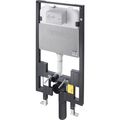



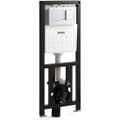



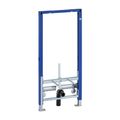


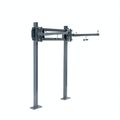
Lav and urinal carriers are structural fittings installed inside a wall to support wall-hung lavatories and urinals, transferring the fixture's weight to the floor or framing rather than relying on the wall surface alone. Commercial plumbers install carriers during rough-in, before the wall finish goes up, since the carrier has to be anchored and leveled while the studs and piping are still accessible. Getting the carrier positioned correctly at this stage is what allows the finished fixture to hang level and hold up under repeated use in high-traffic restrooms.
Carriers see steady demand on commercial and institutional projects such as schools, offices, and public buildings, where wall-hung fixtures are standard for ease of cleaning and accessibility compliance. A carrier that's undersized or poorly anchored for the fixture it supports is a common cause of a wobbly or failing wall-hung lavatory or urinal down the road.
Subcategories
- Lavatory Carriers: Lavatory carriers support wall-hung sinks and typically include adjustable uprights so the fixture height can be set to match accessibility requirements or a project's fixture schedule. Commercial plumbers install these behind the finished wall with the fixture's mounting studs passing through to the carrier frame. Concealed arm styles are common where a clean wall appearance matters, such as in public restrooms. Load rating needs to match or exceed the specific lavatory being installed.
- Urinal Carriers: Urinal carriers anchor wall-hung urinals and are built to handle the specific mounting pattern and weight distribution of urinal fixtures rather than lavatories. Plumbers on commercial restroom projects select these based on the urinal manufacturer's mounting requirements, since bolt patterns vary between brands. Most carriers in this group bolt to the floor and attach to wall framing for a rigid mount. Getting the rough-in height correct at install is critical since the carrier sets the fixture's final mounting position.
- Combination and Chair Carriers: Combination and chair carriers are heavier-duty units designed for fixtures that see high-frequency, high-load use, such as accessible-height installations or facilities with heavy foot traffic. Facility maintenance and commercial plumbing contractors specify these where a standard-duty carrier wouldn't hold up to expected use. The frame construction is typically more robust than lighter residential-style supports. Confirming the carrier's rated load against the fixture and expected usage is the main selection step.
Buying Guide
Choosing the right lav and urinal carrier starts with the fixture itself. The carrier's mounting pattern, bolt spacing, and load rating all need to match the specific lavatory or urinal being installed, since these details vary between fixture manufacturers and aren't universally interchangeable across brands.
Wall and floor conditions matter just as much as the fixture spec. A carrier that anchors to the floor needs adequate structural framing beneath it, and a wall-mounted carrier depends on solid blocking or stud spacing that can handle the transferred load. Confirming these conditions during rough-in avoids a callback after the wall is finished.
Accessibility requirements often dictate mounting height for lavatories and urinals in commercial and institutional buildings, so an adjustable carrier that allows height changes after rough-in gives some flexibility if the final fixture schedule shifts during construction.
For high-traffic installations, sizing up to a combination or chair carrier rather than a standard-duty unit is usually worth the added cost, since a carrier that's marginal for the load it carries is one of the more disruptive things to fix once the wall finish is in place.
Frequently Asked Questions
When during construction should lav and urinal carriers be installed?
Carriers need to go in during the rough-in phase, before the wall finish is applied, since they anchor to the floor and wall framing that won't be accessible once the wall is closed up.
Are lavatory carriers and urinal carriers interchangeable?
No, they're built for different mounting patterns and weight distributions specific to each fixture type. A carrier needs to be selected to match the exact fixture it will support.
What happens if a carrier is undersized for the fixture it supports?
An undersized carrier can lead to a wobbly fixture, stress cracks at the mounting points, or eventual failure of the wall connection under repeated use. Matching the carrier's rated load to the fixture's weight and expected traffic is important to avoid this.
Do all urinal carriers fit all urinal brands?
Bolt patterns and mounting requirements vary between urinal manufacturers, so the carrier needs to match the specific urinal being installed rather than being assumed universal.
Can carrier mounting height be adjusted after installation?
Many carriers include adjustable uprights that allow some height changes even after rough-in, which offers flexibility if the fixture schedule changes, though major adjustments are easier to make before the wall is finished.
