




Network & Communication Cable

 --%3E %3Csvg version='1.1' id='No-RB' xmlns='http://www.w3.org/2000/svg' xmlns:xlink='http://www.w3.org/1999/xlink' x='0px' y='0px' viewBox='0 0 100 100' enable-background='new 0 0 100 100' xml:space='preserve'%3E %3Cpath fill='%23CECECE' d='M79.44,0.95H20.56C9.78,0.95,0.95,9.78,0.95,20.56v58.87c0,10.79,8.82,19.61,19.61,19.61h58.87 c10.79,0,19.61-8.83,19.61-19.61V20.56C99.05,9.78,90.22,0.95,79.44,0.95z M65.38,58.24l9.38,29.58L49.69,69.78L24.5,87.82 l9.34-29.6L8.8,39.6l30.73-0.17c0,0,6.98-19.61,10-28.93c0.54,1.36,9.88,29.1,9.88,29.1H91.2L65.38,58.24z'/%3E %3C/svg%3E)
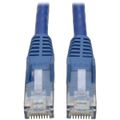
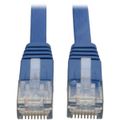


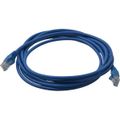
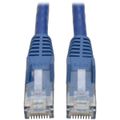

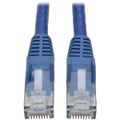
Network & Communication Cable covers the wiring contractors run for data networks, phone lines, security systems, and building automation. Cat6 cable, for example, supports bandwidth up to 250 MHz and data rates of 1 Gbps over a 100 meter run, according to Leviton's cable specifications, making it the standard pick for office networks, wireless access points, and IP cameras that draw power over the same line. Cat5e remains common for basic Ethernet drops where budget and simplicity matter more than headroom for future upgrades. Low-voltage installers also rely on this category for thermostat wiring, intercoms, and alarm circuits that share a jobsite with structured cabling. Getting the right cable type, jacket rating, and shielding on the first pull avoids costly re-pulls once drywall goes up, and it keeps a building's network ready for the devices that get added long after the original installation is finished.
Subcategories
- Cat5e Cable: Cat5e is the baseline twisted-pair cable for standard Ethernet drops, phone lines, and basic data runs. Southwire's Cat5e cable uses 24 AWG solid bare copper conductors and carries a CMR jacket rating for riser installations. Low-voltage techs specify it for straightforward network drops where gigabit-plus speeds are not required. It remains a cost-effective choice for voice and basic data applications in offices and residential structured wiring.
- Cat6 / Cat6e Cable: Cat6 and Cat6e cable step up bandwidth and are built for networks running high-definition video, gigabit switches, and devices that pull power over the data line. Leviton rates its Cat6 systems for up to 250 MHz of bandwidth and 1 Gbps data rates over a 100 meter run. Network installers reach for this tier when access points, IP cameras, or VoIP phones need Power over Ethernet alongside data. It gives a building headroom for higher-speed equipment added after the original cable pull.
- Plenum-Rated (CMP) Cable: Plenum-rated cable carries a CMP jacket built to meet fire and smoke codes for use in air-handling spaces like drop ceilings and raised floors. Southwire's Cat6e CMP cable is rated for both plenum and riser installations and supports Power over Ethernet applications. Electrical and low-voltage contractors pull CMP cable whenever the run passes through HVAC plenum space, since local code typically requires it there instead of standard CMR jacketing. Specifying the correct jacket rating up front keeps an installation code-compliant without a second pull later.
Buying Guide
Choosing cable for a network drop starts with the data rate the network needs today and the headroom it needs tomorrow. A basic voice or low-bandwidth data run can still use Cat5e, but any run supporting gigabit switches, wireless access points, or video should move up to Cat6 or Cat6e, since Leviton rates Cat6 for up to 250 MHz and 1 Gbps over a full 100 meter run. Network & Communication Cable also has to match the space it runs through. Local fire code typically dictates jacket type: CMP for plenum spaces like drop ceilings and air returns, and CMR for vertical riser shafts between floors. Pulling the wrong jacket rating into a plenum space means a failed inspection and a second pull, so confirm the jacket rating before ordering. Power needs matter too. Any run feeding an IP camera, wireless access point, or VoIP phone over Power over Ethernet needs a cable rated for the added current draw without overheating, which is where Cat6e and higher categories earn their keep. Shielded cable (STP/FTP) is worth the extra step in runs near motors, fluorescent ballasts, or other sources of electromagnetic interference, while unshielded (UTP) cable covers most standard office and residential runs. Conductor type matters as well: solid conductors suit permanent in-wall runs, while stranded cable holds up better in patch cords that get flexed and reseated.
Frequently Asked Questions
What is the difference between Cat5e and Cat6 cable?
Cat5e and Cat6 are both twisted-pair network cables, but Cat6 is built for higher bandwidth and speed. Leviton rates Cat6 for up to 250 MHz and 1 Gbps over a 100 meter run, while Cat5e covers standard gigabit Ethernet at a lower bandwidth ceiling. Cat6 gives a network more headroom for high-definition video, VoIP, and other bandwidth-heavy applications added later.
When does a cable run need a plenum (CMP) jacket instead of riser (CMR)?
A CMP jacket is required whenever cable runs through air-handling spaces such as drop ceilings, raised floors, or HVAC returns, since it is built to meet stricter fire and smoke codes than riser-rated cable. CMR jacketing is intended for vertical runs between floors inside a riser shaft, not open plenum spaces. Local building and fire code determines which rating applies to a given run, so it pays to confirm before pulling cable.
Can Cat6 cable carry Power over Ethernet safely?
Cat6 and Cat6e cable are commonly used for Power over Ethernet applications that power devices like IP cameras, wireless access points, and VoIP phones over the same line that carries data. Southwire's Cat6e cable is rated for PoE use in both plenum and riser installations. Bundling many PoE runs together generates heat, so cable gauge and bundle size both factor into a safe, code-compliant installation.
Does Network & Communication Cable need to be shielded?
Shielded twisted-pair cable (STP or FTP) helps block electromagnetic interference from motors, fluorescent lighting ballasts, and other equipment that can disrupt an unshielded line. Standard unshielded twisted-pair (UTP) cable handles most office and residential network runs without issue. Shielded cable calls for grounded connectors and hardware to work as intended, which adds a step to the installation compared to standard UTP.
What gauge conductor is used in Cat5e and Cat6 cable?
Southwire's Cat5e and Cat6e cables both use 24 AWG copper conductors, a standard gauge for structured network cabling. Solid conductors are typical for permanent in-wall and in-ceiling runs, while stranded versions are more common in flexible patch cords. Matching conductor type to the application, fixed run versus patch cable, helps a network hold up to repeated flexing or wall termination alike.
