



NuTone

 --%3E %3Csvg version='1.1' id='Fill' xmlns='http://www.w3.org/2000/svg' xmlns:xlink='http://www.w3.org/1999/xlink' x='0px' y='0px' viewBox='0 0 100 100' enable-background='new 0 0 100 100' xml:space='preserve'%3E %3Cpath fill='%23F15C02' d='M79.44,0.95H20.56C9.78,0.95,0.95,9.78,0.95,20.56v58.87c0,10.79,8.82,19.61,19.61,19.61h58.87 c10.79,0,19.61-8.83,19.61-19.61V20.56C99.05,9.78,90.22,0.95,79.44,0.95z M65.38,58.24l9.38,29.58L49.69,69.78L24.5,87.82 l9.34-29.6L8.8,39.6l30.73-0.17c0,0,6.98-19.61,10-28.93c0.54,1.36,9.88,29.1,9.88,29.1H91.2L65.38,58.24z'/%3E %3C/svg%3E)

 --%3E %3Csvg version='1.1' id='Half' xmlns='http://www.w3.org/2000/svg' xmlns:xlink='http://www.w3.org/1999/xlink' x='0px' y='0px' viewBox='0 0 100 100' enable-background='new 0 0 100 100' xml:space='preserve'%3E %3Cg%3E %3Cpath fill='%23F15C02' d='M30.05,70.23l3.79-12.01L8.8,39.6l30.73-0.17c0,0,6.98-19.61,10-28.93c0.54,1.36,9.88,29.1,9.88,29.1h1.58 L93.71,7.18c-3.58-3.82-8.66-6.23-14.28-6.23H20.56C9.78,0.95,0.95,9.78,0.95,20.56v58.87c0,5.41,2.22,10.32,5.79,13.88 L30.05,70.23z'/%3E %3C/g%3E %3Cpath fill='%23FBC8B4' d='M93.71,7.18L60.98,39.6H91.2L65.38,58.24l9.38,29.58L49.69,69.78L24.5,87.82l5.55-17.59L6.75,93.32 c3.55,3.54,8.44,5.73,13.82,5.73h58.87c10.79,0,19.61-8.83,19.61-19.61V20.56C99.05,15.4,97.01,10.69,93.71,7.18z'/%3E %3C/svg%3E)

 --%3E %3Csvg version='1.1' id='No-RB' xmlns='http://www.w3.org/2000/svg' xmlns:xlink='http://www.w3.org/1999/xlink' x='0px' y='0px' viewBox='0 0 100 100' enable-background='new 0 0 100 100' xml:space='preserve'%3E %3Cpath fill='%23CECECE' d='M79.44,0.95H20.56C9.78,0.95,0.95,9.78,0.95,20.56v58.87c0,10.79,8.82,19.61,19.61,19.61h58.87 c10.79,0,19.61-8.83,19.61-19.61V20.56C99.05,9.78,90.22,0.95,79.44,0.95z M65.38,58.24l9.38,29.58L49.69,69.78L24.5,87.82 l9.34-29.6L8.8,39.6l30.73-0.17c0,0,6.98-19.61,10-28.93c0.54,1.36,9.88,29.1,9.88,29.1H91.2L65.38,58.24z'/%3E %3C/svg%3E)




 --%3E %3Csvg version='1.1' id='With-RB' xmlns='http://www.w3.org/2000/svg' xmlns:xlink='http://www.w3.org/1999/xlink' x='0px' y='0px' viewBox='0 0 100 100' enable-background='new 0 0 100 100' xml:space='preserve'%3E %3Cpath fill='%23FBC8B4' d='M79.44,0.95H20.56C9.78,0.95,0.95,9.78,0.95,20.56v58.87c0,10.79,8.82,19.61,19.61,19.61h58.87 c10.79,0,19.61-8.83,19.61-19.61V20.56C99.05,9.78,90.22,0.95,79.44,0.95z M65.38,58.24l9.38,29.58L49.69,69.78L24.5,87.82 l9.34-29.6L8.8,39.6l30.73-0.17c0,0,6.98-19.61,10-28.93c0.54,1.36,9.88,29.1,9.88,29.1H91.2L65.38,58.24z'/%3E %3C/svg%3E)



NuTone holds a long history in residential ventilation and electrical convenience products, having introduced the first electric door chime and going on to build major market positions in doorbells, central vacuum systems, kitchen exhaust range hoods, and bathroom ventilation fans. The brand became part of Broan-NuTone LLC following a merger that combined NuTone with Broan under one roof.
Broan-NuTone is headquartered in Hartford, Wisconsin, and employs more than 2,500 people across seven countries on four continents, with additional manufacturing, marketing, and sales locations in California, Ohio, Canada, Chile, China, and Mexico.
Product Lines
NuTone's catalog centers on bath and exhaust ventilation fans, ranging from standard exhaust units to humidity-sensing and Bluetooth-equipped fans designed to clear moisture, odor, and airborne particulates from bathrooms and utility spaces.
Range hoods make up another core category, including under-cabinet, wall-mount chimney, island, and downdraft styles suited to a wide range of kitchen layouts. NuTone also produces energy recovery and heat recovery ventilators for balanced fresh-air systems, along with central vacuum systems and intercom products that round out its built-in product portfolio.
Why Contractors Specify NuTone
Electrical and HVAC contractors specify NuTone products because they cover the full scope of residential ventilation needs from a single manufacturer, simplifying sourcing for bath fan replacements, kitchen hood installs, and whole-home air exchange projects. Several models carry ENERGY STAR certification, which helps installers meet local energy code requirements on new construction and remodel jobs.
A long production history means parts and replacement housings for older NuTone fans are often easier to match on retrofit jobs, reducing rework when a homeowner wants to keep existing ceiling cutouts or ductwork.
How to Choose NuTone Products
Selecting a bath fan starts with matching airflow capacity, measured in CFM, to room size and local code requirements, then checking the sound rating in sones for projects where quiet operation matters. Humidity-sensing or motion-activated models suit bathrooms prone to lingering moisture, while standard models work for straightforward exhaust needs.
For range hoods, contractors should confirm the duct path and termination point before selecting between under-cabinet, wall, island, or downdraft styles, and size the blower's CFM rating to the cooking equipment below. Fresh-air system selection depends on climate zone, since energy recovery ventilators and heat recovery ventilators suit different humidity and temperature conditions.
Frequently Asked Questions
How is a bathroom exhaust fan sized for a room?
Sizing depends on bathroom square footage and fixture count, with larger bathrooms or those with separate shower and toilet areas typically needing higher-capacity fans or multiple units; building codes and standard HVI sizing guidelines are commonly used to land on the right CFM rating for a given room.
Can a NuTone range hood be installed without exterior ductwork?
Many NuTone range hood models support both ducted and ductless configurations, with a recirculating kit available for installations where exterior ducting isn't practical, though ducted setups generally remove more heat, moisture, and odor.
What is the difference between an ERV and an HRV?
An energy recovery ventilator exchanges both heat and moisture between incoming and outgoing air, making it suited to humid climates, while a heat recovery ventilator transfers heat only and tends to fit drier, colder regions better.
Will a new NuTone fan fit into an existing ceiling housing?
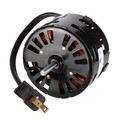
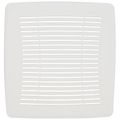
Many replacement fan motor and grille kits are designed to fit into existing housings within the same series, but confirming housing dimensions and mounting style before ordering helps avoid cutting a new opening.
How is bathroom fan noise measured?
Sound is rated in sones, with lower numbers indicating quieter operation; checking the sone rating on the spec sheet helps match a fan to noise-sensitive spaces such as bedrooms with adjoining bathrooms.
