




Plumbing & Utility Line Locators

 --%3E %3Csvg version='1.1' id='No-RB' xmlns='http://www.w3.org/2000/svg' xmlns:xlink='http://www.w3.org/1999/xlink' x='0px' y='0px' viewBox='0 0 100 100' enable-background='new 0 0 100 100' xml:space='preserve'%3E %3Cpath fill='%23CECECE' d='M79.44,0.95H20.56C9.78,0.95,0.95,9.78,0.95,20.56v58.87c0,10.79,8.82,19.61,19.61,19.61h58.87 c10.79,0,19.61-8.83,19.61-19.61V20.56C99.05,9.78,90.22,0.95,79.44,0.95z M65.38,58.24l9.38,29.58L49.69,69.78L24.5,87.82 l9.34-29.6L8.8,39.6l30.73-0.17c0,0,6.98-19.61,10-28.93c0.54,1.36,9.88,29.1,9.88,29.1H91.2L65.38,58.24z'/%3E %3C/svg%3E)


 --%3E %3Csvg version='1.1' id='Fill' xmlns='http://www.w3.org/2000/svg' xmlns:xlink='http://www.w3.org/1999/xlink' x='0px' y='0px' viewBox='0 0 100 100' enable-background='new 0 0 100 100' xml:space='preserve'%3E %3Cpath fill='%23F15C02' d='M79.44,0.95H20.56C9.78,0.95,0.95,9.78,0.95,20.56v58.87c0,10.79,8.82,19.61,19.61,19.61h58.87 c10.79,0,19.61-8.83,19.61-19.61V20.56C99.05,9.78,90.22,0.95,79.44,0.95z M65.38,58.24l9.38,29.58L49.69,69.78L24.5,87.82 l9.34-29.6L8.8,39.6l30.73-0.17c0,0,6.98-19.61,10-28.93c0.54,1.36,9.88,29.1,9.88,29.1H91.2L65.38,58.24z'/%3E %3C/svg%3E)
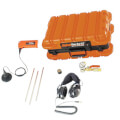
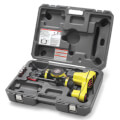
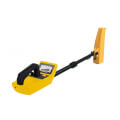
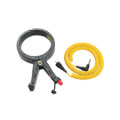

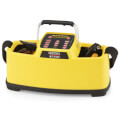
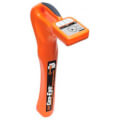
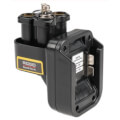
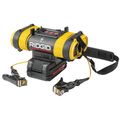
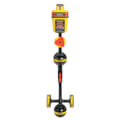

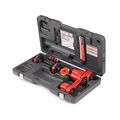
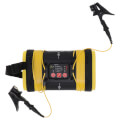
Plumbing & Utility Line Locators are electronic tools used to trace the path and depth of pipes, cables, and other buried lines before digging, drain cleaning, or trenchless repair work begins. A transmitter sends a signal onto a line, either by direct connection, induction, or a sonde pushed through a non-metallic pipe, and a handheld receiver traces that signal from the surface to map the line's route. Systems built around multiple frequencies, such as three-frequency transmitters, cover a wider range of metallic and non-metallic utilities than a single-frequency unit. Plumbers and utility crews rely on these locators to avoid striking a gas line, water main, or electrical conduit during excavation, and to find a specific fitting or cleanout buried under a finished yard or driveway. Choosing a locator with the right frequency options and antenna sensitivity for the jobsite's utility mix keeps both crews and buried infrastructure safe from an accidental strike.
Subcategories
- Sonde Locators: Sonde locators use a small battery-powered transmitter, called a sonde, that's pushed through a non-metallic pipe on a flex rod or drain cable, then tracked from above by a separate receiver. Plumbers rely on this method to trace non-metallic drain and sewer lines that don't carry an electrical signal on their own. Multi-frequency systems, such as three-frequency units, adapt to different sonde sizes and depths on a single receiver. Combination camera-and-sonde systems let a technician locate a specific point of interest found during a video inspection.
- RF & Induction Locators: RF and induction locators trace metallic pipes and cables by transmitting a signal directly onto the line or inducing one through the ground when a direct connection isn't possible. A handheld receiver then follows that signal along the buried line's path and estimates its depth from the surface. Crews turn to this approach for gas lines, metallic water services, and electrical conduit before excavation begins. It also works as a first pass before calling for a full utility locate on a larger project.
- Combination Camera & Locator Systems: Combination systems pair a pushable inspection camera with a built-in sonde or transmitter so a technician can locate the camera head's exact position from the surface during a video inspection. Drain and sewer contractors use these to mark a break, root intrusion, or offset joint for excavation without guessing at the location. The sonde transmits through the camera cable itself rather than requiring a separate tool. Locating the exact point of interest this way narrows an excavation to a much smaller area than a blind dig.
- Ground Penetrating Radar: Ground penetrating radar locators send radar pulses into the ground and read the reflections to map buried objects, including non-metallic pipe, without needing a signal source on the line itself. Utility locating crews use GPR when a line can't be reached with a sonde or induction signal, such as an abandoned or unknown utility. GPR also detects non-utility obstructions like buried debris or old foundations that a standard locator would miss. It's typically used alongside RF and sonde methods rather than as a full replacement for them.
Buying Guide
Start with what needs to be found. A metallic gas line, water service, or electrical conduit can usually be traced with a straightforward RF or induction locator, tracing a signal sent directly onto the line or induced through the ground. A non-metallic drain, sewer, or water line needs a sonde instead, since there's no conductive path for an RF signal to follow, and the sonde has to be physically pushed into the pipe on a flex rod, drain cable, or inspection camera. Plumbing & Utility Line Locators built around multiple frequencies, such as three-frequency transmitters, give a crew more flexibility to match the signal to different sonde sizes, depths, and interference conditions on a single jobsite rather than carrying multiple single-frequency units. Depth range matters just as much as frequency: a locator rated for shallow residential work won't necessarily read accurately on a deeper commercial utility run. Crews doing frequent drain and sewer work benefit most from a combination camera-and-locator system, since it finds a specific point of interest, like a break or offset joint, discovered during inspection rather than just tracing a general pipe route. Ground penetrating radar fills the gap when a line can't be reached with a sonde or an RF signal at all, such as an abandoned or unidentified utility, though it adds cost and a learning curve compared to a standard locator. Matching the tool to the utility type first, then to depth and jobsite conditions, narrows the choice down fast.
Frequently Asked Questions
What's the difference between a sonde locator and an RF locator?
An RF or induction locator traces a signal sent directly onto a metallic pipe or cable, or induced through the ground, and works on gas lines, metallic water services, and electrical conduit. A sonde locator uses a small battery-powered transmitter physically pushed through a non-metallic pipe on a flex rod, drain cable, or inspection camera, since non-metallic pipe can't carry an RF signal on its own. Choosing the wrong type for the utility means getting no signal at all rather than an inaccurate reading.
Why use a multi-frequency utility locator instead of a single-frequency one?
A multi-frequency transmitter, such as a three-frequency unit, adapts to different sonde sizes, depths, and jobsite interference conditions without needing to swap equipment. A single-frequency locator works fine on straightforward jobs but can struggle when signal bleed-over from nearby utilities or heavy interference gets in the way. Crews working a mix of residential and commercial utilities generally get more consistent results from a multi-frequency system.
Can a utility locator find non-metallic pipe?
Non-metallic pipe, including most modern drain, sewer, and water lines, doesn't carry an RF signal, so tracing it requires a sonde pushed physically into the pipe or ground penetrating radar reading reflections from the surface. A standard RF locator alone won't detect non-metallic pipe without one of those methods added in. Combination camera-and-sonde systems make this easier by transmitting through the same cable used for the video inspection.
How accurate is depth measurement on a utility locator?
Depth measurement accuracy on a utility locator depends on the unit's rated range, the utility's actual depth, and interference from nearby lines or soil conditions. Locators built for shallow residential depths don't necessarily read accurately on deeper commercial utility runs. Confirming the locator's rated depth range against the expected utility depth before relying on the reading avoids a costly excavation error.
When is ground penetrating radar necessary instead of a standard locator?
Ground penetrating radar becomes necessary when a line can't be reached with a sonde or an RF signal at all, such as an abandoned, unidentified, or non-conductive utility with no access point. GPR reads radar reflections from the surface rather than requiring a signal source on the line itself. It's typically used alongside RF and sonde locators on a project rather than replacing them entirely.
