




Quick-Connect 90° Elbows


 --%3E %3Csvg version='1.1' id='No-RB' xmlns='http://www.w3.org/2000/svg' xmlns:xlink='http://www.w3.org/1999/xlink' x='0px' y='0px' viewBox='0 0 100 100' enable-background='new 0 0 100 100' xml:space='preserve'%3E %3Cpath fill='%23CECECE' d='M79.44,0.95H20.56C9.78,0.95,0.95,9.78,0.95,20.56v58.87c0,10.79,8.82,19.61,19.61,19.61h58.87 c10.79,0,19.61-8.83,19.61-19.61V20.56C99.05,9.78,90.22,0.95,79.44,0.95z M65.38,58.24l9.38,29.58L49.69,69.78L24.5,87.82 l9.34-29.6L8.8,39.6l30.73-0.17c0,0,6.98-19.61,10-28.93c0.54,1.36,9.88,29.1,9.88,29.1H91.2L65.38,58.24z'/%3E %3C/svg%3E)
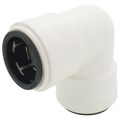

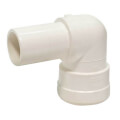
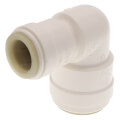
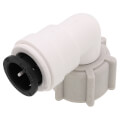
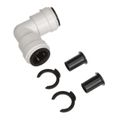


Quick-Connect 90° Elbows are push-to-connect fittings that turn a run of copper, CPVC, PEX or CTS-rated pipe through a 90° change of direction with no tools required. Watts plastic models such as the 3517 carry a maximum working pressure of 250 psi, and they use a locking clip and an O-ring guide for zero-leak connections. Styles include standard, reducing, stackable and female swivel elbows, so one fitting family handles a range of layouts. Plumbers and installers use them where installation speed matters and where the fitting may need to be removed later, since Watts states that no tools are required for installation or removal. Selecting the right style and size before the job starts keeps the work moving and avoids extra trips for a missing fitting.
Subcategories
- Standard 90° Elbows: The Watts 3517 is a thermoplastic elbow with push-to-connect ends on both sides. The 3517-14 is sized for 3/4 inch CTS and carries a maximum working pressure of 250 psi. It is lead-free and rotates after installation. Plumbers use it for plain direction changes in a run of copper, CPVC, PEX or CTS-rated pipe.
- Reducing 90° Elbows: The Watts 3517R-1410 steps from 3/4 inch CTS to 1/2 inch CTS, with push-to-connect ends on both sides. It carries a 250 psi maximum working pressure and works with copper, CPVC, PEX and CTS-rated pipe. Installers use reducing elbows where the line size changes at the turn.
- Stackable 90° Elbows: The Watts 3518-14 is a stackable elbow in 3/4 inch CTS with push-to-connect ends on both sides and a 250 psi maximum working pressure. The product description notes increased flow capacity compared with barb fittings. Plumbers use it on push-to-connect runs in copper, CPVC, PEX or CTS-rated pipe.
- Female Swivel 90° Elbows: The Watts 3520-1008 is a female swivel elbow sized 1/2 inch CTS by 1/2 inch NPS, with a push-to-connect inlet and a female threaded outlet. It carries a 250 psi maximum working pressure and is not suitable for gas service. Installers use it to transition from tubing to a threaded connection.
Buying Guide
Start with the pipe. Watts push-to-connect elbows such as the 3517 work with copper, CPVC, PEX and CTS-rated pipe, and sizes use CTS designations, such as 3/4 inch CTS on the 3517-14. Confirm the tubing type and size against the fitting before ordering.
Next, pick the style by what the layout needs. Standard elbows like the 3517 handle same-size turns, and the 3517R-1410 steps from 3/4 inch CTS to 1/2 inch CTS. The 3518-14 stackable elbow is described with increased flow capacity compared with barb fittings, and the 3520-1008 female swivel elbow transitions from 1/2 inch CTS tubing to a 1/2 inch NPS threaded connection.
When comparing Quick-Connect 90° Elbows, check the pressure and temperature ratings on the model data. The 3517-14, 3517R-1410, 3518-14 and 3520-1008 each list a maximum working pressure of 250 psi, and each also lists a temperature range, so the service conditions of the job should be checked against those limits before installation.
Check the application limits as well. The 3520-1008 is not suitable for gas service, and Watts lists a 25-year limited warranty on these elbows. Lead-free construction is listed for the 3517-14, 3517R-1410, 3518-14 and 3520-1008, which matters on potable water work.
Finally, plan the count by fitting type. A mixed job often needs standard, reducing and swivel elbows together, so building the count from the layout before ordering prevents delays at rough-in.
Frequently Asked Questions
What pipe types do quick-connect 90° elbows work with?
Watts quick-connect 90° elbows such as the 3517, 3517R, 3518 and 3520 work with copper, CPVC, PEX and CTS-rated pipe. Watts states that no tools are required for installation or removal. Sizes use CTS designations, for example 3/4 inch CTS on the 3517-14.
What pressure rating do Watts quick-connect 90° elbows carry?
The Watts quick-connect 90° elbows 3517-14, 3517R-1410, 3518-14 and 3520-1008 each list a maximum working pressure of 250 psi. Each model also lists a temperature range, so the job's service conditions should be checked against the model data. Ratings are model specific and should not be applied to other fittings.
Do quick-connect 90° elbows need special tools?
Watts states that its 3517, 3517R, 3518 and 3520 quick-connect 90° elbows need no tools for installation or removal. The 3517 uses a locking clip and an O-ring guide, and the elbows rotate after installation. Pipe preparation and insertion should follow the manufacturer's instructions.
Which quick-connect 90° elbow connects tubing to a threaded fitting?
The Watts 3520-1008 female swivel elbow transitions from 1/2 inch CTS tubing to a 1/2 inch NPS connection. The inlet is push-to-connect, and the outlet is female threaded. Watts lists the fitting as not suitable for gas service.
What is a reducing quick-connect 90° elbow?
A reducing quick-connect 90° elbow changes pipe size at the turn. The Watts 3517R-1410 goes from 3/4 inch CTS to 1/2 inch CTS with push-to-connect ends on both sides. It carries a maximum working pressure of 250 psi and a 25-year limited warranty.
