




Filters
SORT
Product Availability –
Size –
Connection Type –
Connection Method –
Flow Capacity (Cv) –
Review Score –
 --%3E %3Csvg version='1.1' id='Fill' xmlns='http://www.w3.org/2000/svg' xmlns:xlink='http://www.w3.org/1999/xlink' x='0px' y='0px' viewBox='0 0 100 100' enable-background='new 0 0 100 100' xml:space='preserve'%3E %3Cpath fill='%23F15C02' d='M79.44,0.95H20.56C9.78,0.95,0.95,9.78,0.95,20.56v58.87c0,10.79,8.82,19.61,19.61,19.61h58.87 c10.79,0,19.61-8.83,19.61-19.61V20.56C99.05,9.78,90.22,0.95,79.44,0.95z M65.38,58.24l9.38,29.58L49.69,69.78L24.5,87.82 l9.34-29.6L8.8,39.6l30.73-0.17c0,0,6.98-19.61,10-28.93c0.54,1.36,9.88,29.1,9.88,29.1H91.2L65.38,58.24z'/%3E %3C/svg%3E)
Price Range –
Resideo Braukmann AMX Series DirectConnect Mixing Valves

 --%3E %3Csvg version='1.1' id='No-RB' xmlns='http://www.w3.org/2000/svg' xmlns:xlink='http://www.w3.org/1999/xlink' x='0px' y='0px' viewBox='0 0 100 100' enable-background='new 0 0 100 100' xml:space='preserve'%3E %3Cpath fill='%23CECECE' d='M79.44,0.95H20.56C9.78,0.95,0.95,9.78,0.95,20.56v58.87c0,10.79,8.82,19.61,19.61,19.61h58.87 c10.79,0,19.61-8.83,19.61-19.61V20.56C99.05,9.78,90.22,0.95,79.44,0.95z M65.38,58.24l9.38,29.58L49.69,69.78L24.5,87.82 l9.34-29.6L8.8,39.6l30.73-0.17c0,0,6.98-19.61,10-28.93c0.54,1.36,9.88,29.1,9.88,29.1H91.2L65.38,58.24z'/%3E %3C/svg%3E)

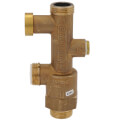
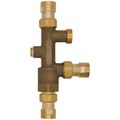
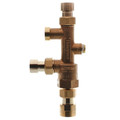
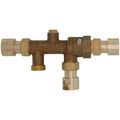
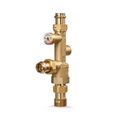
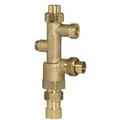


Resideo Braukmann AMX Series DirectConnect mixing valves blend hot and cold water at a set point before it reaches fixtures, keeping delivered water temperature stable even as supply pressure or temperature fluctuates elsewhere in the system. Plumbers specify thermostatic mixing valves like these on domestic hot water systems where a boiler or water heater runs hotter than what's safe to send straight to a shower, lavatory, or hand-washing station. The DirectConnect design integrates union-style fittings into the valve body, letting an installer land supply and outlet lines without sourcing separate adapters or unions on the job. A wax or bimetal thermostatic element inside the valve continuously adjusts the hot and cold water mix to hold the target outlet temperature. Because these valves respond automatically to changes in supply conditions, they reduce the risk of a scalding or uncomfortably cold surge at the fixture. Reliable temperature control also helps a building meet code requirements for maximum hot water delivery temperature at point of use.
Subcategories
- Point-of-Use Mixing Valves: Point-of-use mixing valves install close to an individual fixture, tempering hot water right before it reaches a single sink, shower, or hand-washing station. Plumbers use this configuration when only one or two fixtures need a lower delivery temperature than the rest of the building. Locating the valve near the fixture keeps the tempered run short, which limits both heat loss and the volume of water that has to travel through unmixed hot supply. This setup is common in commercial restrooms with public-facing sinks.
- Central Mixing Valves: Central mixing valves temper hot water for an entire building or a whole branch of the plumbing system rather than a single fixture. Mechanical contractors install these near the water heater or boiler so every downstream fixture on that branch receives water at a consistent, already-tempered supply temperature. A central valve simplifies fixture-level plumbing since individual point-of-use valves aren't needed throughout the building. Multifamily and commercial buildings commonly rely on a central valve to meet code-mandated delivery temperatures across many units.
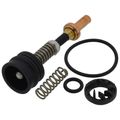
- Replacement Cartridges & Thermostatic Elements: Replacement cartridges and thermostatic elements let a technician service an existing AMX Series valve without removing the whole valve body from the line. Facility maintenance staff replace these components when a valve starts delivering water outside its set range, which is often a sign the thermostatic element has worn out rather than a sign of valve body failure. Keeping the valve body in place and swapping only the internal cartridge also reduces the amount of piping that has to be disturbed during the repair. This approach shortens downtime on domestic hot water systems that can't be shut down for long.
Buying Guide
Selecting a Resideo Braukmann AMX Series DirectConnect mixing valve starts with deciding whether the application calls for point-of-use tempering at a single fixture or central mixing for an entire branch of the building. A single public restroom sink needs a much smaller valve than a central mixing station feeding dozens of apartment units, so matching the valve's flow capacity to the actual fixture count on that line avoids both under- and over-sizing.
Connection type is the next consideration. The DirectConnect design's built-in union fittings save time on the initial install, since a contractor doesn't need to source and thread separate unions onto the valve body. Confirming the valve's connection size matches the existing supply and outlet piping before ordering avoids a mismatch that would otherwise require additional adapters on install day.
Contractors should also plan for future service access. Because these valves rely on an internal thermostatic element that wears over time, installing the valve with enough clearance to remove and replace that cartridge later makes maintenance calls faster. A valve installed in a tight, hard-to-reach location often turns a simple cartridge swap into a much longer job.
Finally, check the valve against the local plumbing code's maximum hot water delivery temperature requirements for the fixture type being served, since public and residential fixtures are often held to different limits. Confirming this before the job starts prevents a costly valve swap during final inspection.
Frequently Asked Questions
What does the DirectConnect design actually add over a standard mixing valve?
The DirectConnect design builds union-style fittings directly into the valve body, so an installer can connect supply and outlet piping without sourcing and threading separate union fittings. This shortens install time and reduces the number of separate parts needed on the job. The internal mixing function of the valve works the same as any other thermostatic mixing valve in the AMX Series.
How does a thermostatic mixing valve respond to a change in incoming water temperature?
A thermostatic element inside the valve expands or contracts as it senses the mixed outlet temperature, adjusting the ratio of hot to cold water flowing through the valve to hold the set point. This happens continuously and automatically, without a technician needing to manually rebalance the valve after a supply temperature swing. That automatic response is what keeps delivered water temperature stable at the fixture.
When should a point-of-use valve be used instead of a central mixing valve?
A point-of-use valve makes sense when only one or a small handful of fixtures need tempered water while the rest of the building runs on unmixed hot supply. A central valve is the better fit when many fixtures across a branch or an entire building all need the same delivery temperature. Central mixing also simplifies code compliance since one valve covers every downstream fixture on that branch.
What's a common sign that the thermostatic element needs to be replaced?
Water delivered outside the valve's set temperature range, either running too hot or too cold at the fixture, is the most common symptom of a worn thermostatic element. This typically develops gradually rather than as a sudden failure, so periodic temperature checks at the fixture help catch it early. Replacing the cartridge or element usually resolves the issue without needing to replace the entire valve body.
Does the valve need to be installed in a specific orientation?
Mixing valves are generally designed to be installed per the flow direction arrows marked on the valve body, and getting that orientation wrong can prevent the valve from mixing correctly. Checking the manufacturer's markings on the valve body during installation avoids this mistake. Clearance around the valve for future cartridge service is also worth planning for at install time.
