




Filters
SORT
Product Availability –
Brand –
Size –
Batteries Included –
Includes –
Review Score –
 --%3E %3Csvg version='1.1' id='Fill' xmlns='http://www.w3.org/2000/svg' xmlns:xlink='http://www.w3.org/1999/xlink' x='0px' y='0px' viewBox='0 0 100 100' enable-background='new 0 0 100 100' xml:space='preserve'%3E %3Cpath fill='%23F15C02' d='M79.44,0.95H20.56C9.78,0.95,0.95,9.78,0.95,20.56v58.87c0,10.79,8.82,19.61,19.61,19.61h58.87 c10.79,0,19.61-8.83,19.61-19.61V20.56C99.05,9.78,90.22,0.95,79.44,0.95z M65.38,58.24l9.38,29.58L49.69,69.78L24.5,87.82 l9.34-29.6L8.8,39.6l30.73-0.17c0,0,6.98-19.61,10-28.93c0.54,1.36,9.88,29.1,9.88,29.1H91.2L65.38,58.24z'/%3E %3C/svg%3E)
Price Range –
Rod Cutters



 --%3E %3Csvg version='1.1' id='No-RB' xmlns='http://www.w3.org/2000/svg' xmlns:xlink='http://www.w3.org/1999/xlink' x='0px' y='0px' viewBox='0 0 100 100' enable-background='new 0 0 100 100' xml:space='preserve'%3E %3Cpath fill='%23CECECE' d='M79.44,0.95H20.56C9.78,0.95,0.95,9.78,0.95,20.56v58.87c0,10.79,8.82,19.61,19.61,19.61h58.87 c10.79,0,19.61-8.83,19.61-19.61V20.56C99.05,9.78,90.22,0.95,79.44,0.95z M65.38,58.24l9.38,29.58L49.69,69.78L24.5,87.82 l9.34-29.6L8.8,39.6l30.73-0.17c0,0,6.98-19.61,10-28.93c0.54,1.36,9.88,29.1,9.88,29.1H91.2L65.38,58.24z'/%3E %3C/svg%3E)
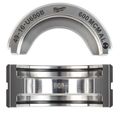
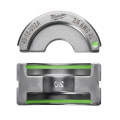
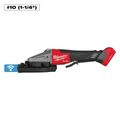
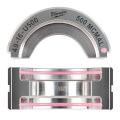
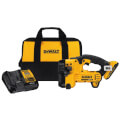

Rod Cutters are power tools built to cut threaded rod cleanly, without the burrs and thread damage a hacksaw or angle grinder tends to leave behind. Cordless models dominate this category, with options like Milwaukee's M18 brushless cutter handling 1/4, 3/8, and 1/2 inch mild steel threaded rod as well as 1/4 and 3/8 inch stainless steel. A rotating four-sided cutting die is a common feature across brands, letting one tool switch between rod sizes without swapping heads. Battery life matters on a job site, and a tool like the M18 cutter delivers 400 or more cuts on 3/8 inch mild steel from a single charge. Plumbers, electricians, and HVAC installers reach for these tools daily when hanging pipe, cable tray, and ductwork from threaded rod, since a clean cut lets a nut thread on immediately without filing or deburring first.
Subcategories
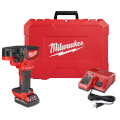
- M18 Cordless Rod Cutters: Milwaukee's M18 brushless rod cutter handles 1/4, 3/8, and 1/2 inch mild steel threaded rod along with 1/4 and 3/8 inch stainless steel. A single charge on an M18 2.0Ah battery delivers 400 or more cuts on 3/8 inch mild steel, enough for a full day of rack and hanger work. Four-sided rotatable cutting dies let one tool cover the full size range without a head swap. Contractors running an all-M18 battery platform pick this option to keep one battery system across the whole tool bag.
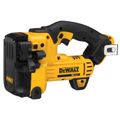
- 20V MAX Cordless Rod Cutters: DeWalt's DCS350B covers the same rod range, cutting 1/4, 3/8, and 1/2 inch mild steel threaded rod plus 1/4 and 3/8 inch stainless steel, on the 20V MAX battery platform. A single charge produces up to 350 cuts on 3/8 inch mild steel. The tool ships bare, so it draws from any battery in DeWalt's broader 20V MAX lineup. Crews already standardized on 20V MAX tools add this cutter without introducing a second battery system.
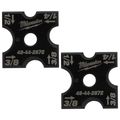
- Replacement and Multi-Size Cutting Dies: Four-sided rotatable cutting dies are the component that lets a single rod cutter body handle multiple rod diameters. Rotating the die to a fresh face restores a clean cutting edge without replacing the whole tool. Crews cutting high volumes of rod across a job wear through one face faster than others, particularly on the smaller stainless steel sizes. Keeping a spare die on hand avoids downtime waiting on a full tool replacement.
Buying Guide
Match the tool to the rod sizes and materials the job actually calls for before comparing brands. Both the Milwaukee M18 and DeWalt 20V MAX cordless options cut 1/4, 3/8, and 1/2 inch mild steel threaded rod along with 1/4 and 3/8 inch stainless steel, so size range alone will not separate the two for most jobs. Battery platform usually decides the choice instead, since a crew already running M18 tools gains little by adding a 20V MAX cutter that needs its own charger and batteries. Cuts per charge is worth checking against the day's expected workload. The M18 cutter is rated for 400 or more cuts on 3/8 inch mild steel per charge, while the 20V MAX model is rated for up to 350, a difference that matters more on high-volume rack and hanger jobs than on light service work. Shopping the Rod Cutters category by cutting die design also pays off, since a four-sided rotatable die lets one tool handle several rod sizes without swapping heads, cutting down on the number of tools a technician has to carry to the job. Stainless steel capacity tends to run lower than mild steel capacity on most models, so confirming the stainless rating specifically matters on jobs involving corrosion-resistant hanger systems. A clean, burr-free cut that lets a nut thread on without filing saves real time across a day of overhead work.
Frequently Asked Questions
What rod sizes can a cordless rod cutter handle?
Both the Milwaukee M18 and DeWalt 20V MAX cordless rod cutters handle 1/4, 3/8, and 1/2 inch mild steel threaded rod along with 1/4 and 3/8 inch stainless steel. Rotating the four-sided cutting die switches the tool between sizes without needing a separate head. Checking a specific model's listed range still matters, since capacity can vary slightly between tools.
How many cuts can I expect from one battery charge?
The Milwaukee M18 brushless rod cutter is rated for 400 or more cuts on 3/8 inch mild steel using an M18 2.0Ah battery. The DeWalt DCS350B is rated for up to 350 cuts on the same rod size using its 20V MAX platform. Actual cuts per charge will run lower on thicker rod or stainless steel compared to 3/8 inch mild steel.
Do these cutters leave a clean thread for nuts to run onto?
Yes, rod cutters are built specifically to produce a clean, burr-free cut that preserves the thread profile. A nut can thread onto the cut end immediately without filing or deburring first, unlike a cut made with a hacksaw or angle grinder. That clean-cut quality is the main reason trades reach for a dedicated rod cutter over general cutting tools.
Can one cutter switch between different rod sizes?
Most cordless rod cutters use a four-sided rotatable cutting die, letting a single tool body handle several rod sizes by rotating the die to a fresh face. Replacing a worn die face restores a clean cut without needing to replace the whole tool. Keeping a spare die on hand helps on jobs cutting high volumes of rod.
Does battery platform matter when choosing a rod cutter?
Battery platform matters more than size range for most crews, since the Milwaukee M18 and DeWalt 20V MAX cutters both cover the same common rod sizes and materials. Choosing the platform a crew already carries avoids adding a second charger and battery system to the truck. Crews without an existing cordless platform can decide based on cuts per charge and other features instead.
