



Runtal



 --%3E %3Csvg version='1.1' id='No-RB' xmlns='http://www.w3.org/2000/svg' xmlns:xlink='http://www.w3.org/1999/xlink' x='0px' y='0px' viewBox='0 0 100 100' enable-background='new 0 0 100 100' xml:space='preserve'%3E %3Cpath fill='%23CECECE' d='M79.44,0.95H20.56C9.78,0.95,0.95,9.78,0.95,20.56v58.87c0,10.79,8.82,19.61,19.61,19.61h58.87 c10.79,0,19.61-8.83,19.61-19.61V20.56C99.05,9.78,90.22,0.95,79.44,0.95z M65.38,58.24l9.38,29.58L49.69,69.78L24.5,87.82 l9.34-29.6L8.8,39.6l30.73-0.17c0,0,6.98-19.61,10-28.93c0.54,1.36,9.88,29.1,9.88,29.1H91.2L65.38,58.24z'/%3E %3C/svg%3E)



 --%3E %3Csvg version='1.1' id='Fill' xmlns='http://www.w3.org/2000/svg' xmlns:xlink='http://www.w3.org/1999/xlink' x='0px' y='0px' viewBox='0 0 100 100' enable-background='new 0 0 100 100' xml:space='preserve'%3E %3Cpath fill='%23F15C02' d='M79.44,0.95H20.56C9.78,0.95,0.95,9.78,0.95,20.56v58.87c0,10.79,8.82,19.61,19.61,19.61h58.87 c10.79,0,19.61-8.83,19.61-19.61V20.56C99.05,9.78,90.22,0.95,79.44,0.95z M65.38,58.24l9.38,29.58L49.69,69.78L24.5,87.82 l9.34-29.6L8.8,39.6l30.73-0.17c0,0,6.98-19.61,10-28.93c0.54,1.36,9.88,29.1,9.88,29.1H91.2L65.38,58.24z'/%3E %3C/svg%3E)
 --%3E %3Csvg version='1.1' id='Half' xmlns='http://www.w3.org/2000/svg' xmlns:xlink='http://www.w3.org/1999/xlink' x='0px' y='0px' viewBox='0 0 100 100' enable-background='new 0 0 100 100' xml:space='preserve'%3E %3Cg%3E %3Cpath fill='%23F15C02' d='M30.05,70.23l3.79-12.01L8.8,39.6l30.73-0.17c0,0,6.98-19.61,10-28.93c0.54,1.36,9.88,29.1,9.88,29.1h1.58 L93.71,7.18c-3.58-3.82-8.66-6.23-14.28-6.23H20.56C9.78,0.95,0.95,9.78,0.95,20.56v58.87c0,5.41,2.22,10.32,5.79,13.88 L30.05,70.23z'/%3E %3C/g%3E %3Cpath fill='%23FBC8B4' d='M93.71,7.18L60.98,39.6H91.2L65.38,58.24l9.38,29.58L49.69,69.78L24.5,87.82l5.55-17.59L6.75,93.32 c3.55,3.54,8.44,5.73,13.82,5.73h58.87c10.79,0,19.61-8.83,19.61-19.61V20.56C99.05,15.4,97.01,10.69,93.71,7.18z'/%3E %3C/svg%3E)


 --%3E %3Csvg version='1.1' id='With-RB' xmlns='http://www.w3.org/2000/svg' xmlns:xlink='http://www.w3.org/1999/xlink' x='0px' y='0px' viewBox='0 0 100 100' enable-background='new 0 0 100 100' xml:space='preserve'%3E %3Cpath fill='%23FBC8B4' d='M79.44,0.95H20.56C9.78,0.95,0.95,9.78,0.95,20.56v58.87c0,10.79,8.82,19.61,19.61,19.61h58.87 c10.79,0,19.61-8.83,19.61-19.61V20.56C99.05,9.78,90.22,0.95,79.44,0.95z M65.38,58.24l9.38,29.58L49.69,69.78L24.5,87.82 l9.34-29.6L8.8,39.6l30.73-0.17c0,0,6.98-19.61,10-28.93c0.54,1.36,9.88,29.1,9.88,29.1H91.2L65.38,58.24z'/%3E %3C/svg%3E)


Runtal is a radiator brand credited with inventing the flat-panel steel radiator in 1953. The brand operates in North America as Runtal North America, Inc., part of Zehnder Group AG, a company headquartered in Switzerland.
Zehnder Group opened a factory in Ward Hill, Massachusetts, to produce welded steel hydronic and electric heating products under the Runtal name. This gives the brand a domestic manufacturing base for the US and Canadian markets. From that original flat-panel design, Runtal has expanded into a full range of hydronic, electric, and steam heating products used across residential and commercial construction.
Product Lines
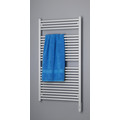
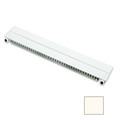
Runtal's catalog spans three heating formats. Hydronic radiators tie into a boiler loop. Electric radiators suit spaces without hydronic piping. Steam radiators suit older or industrial systems still running steam distribution.
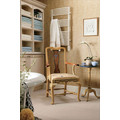
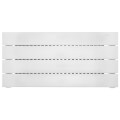
Within each format, panel styles range from slim wall-mounted units suited to tight rooms to larger commercial radiators sized for schools, offices, and institutional buildings. Because all three formats share the same flat-panel design heritage, a contractor can specify a consistent look across a building even when different rooms call for different heating formats.
Why Contractors Specify Runtal
Contractors point to Runtal's manufacturing history, dating back to the original 1953 flat-panel design, as evidence the product line has been refined over decades rather than introduced recently.
Having a US factory in Ward Hill, Massachusetts, means domestic manufacturing supports the American and Canadian markets.
Runtal is used in a wide range of building types, from schools and hospitals to corporate offices. This gives contractors a track record to point to when specifying Runtal for institutional work, not only residential jobs. Offering hydronic, electric, and steam options under one brand also lets a contractor stick with a single manufacturer across mixed-system buildings.
How to Choose Runtal Products
Start by identifying the building's existing heat source, since Runtal offers separate hydronic, electric, and steam radiator lines rather than one universal product.
For hydronic and steam retrofits, match the radiator's connection style and output to the existing boiler loop or steam distribution. Do not assume a direct swap for the old radiator. Electric Runtal radiators fit best in additions or renovated spaces with no hydronic piping run to them.
Building type also matters. School, hospital, and office specifications often call for the commercial radiator sizing and mounting Runtal offers alongside its residential panel lines.
Frequently Asked Questions
When was the Runtal flat-panel radiator invented?
Runtal is credited with inventing the flat-panel steel radiator in 1953.
Who owns the Runtal brand?
Runtal operates in North America as Runtal North America, Inc., part of Zehnder Group AG, which is headquartered in Switzerland.
Where are Runtal radiators manufactured for the US market?
Zehnder Group opened a factory in Ward Hill, Massachusetts, to produce welded steel hydronic and electric heating products under the Runtal brand for the American and Canadian markets.
What types of heating systems does Runtal make radiators for?
Runtal manufactures radiators across three formats: hydronic, electric, and steam heating systems.
What kinds of buildings use Runtal radiators?
Runtal radiators are installed in a range of settings including schools, government buildings, hospitals, corporate offices, libraries, museums, and homes.
