




Ruud Residential Water Heaters

 --%3E %3Csvg version='1.1' id='No-RB' xmlns='http://www.w3.org/2000/svg' xmlns:xlink='http://www.w3.org/1999/xlink' x='0px' y='0px' viewBox='0 0 100 100' enable-background='new 0 0 100 100' xml:space='preserve'%3E %3Cpath fill='%23CECECE' d='M79.44,0.95H20.56C9.78,0.95,0.95,9.78,0.95,20.56v58.87c0,10.79,8.82,19.61,19.61,19.61h58.87 c10.79,0,19.61-8.83,19.61-19.61V20.56C99.05,9.78,90.22,0.95,79.44,0.95z M65.38,58.24l9.38,29.58L49.69,69.78L24.5,87.82 l9.34-29.6L8.8,39.6l30.73-0.17c0,0,6.98-19.61,10-28.93c0.54,1.36,9.88,29.1,9.88,29.1H91.2L65.38,58.24z'/%3E %3C/svg%3E)
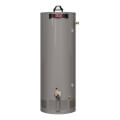
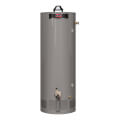
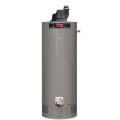

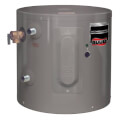


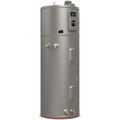
Ruud residential water heaters are gas, electric, and hybrid units built for single family homes, condos, and small multi family properties that need consistent hot water production. Ruud has manufactured water heating equipment for decades, and its residential lineup covers standard atmospheric vent tanks, power vent and direct vent models, and tankless units suited to different fuel types and venting layouts. Contractors working with Ruud equipment can match tank capacity and recovery rate to household size, fixture count, and periods of heavy simultaneous demand such as back to back showers. Choosing between gas and electric models often comes down to what utility connections already exist at the property and what local plumbing and electrical codes require for the space. Venting style matters just as much, since the mechanical room location relative to an exterior wall or existing chimney shapes which configuration installs cleanly. On replacement jobs, matching existing gas line sizing, electrical service, and venting infrastructure keeps a swap straightforward and helps a technician finish in a single visit.
Subcategories
- Gas Water Heaters: Atmospheric vent tank models that draft through a standard chimney or B vent, a common choice for straightforward tank for tank replacements in basements and utility closets with existing gas venting in place.
- Power Vent Water Heaters: Use a built in blower to exhaust through PVC or similar pipe run horizontally or vertically, giving installers flexibility when a home has no usable chimney or when the water heater sits far from an exterior wall.
- Electric Water Heaters: Rely on electric resistance elements instead of a burner and flue, a practical option for homes without gas service or where local code favors electric equipment in a finished living space.
- Hybrid Heat Pump Water Heaters: Pull heat from surrounding air to warm the tank, cutting energy use in conditioned spaces with enough air volume, though they need adequate clearance and ambient temperature to run efficiently.
- Tankless Water Heaters: Heat water on demand rather than storing it, saving floor space and supporting continuous hot water for households that value on demand output over storage capacity.
Buying Guide
Sizing a Ruud residential water heater starts with counting fixtures and estimating peak simultaneous demand rather than picking the largest tank available. A two bathroom home with a single occupant has very different needs than a four bedroom house with teenagers showering back to back, and recovery rate matters as much as tank capacity for the second scenario. Fuel type is usually decided before a contractor gets involved, since it depends on what is already run to the mechanical room, but venting style is where real judgment comes in. A power vent model opens up placement options when a chimney is unavailable or oversized for a smaller gas appliance, while an atmospheric vent unit keeps installation simple when existing venting is sound and properly sized.
Replacement jobs bring their own considerations. Local code may require an expansion tank on the cold supply line, a drain pan under the unit, or updated seismic strapping depending on the jurisdiction, and none of that is optional just because the old unit lacked it. Electrical work matters too: a hybrid heat pump model draws more current than a standard electric tank and may need a dedicated circuit sized for it. Warranty terms differ by tank and component, so contractors should confirm whether the tank, parts, and labor carry the same coverage period before quoting a job, since mismatched warranty lengths are a common source of confusion after installation.
Frequently Asked Questions
How do I know if a power vent or atmospheric vent Ruud water heater is the right fit?
Atmospheric vent units work well when a home already has a properly sized chimney or B vent in good condition. Power vent models make more sense when there is no usable vertical vent, when the water heater sits far from an exterior wall, or when a chimney is oversized for a single smaller appliance.
What size Ruud water heater does a typical single family home need?
Sizing depends on household size and peak simultaneous use, not square footage alone. A household with heavy morning shower overlap needs a higher recovery rate or larger tank than one with staggered usage, so it helps to walk through a typical morning routine with the homeowner before quoting a tank size.
Can an electric Ruud water heater be swapped for a gas model on a replacement job?
It is possible but adds scope, since it usually means running new gas line and adding proper venting where none currently exists. That additional work should be priced and permitted separately from a straightforward like for like swap.
Do hybrid heat pump water heaters need special installation conditions?
Yes. They need enough surrounding air volume to draw heat from efficiently and perform best in spaces that stay above a certain ambient temperature, so a small enclosed closet is usually a poor location without added ventilation.
What should be checked before replacing an old Ruud water heater with a new one?
Confirm the gas line size, venting condition, and electrical service still meet current code requirements, since older installations were sometimes grandfathered under rules that no longer apply to new equipment. An expansion tank or drain pan may also be required now even if the original installation did not have one.
