




SSC Valve Actuators

 --%3E %3Csvg version='1.1' id='No-RB' xmlns='http://www.w3.org/2000/svg' xmlns:xlink='http://www.w3.org/1999/xlink' x='0px' y='0px' viewBox='0 0 100 100' enable-background='new 0 0 100 100' xml:space='preserve'%3E %3Cpath fill='%23CECECE' d='M79.44,0.95H20.56C9.78,0.95,0.95,9.78,0.95,20.56v58.87c0,10.79,8.82,19.61,19.61,19.61h58.87 c10.79,0,19.61-8.83,19.61-19.61V20.56C99.05,9.78,90.22,0.95,79.44,0.95z M65.38,58.24l9.38,29.58L49.69,69.78L24.5,87.82 l9.34-29.6L8.8,39.6l30.73-0.17c0,0,6.98-19.61,10-28.93c0.54,1.36,9.88,29.1,9.88,29.1H91.2L65.38,58.24z'/%3E %3C/svg%3E)

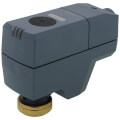
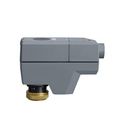
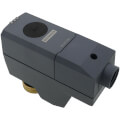

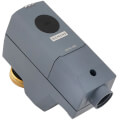
SSC Valve Actuators are Siemens electronic actuators built to drive Powermite MT Series globe valves in hydronic heating and cooling zones. Each actuator operates on a 24V AC or DC supply and accepts a 0 to 10 Vdc control signal to position the valve stem across a 7/32 inch stroke. The lineup includes both spring return and non-spring return models, giving designers a fail-safe option for zones that need to default to a known position on power loss. Contractors pull these into new construction and retrofit jobs where a building automation system needs precise proportional control over hot or chilled water flow rather than simple on/off staging. Because the actuator pairs directly with the Powermite MT valve body, matching stroke and control signal correctly at the design stage keeps zone control accurate and avoids compatibility issues during commissioning.
Subcategories
- Non-Spring Return Actuators: Non-spring return SSC actuators, such as the SSC61U, hold their last commanded position when power is removed rather than driving to a default state. Controls technicians specify these on zones where maintaining the current valve position during a power interruption is acceptable or preferred. These models still operate on a 24V supply with a 0 to 10 Vdc control signal. Non-spring return units are typically the lower-cost option within the SSC line since they omit the internal spring return mechanism.
- Spring Return (Fail-Safe) Actuators: Spring return SSC actuators, including the SSC161.35U and SSC61.5U, drive the valve to a fail-safe position automatically if power or the control signal is lost. Engineers specify these on life-safety or freeze-protection zones where an uncontrolled valve position could cause equipment damage. The fail-safe spring engages within the same 24V, 0 to 10 Vdc control platform used across the SSC series. This configuration adds a layer of protection that non-spring return models do not provide.
- 3-Position Floating Actuators: 3-position floating models, such as the SSC81U and SSC81.5U, use a floating control signal rather than a continuous 0 to 10 Vdc input to drive the valve open, closed, or to hold position. Building automation contractors choose floating control when the control system architecture is set up for that signal type instead of analog proportional control. Both spring return and non-spring return versions exist within the 3-position floating family. These actuators still work with the same Powermite MT Series valve bodies used by the proportional SSC models.
Buying Guide
Begin by confirming the control signal type the building automation system will send to the actuator. SSC Valve Actuators are available in proportional 0 to 10 Vdc versions and in 3-position floating versions, and the two are not interchangeable at the controller without a signal conversion. Selecting the wrong control type at the design stage causes commissioning delays once the actuator and controller are already installed.
Next, decide whether the zone needs spring return or non-spring return operation. Spring return actuators drive the valve to a fail-safe position automatically when power or signal is lost, which matters most on freeze-protection loops, life-safety systems, or any zone where an uncontrolled valve position during an outage could damage equipment. Non-spring return actuators simply hold their last position, which is acceptable on zones where a brief loss of control during a power interruption carries little risk.
Confirm the actuator is being paired with a compatible Powermite MT Series valve body, since the SSC series is built around a 7/32 inch stroke that matches that specific valve line. All SSC models run on a 24V AC or DC supply, so verify the transformer and wiring on site can support the actuator count on a given zone. Finally, check current stocking status before specifying a particular model number, since some SSC actuators in the lineup have been discontinued by the manufacturer and replaced with updated part numbers.
Frequently Asked Questions
What valve bodies do SSC actuators work with?
SSC Valve Actuators are built to drive Powermite MT Series globe valves using a 7/32 inch stroke. Confirming the valve body matches this series before ordering an actuator avoids stroke and compatibility mismatches. The actuator and valve are designed as a matched pair within the Siemens Powermite line.
What is the difference between spring return and non-spring return SSC actuators?
Spring return actuators drive the valve to a fail-safe position automatically if power or the control signal is lost. Non-spring return actuators simply hold their last commanded position instead. Spring return models are the better fit for freeze-protection or life-safety zones where an uncontrolled position during an outage creates risk.
What control signal do SSC Valve Actuators accept?
Most SSC actuators accept a 0 to 10 Vdc proportional control signal on a 24V AC or DC power supply. Some models in the line, like the SSC81U and SSC81.5U, instead use a 3-position floating control signal. Confirming which signal type the building automation controller sends is necessary before ordering, since the two types are not interchangeable without conversion.
Are all SSC actuator models still available?
No, several SSC models have been discontinued by the manufacturer over time and replaced with updated part numbers. Checking current availability before specifying a particular SSC model number on a project avoids delays during procurement. A supplier can confirm the current replacement part number for a discontinued SSC actuator.
What power supply do SSC Valve Actuators require?
SSC Valve Actuators operate on a 24V AC or DC power supply across the entire product line. Verifying the transformer capacity on site against the total actuator count on a zone keeps the control circuit within its rated load. This 24V platform is consistent whether the actuator is a proportional, spring return, or floating control model.
