



Filters
SORT
Product Availability –
Brand –
Horse Power –
Shutoff Head (ft.) –
Voltage –
Flow At 1 FT Head –
Review Score –
 --%3E %3Csvg version='1.1' id='Fill' xmlns='http://www.w3.org/2000/svg' xmlns:xlink='http://www.w3.org/1999/xlink' x='0px' y='0px' viewBox='0 0 100 100' enable-background='new 0 0 100 100' xml:space='preserve'%3E %3Cpath fill='%23F15C02' d='M79.44,0.95H20.56C9.78,0.95,0.95,9.78,0.95,20.56v58.87c0,10.79,8.82,19.61,19.61,19.61h58.87 c10.79,0,19.61-8.83,19.61-19.61V20.56C99.05,9.78,90.22,0.95,79.44,0.95z M65.38,58.24l9.38,29.58L49.69,69.78L24.5,87.82 l9.34-29.6L8.8,39.6l30.73-0.17c0,0,6.98-19.61,10-28.93c0.54,1.36,9.88,29.1,9.88,29.1H91.2L65.38,58.24z'/%3E %3C/svg%3E)
 --%3E %3Csvg version='1.1' id='With-RB' xmlns='http://www.w3.org/2000/svg' xmlns:xlink='http://www.w3.org/1999/xlink' x='0px' y='0px' viewBox='0 0 100 100' enable-background='new 0 0 100 100' xml:space='preserve'%3E %3Cpath fill='%23FBC8B4' d='M79.44,0.95H20.56C9.78,0.95,0.95,9.78,0.95,20.56v58.87c0,10.79,8.82,19.61,19.61,19.61h58.87 c10.79,0,19.61-8.83,19.61-19.61V20.56C99.05,9.78,90.22,0.95,79.44,0.95z M65.38,58.24l9.38,29.58L49.69,69.78L24.5,87.82 l9.34-29.6L8.8,39.6l30.73-0.17c0,0,6.98-19.61,10-28.93c0.54,1.36,9.88,29.1,9.88,29.1H91.2L65.38,58.24z'/%3E %3C/svg%3E)
Price Range –
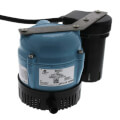
Shallow Pan Condensate Removal Pumps

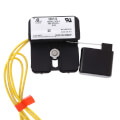


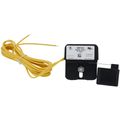

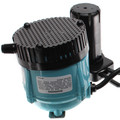

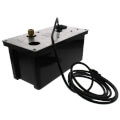

 --%3E %3Csvg version='1.1' id='No-RB' xmlns='http://www.w3.org/2000/svg' xmlns:xlink='http://www.w3.org/1999/xlink' x='0px' y='0px' viewBox='0 0 100 100' enable-background='new 0 0 100 100' xml:space='preserve'%3E %3Cpath fill='%23CECECE' d='M79.44,0.95H20.56C9.78,0.95,0.95,9.78,0.95,20.56v58.87c0,10.79,8.82,19.61,19.61,19.61h58.87 c10.79,0,19.61-8.83,19.61-19.61V20.56C99.05,9.78,90.22,0.95,79.44,0.95z M65.38,58.24l9.38,29.58L49.69,69.78L24.5,87.82 l9.34-29.6L8.8,39.6l30.73-0.17c0,0,6.98-19.61,10-28.93c0.54,1.36,9.88,29.1,9.88,29.1H91.2L65.38,58.24z'/%3E %3C/svg%3E)


Shallow pan condensate removal pumps are compact pumps built to sit inside a low-profile drain pan under a furnace, air handler, or mini split, moving condensate away from equipment installed in tight attic, closet, or crawlspace locations.
Their low reservoir height, often just a couple inches, lets them fit under equipment where a standard condensate pump's taller housing simply won't clear.
A float switch inside the pan activates the pump once condensate reaches a set level and can also shut down the connected equipment if the pump fails, protecting a finished ceiling or floor below from water damage.
Contractors reach for these pumps specifically on retrofit and tight-clearance jobs where relocating the equipment or cutting a gravity drain line isn't practical.
Getting the pan sized correctly for the equipment above it keeps condensate flowing where it's supposed to, which matters most on jobs where a leak would go unnoticed until real damage is done.
Subcategories
- Single-Piece Pan and Pump Units: Single-piece units combine the shallow pan and pump into one assembly, simplifying installation under equipment with limited clearance. Technicians set the whole unit in place, connect the discharge tubing, and wire in the float switch alarm, cutting install time compared to piecing components together. Furnace and air handler retrofits in finished basements commonly use these. Pan dimensions vary by model to match common equipment footprints.
- Replacement Pump Motors: Replacement pump motors let a technician swap out a worn or failed pump without replacing the entire pan assembly, extending the service life of an otherwise sound installation. Motors are rated by flow and lift height, so matching those specs to the original equipment keeps performance consistent. Swapping just the motor saves a return trip for a full unit when only the motor has failed. Many models use a simple twist-lock or bolt-in mount for a quick swap.
- Float Switches and Safety Controls: Float switches sit inside the shallow pan and shut down the connected HVAC equipment if condensate rises above a safe level, typically because the pump has failed or the discharge line is blocked. Contractors treat this as a required safety component rather than an optional add-on, since it's often the only thing standing between a stuck pump and a ceiling leak. Replacement switches are sized to fit the shallow pan's limited depth. Wiring runs directly into the equipment's low-voltage control circuit.
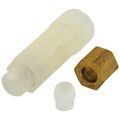
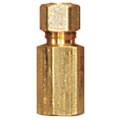
- Discharge Tubing and Fittings: Discharge tubing and fittings route condensate from the pump to a suitable drain point, often running a long horizontal or vertical distance from a tight equipment closet. Technicians choose tubing diameter based on the pump's rated flow and the length of the run, since undersized tubing restricts flow and can trigger nuisance shutoffs. Check valves in the fitting kit keep water from draining back into the pan between pump cycles. Clear tubing options let a tech spot a clog at a glance.
Buying Guide
Choosing a shallow pan condensate removal pump starts with measuring the actual clearance under the equipment, since the entire appeal of these pumps over standard units is their low profile fitting spaces a taller pump can't.
Pump capacity, rated in gallons per hour of lift and maximum vertical lift height, needs to match both the expected condensate volume from the connected equipment and the length of the discharge run to the drain point.
A float switch with an equipment shutoff feature is worth prioritizing on any install above a finished space, since it's the backup that prevents a stuck pump from becoming a ceiling repair.
Noise level matters more on shallow pan condensate removal pumps than on standard condensate pumps because shallow pan installations often sit closer to living space, so checking the manufacturer's sound rating avoids a callback over an audible cycling pump.
Contractors working a mix of retrofit jobs tend to keep a small stock of shallow pan units alongside replacement motors and float switches, since matching an exact discharge configuration on the spot beats a special order when a customer's basement ceiling is already showing water stains.
Reviewing the discharge tubing run length and any elevation changes before selecting a pump avoids undersizing a unit that technically fits the pan but can't handle the actual lift distance required on that particular job.
Frequently Asked Questions
Why use a shallow pan pump instead of a standard condensate pump?
Shallow pan pumps have a lower reservoir height that fits under equipment where a standard pump's taller housing won't clear. They're built specifically for tight attic, closet, or crawlspace installs. Standard pumps remain the better choice whenever clearance isn't a constraint.
What happens if the pump fails?
A float switch inside the pan detects the rising condensate level and shuts down the connected equipment before an overflow occurs. The switch is the main protection against ceiling or floor damage from a failed pump. Replacing the pump promptly restores normal operation.
Can I replace just the pump motor instead of the whole unit?
Many shallow pan systems allow the pump motor to be swapped separately from the pan assembly, provided the replacement motor matches the original's flow and lift specifications. Swapping only the motor saves the cost and labor of replacing an otherwise functional pan. Checking compatibility before ordering avoids a mismatch.
How do I size the discharge tubing correctly?
Tubing diameter should match the pump's rated flow, and longer or more vertical discharge runs generally call for a slightly larger diameter to avoid restricting flow. Undersized tubing can trigger nuisance shutoffs even on a properly functioning pump. The pump manufacturer's specifications list the recommended tubing size for various run lengths.
Are these pumps noisy in a finished space?
Noise levels vary by model, and it's worth checking the manufacturer's sound rating before installing one near living space. Shallow pan pumps sit closer to occupied areas than typical basement or utility room installs, so a quieter model avoids complaints. Mounting the pump on an isolating pad also reduces vibration noise.
