




Filters
SORT
Product Availability –
Fan Diameter –
Horse Power –
Review Score –
 --%3E %3Csvg version='1.1' id='Fill' xmlns='http://www.w3.org/2000/svg' xmlns:xlink='http://www.w3.org/1999/xlink' x='0px' y='0px' viewBox='0 0 100 100' enable-background='new 0 0 100 100' xml:space='preserve'%3E %3Cpath fill='%23F15C02' d='M79.44,0.95H20.56C9.78,0.95,0.95,9.78,0.95,20.56v58.87c0,10.79,8.82,19.61,19.61,19.61h58.87 c10.79,0,19.61-8.83,19.61-19.61V20.56C99.05,9.78,90.22,0.95,79.44,0.95z M65.38,58.24l9.38,29.58L49.69,69.78L24.5,87.82 l9.34-29.6L8.8,39.6l30.73-0.17c0,0,6.98-19.61,10-28.93c0.54,1.36,9.88,29.1,9.88,29.1H91.2L65.38,58.24z'/%3E %3C/svg%3E)
 --%3E %3Csvg version='1.1' id='With-RB' xmlns='http://www.w3.org/2000/svg' xmlns:xlink='http://www.w3.org/1999/xlink' x='0px' y='0px' viewBox='0 0 100 100' enable-background='new 0 0 100 100' xml:space='preserve'%3E %3Cpath fill='%23FBC8B4' d='M79.44,0.95H20.56C9.78,0.95,0.95,9.78,0.95,20.56v58.87c0,10.79,8.82,19.61,19.61,19.61h58.87 c10.79,0,19.61-8.83,19.61-19.61V20.56C99.05,9.78,90.22,0.95,79.44,0.95z M65.38,58.24l9.38,29.58L49.69,69.78L24.5,87.82 l9.34-29.6L8.8,39.6l30.73-0.17c0,0,6.98-19.61,10-28.93c0.54,1.36,9.88,29.1,9.88,29.1H91.2L65.38,58.24z'/%3E %3C/svg%3E)
Price Range –
Shutter Mounted Exhaust Fans

 --%3E %3Csvg version='1.1' id='No-RB' xmlns='http://www.w3.org/2000/svg' xmlns:xlink='http://www.w3.org/1999/xlink' x='0px' y='0px' viewBox='0 0 100 100' enable-background='new 0 0 100 100' xml:space='preserve'%3E %3Cpath fill='%23CECECE' d='M79.44,0.95H20.56C9.78,0.95,0.95,9.78,0.95,20.56v58.87c0,10.79,8.82,19.61,19.61,19.61h58.87 c10.79,0,19.61-8.83,19.61-19.61V20.56C99.05,9.78,90.22,0.95,79.44,0.95z M65.38,58.24l9.38,29.58L49.69,69.78L24.5,87.82 l9.34-29.6L8.8,39.6l30.73-0.17c0,0,6.98-19.61,10-28.93c0.54,1.36,9.88,29.1,9.88,29.1H91.2L65.38,58.24z'/%3E %3C/svg%3E)
 --%3E %3Csvg version='1.1' id='Half' xmlns='http://www.w3.org/2000/svg' xmlns:xlink='http://www.w3.org/1999/xlink' x='0px' y='0px' viewBox='0 0 100 100' enable-background='new 0 0 100 100' xml:space='preserve'%3E %3Cg%3E %3Cpath fill='%23F15C02' d='M30.05,70.23l3.79-12.01L8.8,39.6l30.73-0.17c0,0,6.98-19.61,10-28.93c0.54,1.36,9.88,29.1,9.88,29.1h1.58 L93.71,7.18c-3.58-3.82-8.66-6.23-14.28-6.23H20.56C9.78,0.95,0.95,9.78,0.95,20.56v58.87c0,5.41,2.22,10.32,5.79,13.88 L30.05,70.23z'/%3E %3C/g%3E %3Cpath fill='%23FBC8B4' d='M93.71,7.18L60.98,39.6H91.2L65.38,58.24l9.38,29.58L49.69,69.78L24.5,87.82l5.55-17.59L6.75,93.32 c3.55,3.54,8.44,5.73,13.82,5.73h58.87c10.79,0,19.61-8.83,19.61-19.61V20.56C99.05,15.4,97.01,10.69,93.71,7.18z'/%3E %3C/svg%3E)
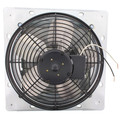


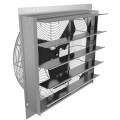
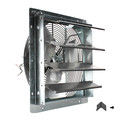
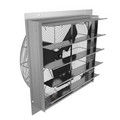
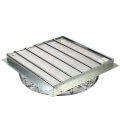
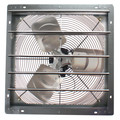
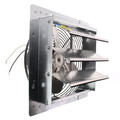
Shutter mounted exhaust fans are wall panel fans built with an integrated shutter that opens under airflow and closes automatically when the fan cycles off, sealing the opening against backdraft, wind, and pests. Contractors specify them for garages, workshops, attics, and utility rooms where a wall or gable opening needs continuous protection whenever the fan isn't running. The shutter blades are typically aluminum or galvanized steel, matched to the housing material for corrosion resistance in damp or exterior-facing installations.
Because the shutter closes passively, these fans don't need a separate backdraft damper accessory, simplifying installation and reducing the number of parts that can fail in the field. Selecting the right size comes down to matching fan CFM to the room's air-exchange requirement and confirming the shutter opening fits the available wall or gable cutout, since an undersized shutter restricts airflow even when the fan itself is rated for the job.
Subcategories
- Direct-Drive Shutter Fans: Direct-drive shutter fans mount the motor directly on the fan shaft, so the blade spins at the same speed as the motor. Contractors favor them for garages and utility rooms because there's no belt to tension or replace, which keeps maintenance calls to a minimum. The tradeoff is a fixed speed unless the fan ships with a multi-speed motor tap.
- Belt-Drive Shutter Fans: Belt-drive shutter fans separate the motor from the blade shaft using a pulley and belt, which lets a single motor size drive multiple blade speeds by swapping pulleys. Contractors use this style in larger workshops and light commercial spaces where quieter operation and adjustable airflow outweigh the added maintenance of periodic belt inspection. The shutter itself operates the same way as on a direct-drive unit, opening under fan pressure and falling closed once airflow stops.
- Wall Mount Shutter Fans: Wall mount shutter fans install through an exterior wall opening, with the shutter housing flush against the siding or sheathing. They're the standard choice for garage and workshop exhaust because the mounting frame accepts standard lumber-frame rough openings. Contractors typically pair them with a matching intake louver on the opposite wall to keep makeup air moving through the space instead of pulling it back through gaps and penetrations.
- Gable Mount Shutter Fans: Gable mount shutter fans install in the triangular gable end of an attic, venting hot, moist air before it builds up under the roof deck. The shutter keeps wind-driven rain and insects out when the fan cycles off, which matters in an unconditioned attic that otherwise has no barrier at that opening. Contractors size these by attic square footage and existing soffit intake, since a gable fan pulling more air than the soffits can supply just short-cycles pulling conditioned air from the living space below.
Buying Guide
Start by calculating the required air exchange for the space, since undersizing a shutter mounted exhaust fan is the most common installation mistake. Garages and workshops generally need enough CFM to exchange the room's air several times per hour, while attic gable applications size off square footage of attic floor rather than room volume. Once the target CFM is set, confirm the physical shutter opening fits the available wall or gable cutout, because a fan rated for the right airflow still underperforms if the shutter's free area is smaller than the duct or housing behind it.
Next, decide between direct-drive and belt-drive motors based on noise tolerance and maintenance capacity. Direct-drive units cost less to install and have fewer parts to service, making them a solid default for garages and utility spaces. Belt-drive units run quieter and offer speed flexibility, which suits workshops or occupied spaces where fan noise is a bigger concern than upfront simplicity.
Material selection matters most in coastal or high-humidity installations: aluminum shutters and housings resist corrosion better than galvanized steel over the long term. Shutter Mounted Exhaust Fans installed without a matching intake louver on the opposite side of the space will struggle to move rated airflow, since the fan can only exhaust as much air as can get in to replace it. Finally, check the fan's electrical requirements against the circuit already run to the location before finalizing a model, since larger belt-drive units often need dedicated 120V or 240V circuits that a garage subpanel may not yet have.
Frequently Asked Questions
What's the difference between a shutter mounted exhaust fan and a standard exhaust fan?
A shutter mounted exhaust fan includes a set of gravity- or spring-loaded blades built into the housing that open when the fan runs and close automatically once it shuts off. A standard exhaust fan without a shutter needs a separate backdraft damper to get the same protection against outside air, wind, and pests entering through the opening when the fan is idle.
Can a shutter mounted exhaust fan be installed without an intake louver?
It can, but airflow will fall short of the fan's rated CFM because the fan can only exhaust as much air as the room can pull back in through existing gaps and penetrations. Pairing the fan with a properly sized intake louver on the opposite wall lets it perform closer to its rated capacity.
How do I know if I need a direct-drive or belt-drive shutter fan?
Direct-drive fans are simpler to maintain and cost less to install, making them the common choice for garages and utility rooms. Belt-drive fans run quieter and allow speed adjustment through pulley changes, which better suits workshops or spaces where noise and airflow control matter more than upfront simplicity.
What maintenance do shutter mounted exhaust fans need?
Direct-drive units mainly need periodic cleaning of the blades and shutter louvers to keep them moving freely, since a sticking shutter won't seal fully when the fan shuts off. Belt-drive units add belt tension checks and eventual belt replacement to that routine.
Are shutter mounted exhaust fans rated for outdoor or exterior wall installation?
Most are designed specifically for exterior wall or gable mounting, with housings and shutters built from aluminum or galvanized steel to handle direct weather exposure. Corrosion resistance varies by housing material, so checking the specific model's exterior rating matters most in coastal or high-humidity environments.
