




Spirotherm Combo Air, Dirt & Hydro Separators

 --%3E %3Csvg version='1.1' id='No-RB' xmlns='http://www.w3.org/2000/svg' xmlns:xlink='http://www.w3.org/1999/xlink' x='0px' y='0px' viewBox='0 0 100 100' enable-background='new 0 0 100 100' xml:space='preserve'%3E %3Cpath fill='%23CECECE' d='M79.44,0.95H20.56C9.78,0.95,0.95,9.78,0.95,20.56v58.87c0,10.79,8.82,19.61,19.61,19.61h58.87 c10.79,0,19.61-8.83,19.61-19.61V20.56C99.05,9.78,90.22,0.95,79.44,0.95z M65.38,58.24l9.38,29.58L49.69,69.78L24.5,87.82 l9.34-29.6L8.8,39.6l30.73-0.17c0,0,6.98-19.61,10-28.93c0.54,1.36,9.88,29.1,9.88,29.1H91.2L65.38,58.24z'/%3E %3C/svg%3E)







 --%3E %3Csvg version='1.1' id='Fill' xmlns='http://www.w3.org/2000/svg' xmlns:xlink='http://www.w3.org/1999/xlink' x='0px' y='0px' viewBox='0 0 100 100' enable-background='new 0 0 100 100' xml:space='preserve'%3E %3Cpath fill='%23F15C02' d='M79.44,0.95H20.56C9.78,0.95,0.95,9.78,0.95,20.56v58.87c0,10.79,8.82,19.61,19.61,19.61h58.87 c10.79,0,19.61-8.83,19.61-19.61V20.56C99.05,9.78,90.22,0.95,79.44,0.95z M65.38,58.24l9.38,29.58L49.69,69.78L24.5,87.82 l9.34-29.6L8.8,39.6l30.73-0.17c0,0,6.98-19.61,10-28.93c0.54,1.36,9.88,29.1,9.88,29.1H91.2L65.38,58.24z'/%3E %3C/svg%3E)




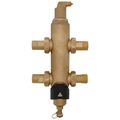
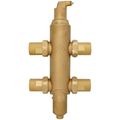
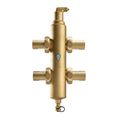
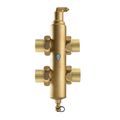
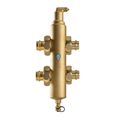
Spirotherm Combo Air, Dirt & Hydro Separators are single-vessel devices that remove entrained air, suspended dirt, and debris from a hydronic heating or cooling loop in one component rather than requiring separate air and dirt separators piped in series. Water entering the vessel slows and changes direction, which lets microbubbles rise out of solution while heavier dirt particles and sediment drop out of suspension into a collection chamber at the bottom. Removing air from a closed loop cuts down on corrosion and noisy circulation, while removing dirt protects pump seals, control valves, and heat exchanger surfaces from abrasive wear. Combining both functions, and often a hydraulic separation function that isolates primary and secondary pumping loops, into one fitting saves mechanical room space and reduces the number of components a contractor has to pipe, insulate, and maintain. Boiler rooms, chiller plants, and larger hydronic systems commonly specify this type of separator during a system upgrade or new install where mechanical room space is limited.
Subcategories
- Threaded Connection Models: Threaded combo separators connect into smaller residential and light commercial hydronic loops using standard pipe threads, which keeps installation simple on systems where a flanged connection would add unnecessary cost and labor. Boiler rooms and mechanical closets with pipe sizes in the smaller residential range are common candidates for this connection style. Contractors specify threaded models on retrofit jobs where matching the existing pipe size and connection style keeps the installation straightforward.
- Flanged Connection Models: Flanged combo separators serve larger commercial and industrial hydronic systems where pipe sizes exceed what a threaded connection can practically support. The flange connection also simplifies future service, since a technician can unbolt and remove the separator for internal cleaning without cutting into the pipe. Mechanical contractors on commercial boiler plant and chiller plant jobs typically specify flanged models to match the rest of the plant's flanged piping.
- Vertical Inline Models: Vertical inline models mount directly in a vertical run of pipe, letting the separator sit in-line with the loop rather than requiring a dedicated horizontal branch. Mechanical rooms with tight floor space but available vertical pipe runs suit this orientation well. Designers favor this configuration on retrofit jobs where rerouting piping to a horizontal branch isn't practical.
- Hydraulic Separation Models: Some combo separators add a hydraulic separation function that decouples a primary boiler or chiller loop from a secondary distribution loop, letting each loop operate at its own flow rate without one pump interfering with the other. Systems with multiple boilers, chillers, or zone pumps commonly use this added function. Engineers specify this configuration on multi-zone commercial systems where independent pump control matters.
Buying Guide
Start with the connection type already in the mechanical room. Threaded connections suit smaller residential and light commercial loops, while flanged connections match the pipe sizes and serviceability expectations of larger commercial and industrial plants.
Size the separator to the system's flow rate, not just the pipe diameter. An undersized separator can restrict flow and add unwanted pressure drop to the loop, while an oversized unit adds cost without improving air and dirt removal performance.
Decide whether the job needs hydraulic separation in addition to air and dirt removal. Systems with multiple boilers, chillers, or zone pumps often benefit from a separator that also decouples primary and secondary loop flow, since that function can simplify pump staging and control logic elsewhere in the design.
Think about orientation and mechanical room layout before specifying a model. Spirotherm Combo Air, Dirt & Hydro Separators come in both horizontal and vertical inline configurations, so match the model to the available pipe run rather than forcing a layout change to fit one orientation.
Plan for service access. A separator with a bottom drain or a removable dirt collection chamber makes periodic cleanout faster, and a flanged unit that can be unbolted for internal inspection saves labor over the life of the system compared to a sealed unit that's harder to service.
Frequently Asked Questions
What does a combo air, dirt, and hydro separator do?
It removes entrained air and suspended dirt from a hydronic loop in one vessel, and on models with a hydraulic separation function, it also isolates a primary loop's flow from a secondary loop's flow. Removing air reduces corrosion and noisy circulation, while removing dirt protects pumps, valves, and heat exchangers from abrasive wear. Combining these functions into one fitting saves mechanical room space compared to piping separate air and dirt separators in series.
Where should a combo separator be installed in a hydronic system?
Most manufacturers recommend installing the separator near the boiler or chiller, typically on the supply side where water temperature and turbulence are highest, since that's where air is most likely to come out of solution. Exact placement should still follow the specific manufacturer's installation guidance for the model being used. Mechanical room layout and available pipe runs often factor into the final placement decision as well.
Do these separators need regular maintenance?
Yes, the dirt collection chamber needs periodic draining or cleanout to remove the sediment and debris it collects over time. How often that service is needed depends on the water quality and how much debris the system generates, so checking the chamber on a regular maintenance schedule catches buildup before it affects performance. A model with easy service access makes this recurring task faster for a maintenance crew.
What's the difference between a threaded and a flanged model?
Threaded models connect with standard pipe threads and suit smaller residential and light commercial systems, while flanged models bolt into larger commercial and industrial piping and simplify future removal for service. The choice usually comes down to the pipe size and connection style already used elsewhere in the mechanical room. Matching the separator's connection type to the rest of the system keeps installation and future service consistent.
Can one separator handle both air removal and hydraulic separation?
Yes, some combo models are built to remove air and dirt while also hydraulically separating a primary loop from a secondary loop, which can simplify pump staging on systems with multiple boilers or zone pumps. Not every combo model includes the hydraulic separation function, so confirming that capability against the system's design requirements before ordering matters. An engineer designing a multi-zone system typically specifies this feature explicitly when it's needed.
