




Filters
SORT
Product Availability –
Horse Power –
Voltage –
Review Score –
 --%3E %3Csvg version='1.1' id='Fill' xmlns='http://www.w3.org/2000/svg' xmlns:xlink='http://www.w3.org/1999/xlink' x='0px' y='0px' viewBox='0 0 100 100' enable-background='new 0 0 100 100' xml:space='preserve'%3E %3Cpath fill='%23F15C02' d='M79.44,0.95H20.56C9.78,0.95,0.95,9.78,0.95,20.56v58.87c0,10.79,8.82,19.61,19.61,19.61h58.87 c10.79,0,19.61-8.83,19.61-19.61V20.56C99.05,9.78,90.22,0.95,79.44,0.95z M65.38,58.24l9.38,29.58L49.69,69.78L24.5,87.82 l9.34-29.6L8.8,39.6l30.73-0.17c0,0,6.98-19.61,10-28.93c0.54,1.36,9.88,29.1,9.88,29.1H91.2L65.38,58.24z'/%3E %3C/svg%3E)
 --%3E %3Csvg version='1.1' id='With-RB' xmlns='http://www.w3.org/2000/svg' xmlns:xlink='http://www.w3.org/1999/xlink' x='0px' y='0px' viewBox='0 0 100 100' enable-background='new 0 0 100 100' xml:space='preserve'%3E %3Cpath fill='%23FBC8B4' d='M79.44,0.95H20.56C9.78,0.95,0.95,9.78,0.95,20.56v58.87c0,10.79,8.82,19.61,19.61,19.61h58.87 c10.79,0,19.61-8.83,19.61-19.61V20.56C99.05,9.78,90.22,0.95,79.44,0.95z M65.38,58.24l9.38,29.58L49.69,69.78L24.5,87.82 l9.34-29.6L8.8,39.6l30.73-0.17c0,0,6.98-19.61,10-28.93c0.54,1.36,9.88,29.1,9.88,29.1H91.2L65.38,58.24z'/%3E %3C/svg%3E)
Price Range –
Supco Hard Start Kits



 --%3E %3Csvg version='1.1' id='Half' xmlns='http://www.w3.org/2000/svg' xmlns:xlink='http://www.w3.org/1999/xlink' x='0px' y='0px' viewBox='0 0 100 100' enable-background='new 0 0 100 100' xml:space='preserve'%3E %3Cg%3E %3Cpath fill='%23F15C02' d='M30.05,70.23l3.79-12.01L8.8,39.6l30.73-0.17c0,0,6.98-19.61,10-28.93c0.54,1.36,9.88,29.1,9.88,29.1h1.58 L93.71,7.18c-3.58-3.82-8.66-6.23-14.28-6.23H20.56C9.78,0.95,0.95,9.78,0.95,20.56v58.87c0,5.41,2.22,10.32,5.79,13.88 L30.05,70.23z'/%3E %3C/g%3E %3Cpath fill='%23FBC8B4' d='M93.71,7.18L60.98,39.6H91.2L65.38,58.24l9.38,29.58L49.69,69.78L24.5,87.82l5.55-17.59L6.75,93.32 c3.55,3.54,8.44,5.73,13.82,5.73h58.87c10.79,0,19.61-8.83,19.61-19.61V20.56C99.05,15.4,97.01,10.69,93.71,7.18z'/%3E %3C/svg%3E)

 --%3E %3Csvg version='1.1' id='No-RB' xmlns='http://www.w3.org/2000/svg' xmlns:xlink='http://www.w3.org/1999/xlink' x='0px' y='0px' viewBox='0 0 100 100' enable-background='new 0 0 100 100' xml:space='preserve'%3E %3Cpath fill='%23CECECE' d='M79.44,0.95H20.56C9.78,0.95,0.95,9.78,0.95,20.56v58.87c0,10.79,8.82,19.61,19.61,19.61h58.87 c10.79,0,19.61-8.83,19.61-19.61V20.56C99.05,9.78,90.22,0.95,79.44,0.95z M65.38,58.24l9.38,29.58L49.69,69.78L24.5,87.82 l9.34-29.6L8.8,39.6l30.73-0.17c0,0,6.98-19.61,10-28.93c0.54,1.36,9.88,29.1,9.88,29.1H91.2L65.38,58.24z'/%3E %3C/svg%3E)
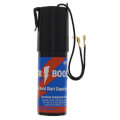
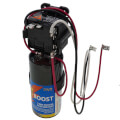
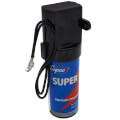

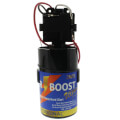
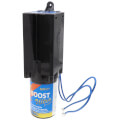

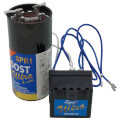

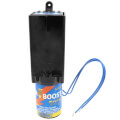
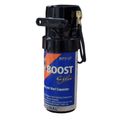

Supco hard start kits give a single phase compressor an extra jolt of starting torque by combining a start capacitor with a relay, helping the compressor overcome high head pressure or a tight mechanical load at the moment it kicks on. Technicians reach for a hard start kit most often on older refrigeration and air conditioning compressors that have begun to struggle on startup, whether from age related wear inside the compressor or from a system that sits under higher than normal pressure between cycles. Rather than replacing a compressor at the first sign of a hard start, a properly matched kit can restore reliable starting and add useful service life to equipment that is otherwise running fine. These kits see steady demand across residential air conditioning, commercial refrigeration, and light industrial equipment because compressor startup issues are common across all of those applications and a hard start kit is a far less expensive fix than a full compressor swap when the diagnosis points to a starting problem rather than a failing motor.
Subcategories
- 3-in-1 Hard Start Kits: Combination kits that bundle a start capacitor, potential relay, and mounting hardware into a single package, sized to common compressor horsepower ranges. These are the most frequently stocked kit style because they cover a wide range of residential and light commercial applications with one part number.
- Start Capacitors: Standalone start capacitors sized by microfarad rating and voltage, used when a technician is replacing only the capacitor portion of an existing hard start setup rather than the full kit. Matching the exact microfarad range specified for the compressor is critical, since an oversized capacitor can damage the start winding.
- Potential Relays: Voltage sensing relays that disconnect the start capacitor from the circuit once the compressor reaches running speed, protecting the start winding from continuous voltage after startup. A failed relay is a common reason a hard start kit stops working even when the capacitor itself tests fine.
- Compressor Saver Kits: Sealed, potted hard start devices designed for tight equipment enclosures where a traditional capacitor and relay combination will not physically fit. These trade some flexibility in application range for a smaller footprint and simpler wiring.
Buying Guide
Matching a hard start kit to the compressor starts with confirming the compressor's horsepower or tonnage rating, since kits are sized to a specific range and an undersized kit will not deliver enough starting torque to solve the problem, while an oversized kit can stress the start winding on a smaller compressor.
Diagnosis should come before parts selection. A compressor that hums but does not start, trips its overload repeatedly, or draws high locked rotor amperage on startup are all signs that point toward a starting issue that a hard start kit can address, but a compressor with worn bearings or a shorted winding will not be fixed by adding starting assistance.
Voltage compatibility matters as much as capacitor sizing, since kits are built for specific voltage ranges and installing one rated for the wrong voltage class can shorten the life of both the kit and the compressor it is meant to help.
Space inside the equipment's electrical compartment can rule out a standard 3-in-1 kit in favor of a more compact, sealed device, particularly on smaller residential condensing units or refrigeration equipment where the relay and capacitor need to fit into a tight enclosure alongside existing wiring.
It is also worth checking whether the equipment manufacturer already restricts or voids warranty coverage for aftermarket hard start devices, since some new equipment under warranty may have specific requirements around adding starting assistance components.
Frequently Asked Questions
What symptoms suggest a compressor needs a hard start kit?
A compressor that hums without starting, trips its overload on startup, or draws unusually high amperage when it first energizes are common signs of a starting issue that a hard start kit is designed to address.
Can a hard start kit fix a compressor with a failing motor winding?
No, hard start kits assist with starting torque and do not repair internal winding damage, so a compressor with a shorted or grounded winding will still need to be replaced regardless of any starting assistance added.
What is the difference between a 3-in-1 kit and a standalone relay or capacitor?
A 3-in-1 kit bundles a start capacitor and potential relay together for a complete replacement, while standalone components are used when only one part of an existing hard start setup has failed and needs replacing.
Why would a potential relay fail even if the capacitor still tests good?
Relays are voltage sensing switches that wear from repeated cycling, so their contacts can fail mechanically or electrically even when the capacitor connected to them still measures within its rated range.
Are hard start kits sized by compressor tonnage or by voltage?
Both matter, since kits are built for a specific horsepower or tonnage range as well as a matching voltage class, and getting either one wrong can result in inadequate starting assistance or added stress on the compressor.
