




Filters
SORT
Product Availability –
Body Pattern –
Size –
Review Score –
 --%3E %3Csvg version='1.1' id='Fill' xmlns='http://www.w3.org/2000/svg' xmlns:xlink='http://www.w3.org/1999/xlink' x='0px' y='0px' viewBox='0 0 100 100' enable-background='new 0 0 100 100' xml:space='preserve'%3E %3Cpath fill='%23F15C02' d='M79.44,0.95H20.56C9.78,0.95,0.95,9.78,0.95,20.56v58.87c0,10.79,8.82,19.61,19.61,19.61h58.87 c10.79,0,19.61-8.83,19.61-19.61V20.56C99.05,9.78,90.22,0.95,79.44,0.95z M65.38,58.24l9.38,29.58L49.69,69.78L24.5,87.82 l9.34-29.6L8.8,39.6l30.73-0.17c0,0,6.98-19.61,10-28.93c0.54,1.36,9.88,29.1,9.88,29.1H91.2L65.38,58.24z'/%3E %3C/svg%3E)
 --%3E %3Csvg version='1.1' id='With-RB' xmlns='http://www.w3.org/2000/svg' xmlns:xlink='http://www.w3.org/1999/xlink' x='0px' y='0px' viewBox='0 0 100 100' enable-background='new 0 0 100 100' xml:space='preserve'%3E %3Cpath fill='%23FBC8B4' d='M79.44,0.95H20.56C9.78,0.95,0.95,9.78,0.95,20.56v58.87c0,10.79,8.82,19.61,19.61,19.61h58.87 c10.79,0,19.61-8.83,19.61-19.61V20.56C99.05,9.78,90.22,0.95,79.44,0.95z M65.38,58.24l9.38,29.58L49.69,69.78L24.5,87.82 l9.34-29.6L8.8,39.6l30.73-0.17c0,0,6.98-19.61,10-28.93c0.54,1.36,9.88,29.1,9.88,29.1H91.2L65.38,58.24z'/%3E %3C/svg%3E)
Price Range –
Taco Air Vents (Hy-Vents)




 --%3E %3Csvg version='1.1' id='Half' xmlns='http://www.w3.org/2000/svg' xmlns:xlink='http://www.w3.org/1999/xlink' x='0px' y='0px' viewBox='0 0 100 100' enable-background='new 0 0 100 100' xml:space='preserve'%3E %3Cg%3E %3Cpath fill='%23F15C02' d='M30.05,70.23l3.79-12.01L8.8,39.6l30.73-0.17c0,0,6.98-19.61,10-28.93c0.54,1.36,9.88,29.1,9.88,29.1h1.58 L93.71,7.18c-3.58-3.82-8.66-6.23-14.28-6.23H20.56C9.78,0.95,0.95,9.78,0.95,20.56v58.87c0,5.41,2.22,10.32,5.79,13.88 L30.05,70.23z'/%3E %3C/g%3E %3Cpath fill='%23FBC8B4' d='M93.71,7.18L60.98,39.6H91.2L65.38,58.24l9.38,29.58L49.69,69.78L24.5,87.82l5.55-17.59L6.75,93.32 c3.55,3.54,8.44,5.73,13.82,5.73h58.87c10.79,0,19.61-8.83,19.61-19.61V20.56C99.05,15.4,97.01,10.69,93.71,7.18z'/%3E %3C/svg%3E)

 --%3E %3Csvg version='1.1' id='No-RB' xmlns='http://www.w3.org/2000/svg' xmlns:xlink='http://www.w3.org/1999/xlink' x='0px' y='0px' viewBox='0 0 100 100' enable-background='new 0 0 100 100' xml:space='preserve'%3E %3Cpath fill='%23CECECE' d='M79.44,0.95H20.56C9.78,0.95,0.95,9.78,0.95,20.56v58.87c0,10.79,8.82,19.61,19.61,19.61h58.87 c10.79,0,19.61-8.83,19.61-19.61V20.56C99.05,9.78,90.22,0.95,79.44,0.95z M65.38,58.24l9.38,29.58L49.69,69.78L24.5,87.82 l9.34-29.6L8.8,39.6l30.73-0.17c0,0,6.98-19.61,10-28.93c0.54,1.36,9.88,29.1,9.88,29.1H91.2L65.38,58.24z'/%3E %3C/svg%3E)

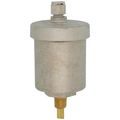
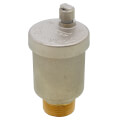
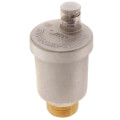
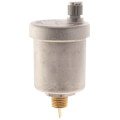
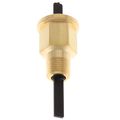
Taco Air Vents, sold under the Hy-Vent name, are automatic air-elimination valves that purge trapped air from closed hydronic heating and cooling systems. Air pockets in a hydronic loop cause noise, reduce heat transfer efficiency, and can lead to pump cavitation over time, so venting that air automatically at the system's high points keeps circulation consistent without a technician manually bleeding the system. The Hy-Vent is rated for a working pressure of about 159.5 psi and a maximum operating temperature of 230°F, covering the pressure and temperature range typical of residential and light commercial hydronic systems. Installation location matters since these vents are designed for the highest point in a system where air naturally accumulates. Taco Comfort Solutions specifically excludes use on steam systems and on loops contaminated with oil or petroleum-based additives, since those conditions can affect the vent's internal float mechanism. Reliable, unattended air elimination is why the Hy-Vent has become a standard specification on hydronic installations.
Subcategories
- Standard Hy-Vent Automatic Air Vents: The standard Hy-Vent mounts at the system's highest point, typically near a boiler, air separator, or the top of a vertical riser, where trapped air collects during normal circulation. A float mechanism inside the vent opens automatically when air accumulates and closes again once the air has been released, requiring no manual intervention from the installer. These vents are sized for typical residential and light commercial hydronic loops. Correct orientation during installation, with the vent mounted vertically, keeps the float mechanism working as designed.
- High-Capacity Hy-Vent Models: Higher-capacity versions handle larger hydronic systems or applications where air introduction is more frequent, such as systems with makeup water additions or larger air separator tanks feeding into the loop. The larger internal volume lets the vent process more air per cycle without needing to open as often. Commercial and multi-zone systems are more likely to specify a higher-capacity model than a single-zone residential install would need. Sizing the vent to the system's air-elimination demand, not just its pipe size, keeps performance consistent.
- Replacement Vent Caps and Repair Kits: Replacement caps and internal repair kits let a contractor service an existing Hy-Vent without replacing the entire body, which stays in the piping. Wear on the float mechanism or cap seal over years of service can cause a vent to weep water or stop venting effectively, and a repair kit addresses that without a full re-plumb. Keeping a small stock of repair parts on hand reduces service time on older systems. Servicing rather than replacing the whole vent also keeps piping connections undisturbed.
Buying Guide
Sizing a Hy-Vent to the system starts with matching its capacity to the volume of air the loop is likely to introduce. A single-zone residential boiler loop typically needs only a standard vent, while larger commercial systems, multi-zone installations, or systems with frequent makeup water additions benefit from a higher-capacity model that can process more air per cycle.
Placement is just as important as capacity. Taco Air Vents (Hy-Vents) are designed to be installed at the system's highest point, where air naturally collects during circulation, and mounting the vent anywhere else significantly reduces how effectively it works. Common placement locations include near the boiler, at an air separator, or at the top of a vertical riser feeding a zone.
Pressure and temperature ratings need to be checked against the system's operating conditions before ordering. Standard Hy-Vent models are rated for roughly 159.5 psi working pressure and up to 230°F, which covers most residential and light commercial hydronic applications, but any system running outside that range needs a vent rated for its actual conditions.
System compatibility is the last check. These vents are built for closed hydronic heating and cooling loops and are not intended for steam systems or loops with oil or petroleum-based additives present, since those conditions can affect the internal float mechanism. Confirming system type before specifying a vent avoids a mismatch that shows up as leaking or unreliable venting after installation.
Frequently Asked Questions
Where should a Hy-Vent be installed in a hydronic system?
Hy-Vents need to be installed at the system's highest point, where trapped air naturally collects during circulation, such as near the boiler, at an air separator, or at the top of a vertical riser. Mounting the vent vertically, as designed, keeps the internal float mechanism working correctly. Installing it at a lower point in the system significantly reduces how much air it can actually remove.
What pressure and temperature can a Hy-Vent handle?
The standard Hy-Vent is rated for a working pressure of about 159.5 psi and a maximum operating temperature of 230°F, which covers most residential and light commercial hydronic systems. Systems operating outside that range need a vent rated for their actual conditions. Checking the system's design pressure and temperature before ordering avoids a mismatch.
Can a Hy-Vent be used on a steam system?
Hy-Vents are built for closed hydronic heating and cooling loops and are specifically not intended for use on steam systems. Steam conditions can affect the internal float mechanism in ways the vent wasn't designed to handle. Systems with oil or petroleum-based additives present should also avoid these vents for the same reason.
How does the automatic air vent know when to open and close?
A float mechanism inside the vent rises and falls with the water level inside the vent body, opening a small valve when air accumulates and pushes the float down, then closing again once the air has vented and water returns. The process happens automatically without any input from a technician. The design is what makes the Hy-Vent suitable for unattended, continuous operation.
When does a Hy-Vent need to be replaced rather than repaired?
Wear on the float mechanism or cap seal after years of service can cause a vent to weep water or stop venting air effectively, and a repair kit can often resolve that without removing the entire body. If the vent body itself is corroded or physically damaged, replacing the whole unit is generally more reliable than attempting a repair. Persistent leaking after a repair kit has been installed is usually a sign the vent needs full replacement.
