



'/%3E%3C/svg%3E)
 --%3E %3Csvg version='1.1' id='Fill' xmlns='http://www.w3.org/2000/svg' xmlns:xlink='http://www.w3.org/1999/xlink' x='0px' y='0px' viewBox='0 0 100 100' enable-background='new 0 0 100 100' xml:space='preserve'%3E %3Cpath fill='%23F15C02' d='M79.44,0.95H20.56C9.78,0.95,0.95,9.78,0.95,20.56v58.87c0,10.79,8.82,19.61,19.61,19.61h58.87 c10.79,0,19.61-8.83,19.61-19.61V20.56C99.05,9.78,90.22,0.95,79.44,0.95z M65.38,58.24l9.38,29.58L49.69,69.78L24.5,87.82 l9.34-29.6L8.8,39.6l30.73-0.17c0,0,6.98-19.61,10-28.93c0.54,1.36,9.88,29.1,9.88,29.1H91.2L65.38,58.24z'/%3E %3C/svg%3E)

Product Highlights


Description
Specs
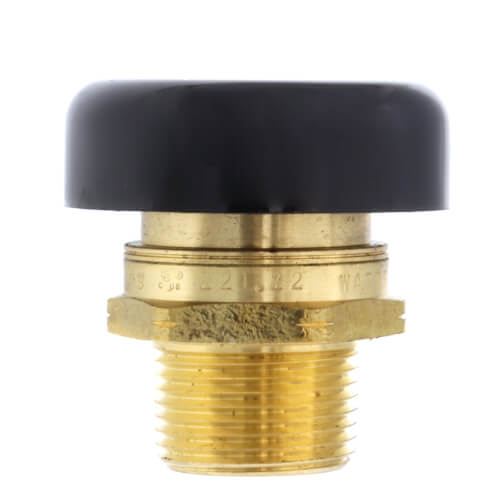
| Size: | 3/4" |
|---|---|
| Connection Type: | MNPT |
| Lead Free: | Yes |
| Max Pressure (PSI): | 200 15 (Steam) |
| Material: | Brass |
| Max Temp (F): | 250°F |
| Width: | 2" |
| Height: | 2" |
| Application: | Plumbing |

Questions?
You May Also Need
Product Reviews
Good product

Works Perfect
 --%3E %3Csvg version='1.1' id='With-RB' xmlns='http://www.w3.org/2000/svg' xmlns:xlink='http://www.w3.org/1999/xlink' x='0px' y='0px' viewBox='0 0 100 100' enable-background='new 0 0 100 100' xml:space='preserve'%3E %3Cpath fill='%23FBC8B4' d='M79.44,0.95H20.56C9.78,0.95,0.95,9.78,0.95,20.56v58.87c0,10.79,8.82,19.61,19.61,19.61h58.87 c10.79,0,19.61-8.83,19.61-19.61V20.56C99.05,9.78,90.22,0.95,79.44,0.95z M65.38,58.24l9.38,29.58L49.69,69.78L24.5,87.82 l9.34-29.6L8.8,39.6l30.73-0.17c0,0,6.98-19.61,10-28.93c0.54,1.36,9.88,29.1,9.88,29.1H91.2L65.38,58.24z'/%3E %3C/svg%3E)
Don't Remove the Cap
Good product
Good product for the money
A cut above the rest
less than 1/2 the price of my local plumbing supply
Great for pool solar heating systems
Exactly what I ordered.
vacuum valve
Product Q&A
2 QuestionsQ: Will this item work on my Mueller Proline brand anti-siphon frost-free sillcock? I accidently left my hose with spray nozzle connected during a hard freeze without draining the hose and now my anti-siphon valve leaks when the sillcock is turned on? It looks to be much sturdier than the existing vacuum breaker on mine.
Asked by heinz 12 years ago
Add your answer
Verified Reply- Supplyhouse Staffit may not, i would use the same one as originally installed.
Hello sir, In regard to the Vacuum Breaker as requested these are quite heavy duty and will allow for a line of plumbing to drain out should a valve be shut off prior to it, and then a valve opened downstream. Think of this like a garden hose with a siphon, once the water is shut off with a proper vacuum breaker the water will drain out completely without causing implosion or, in your case, freezing. I hope this helps, let us know if we can be of further assistance. Thank you, Demian Ashley WQA Certified Water Specialist IV Clean Water Systems & Stores Inc Direct Line***.****Ext 201 www.cleanwaterstore.com <http://www.cleanwaterstore.com/>
First off, I seem to remember that Mueller has a lifetime guarantee on their products, but I could be wrongs about that. Watts markets this product as a Vacuum Relief valve. I used it on my combination hydronic & domestic hot water boiler to protect the internal domestic hot water tank from possible collapse during a sudden vacuum situation. Watts DOES NOT list "sillcock" under the applications for this item. You may want to look at the Vacuum Breakers that Watts has available. Also, I concerned that the Mueller Proline will not disassemble to the point that you could just screw on a new vacuum breaker, but I don't have one to try. Good luck!
Q: My new water heater states: "Install vacuum relief in cold water inlet as required". What is the purpose of this valve? What is the worse that could happen if I didn't install such a valve? My tank is a 50 gal tank.
Asked by Lyndon 14 years ago
Add your answer
Hello PexSupply, The purpose of the vacuum relief valve is to prevent the the collapse of the tank due to atmospheric pressure as the tank is being drained for maintenance. Air must be allowed into the tank to replace the water that is being drained. You can also open an upstairs tap to allow air into the system as the tank is being drained for maintenance. JB
If you lose water pressure on your cold water side, the water in the heater could back-siphon. You could lose pressure if your supply pressure is ever compromised due to a main line break; or, if you shut off the supply-side water for whatever reason (repairs, adding irrigation, etc.), all that hot water in your heater could back-siphon into the supply side of your water line. The vauum relief valve should be installed at the highest elevation on the line that feeds the water heater. Hope this helps.
Direct from the Watts website: "For automatic venting of a closed system to atmosphere when a vacuum is created. The Watts N36-M1 Vacuum Relief Valve permits air to enter and prevent vacuum conditions that could siphon the water from the system, resulting in collapse of a tank or water heater or equipment burn out." I needed it for a combination boiler - both domestic hot water and hydronic heating hot water. I protects the small on-board domestic hot water tank from collapse resulting from a catastrophic piping failure (big leak).
Tank collapses. Is that bad enough? Ignore at your own peril!
Required by what? By local building code somewhere, most likely. The only good use I know of is to aid drain down of the tank by admitting air into the line. But this can be done by opening a cold water valve upstream in the line somewhere. I use 2 of these valves on the lines to my solar hot water collector for drain down purposes. They admit air when the collector drain is opened to allow the water to escape so it won't freeze and rupture the tubing in it on cold winter nights. This is when the input and output valves to and from the collector are closed. A plumber should have more ideas, but I've never seen a need for a vacuum relief valve on standard hot water heater installations that I've put in myself or seen in standard construction.. And: email the heater mfg for clarification. It might even get a specific answer, but probably not. Todd F. Pioneertown, CA.