



'/%3E%3C/svg%3E)
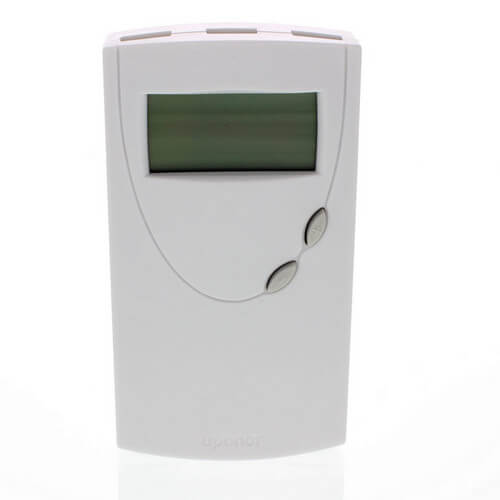
Wirsbo Radiant Thermostat (WT 1), Heat Only, Two-wire
 --%3E %3Csvg version='1.1' id='Fill' xmlns='http://www.w3.org/2000/svg' xmlns:xlink='http://www.w3.org/1999/xlink' x='0px' y='0px' viewBox='0 0 100 100' enable-background='new 0 0 100 100' xml:space='preserve'%3E %3Cpath fill='%23F15C02' d='M79.44,0.95H20.56C9.78,0.95,0.95,9.78,0.95,20.56v58.87c0,10.79,8.82,19.61,19.61,19.61h58.87 c10.79,0,19.61-8.83,19.61-19.61V20.56C99.05,9.78,90.22,0.95,79.44,0.95z M65.38,58.24l9.38,29.58L49.69,69.78L24.5,87.82 l9.34-29.6L8.8,39.6l30.73-0.17c0,0,6.98-19.61,10-28.93c0.54,1.36,9.88,29.1,9.88,29.1H91.2L65.38,58.24z'/%3E %3C/svg%3E)
' fill='%23F15C02' d='M49 0C21.938 0 0 21.938 0 49s21.938 49 49 49 49-21.938 49-49S76.062 0 49 0m0 82.709a7.54 7.54 0 1 1 0-15.08 7.54 7.54 0 0 1 0 15.08m7.54-28.412a7.541 7.541 0 0 1-15.08 0V22.831a7.54 7.54 0 0 1 15.08 0v31.466z'/%3E%3C/svg%3E)
MANUALS (2)
 --%3E %3Csvg version='1.1' id='Half' xmlns='http://www.w3.org/2000/svg' xmlns:xlink='http://www.w3.org/1999/xlink' x='0px' y='0px' viewBox='0 0 100 100' enable-background='new 0 0 100 100' xml:space='preserve'%3E %3Cg%3E %3Cpath fill='%23F15C02' d='M30.05,70.23l3.79-12.01L8.8,39.6l30.73-0.17c0,0,6.98-19.61,10-28.93c0.54,1.36,9.88,29.1,9.88,29.1h1.58 L93.71,7.18c-3.58-3.82-8.66-6.23-14.28-6.23H20.56C9.78,0.95,0.95,9.78,0.95,20.56v58.87c0,5.41,2.22,10.32,5.79,13.88 L30.05,70.23z'/%3E %3C/g%3E %3Cpath fill='%23FBC8B4' d='M93.71,7.18L60.98,39.6H91.2L65.38,58.24l9.38,29.58L49.69,69.78L24.5,87.82l5.55-17.59L6.75,93.32 c3.55,3.54,8.44,5.73,13.82,5.73h58.87c10.79,0,19.61-8.83,19.61-19.61V20.56C99.05,15.4,97.01,10.69,93.71,7.18z'/%3E %3C/svg%3E)
 --%3E %3Csvg version='1.1' id='With-RB' xmlns='http://www.w3.org/2000/svg' xmlns:xlink='http://www.w3.org/1999/xlink' x='0px' y='0px' viewBox='0 0 100 100' enable-background='new 0 0 100 100' xml:space='preserve'%3E %3Cpath fill='%23FBC8B4' d='M79.44,0.95H20.56C9.78,0.95,0.95,9.78,0.95,20.56v58.87c0,10.79,8.82,19.61,19.61,19.61h58.87 c10.79,0,19.61-8.83,19.61-19.61V20.56C99.05,9.78,90.22,0.95,79.44,0.95z M65.38,58.24l9.38,29.58L49.69,69.78L24.5,87.82 l9.34-29.6L8.8,39.6l30.73-0.17c0,0,6.98-19.61,10-28.93c0.54,1.36,9.88,29.1,9.88,29.1H91.2L65.38,58.24z'/%3E %3C/svg%3E)

Product Highlights


Description
- When it comes to radiant heating systems, not just any thermostat will do. That's why professional installers choose Wirsbo Radiant Thermostats. They are the first thermostats designed specifically for radiant floor heating.
- Why a special thermostat for radiant floor heating? The dynamics of a radiant heating system differ from typical baseboard or warm air heating systems. Radiant systems always heat objects and mass, and need to be addressed differently than conventional thermostat logic.
- The Wirsbo Thermostats offer two different control methods to handle this condition--differential and pulse-width modulation. Differential--When the measured room temperature falls 1F (0.5C) below the desired room setting, the control devices wired to the thermostat turns on.
- Pulse-width Modulation--When the condition exists where the room temperature is 1 to 3F (0.5 to 1.5 C) below the room setting, the thermostat manages the on-and-off cycle using pulse width modulation. The on-and-off times vary depending on the difference between the room and set temperatures. The farther away the room temperature is from setpoint, the longer the on time. This prevents the room temperature from rising above the set temperature. The heating system runs continually at room temperature differences greater than 3 degrees F below setpoint.
- These thermostats also feature digital filtering. This means that the thermostat measure the room temperature continuously. The thermostat's sensor detects even the smallest change, making it better able to react to a room's changing conditions. If all the room's temperatures were displayed as they are sensed, the temperatures shown would appear erratic and inconsistent. Filtering works by averaging the sensed values to ensure a smooth operation and display.
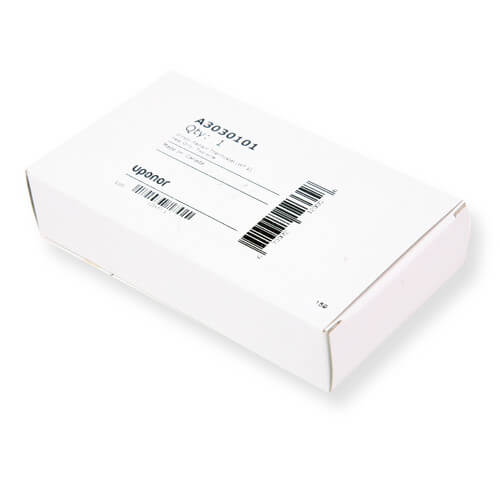
- Wirsbo offers three thermostat models: Heat Only (A3030101), Heat and Cool (A3030102) and Heat Only, Three-wire (A3030103). The Heat Only (A3030101) and Heat and Cool (A3030102) thermostats are designed to operate in heating mode over two wires. These types of thermostats obtain their power for operation from taking voltage from the connected wiring. Different from other industry power-sharing thermostats, these eliminate any need for a third wire or battery, which makes the thermostats simple to install, wire and service.
- And for those times when the two-wire thermostats aren't appropriate because of incompatibility with some third-party devices, Wirsbo also offers the Heat Only, Three-wire (A3030103).
- No matter which thermostat you use, when you're selling radiant, you're selling comfort, The Wirsbo Radiant Thermostats feature special built-in software that provides the ultimate control that standard thermostats--when used with radiant heat--simply cannot. There's no overshoot, no undershoot--just constant, even comfort. Your customers will love the distinctive design and easy-on-the-eyes readout. But most of all, they will love the true radiant comfort only Wirsbo Radiant Thermostats provide!
Specs
| Application: | Heat Only |
|---|---|
| Stages: | 1 Heat |
| Programmability: | Non-Programmable |
| User Interface: | Push Button |
| Mount: | Vertical |
| Power Method: | Hardwired |
| Voltage: | 24V Low voltage |
| Operating Voltage: | 24 VAC +/-10% |
| Wiring: | Two-Wire |
| Color: | White |
| Height: | 5" |
| Length: | 2.72" |
| Depth (Inches): | 0.91" |
| Max. Load: | 1.3A at 24 VAC |
| Display Range: | 32 to 99°F |
| Resolution: | 1° Displayed 0.25° Calculated |

Questions?
Product Reviews
Most Liked Positive Review
Very satisfied
Most Liked Negative Review
no backlight
Good thermostat but...

Good product that I needed and I bought it again yesterday.
Was the exact model we have had since 2001 in our home.
Well worth the investment
Using for Geothermal Radiant Heating
Great Product, simple install
Radiant radiant
easy to install and works just the way it is advertised
wire up and go (simple-dimple)
Works fine.... But
Product Q&A
38 QuestionsQ: Can I use this thermostat with baseboard heaters that are water fed.
Asked by Ken 11 years ago
Add your answer
Verified Reply- SupplyHouse StaffYes, this thermostat may be used on a 24 volt Hydronic heating system with two-wire connection. This thermostat takes power from the wiring, which eliminates the need for any battery or third wire. This thermostat is not approved for use with any forced air heating systems.
Q: The temperature is set to 19 celcious around the house but the interior temperature is actually 23 celcious. other than selecting the temperature I want is there a way to program it?
Asked by seamair 11 years ago
Add your answer
Verified Reply- SupplyHouse StaffThis is a non-programmable thermostat so there would not be a way to set a schedule for the thermostat.
Q: I just installed the Wirsbo Radiant Thermostat and it seems to run constantly until it reaches the programmed temp and then it shuts down. I thought the benefit of this thermostat was that it would run intermittently (PWM) until it reaches desired temp. Is there something I need to do programming-wise?
Asked by Chad 11 years ago
Add your answer
It may look like it is running constantly when in fact is running intermittently once it reaches within about two degrees of the desired temperature. When there is more then about a two degree deference between the desired temperature and the actual temperature it will generally run continuously in order to reach the desired temperature more quickly. The little lines symbolizing heat radiating from the floor symbol (located on the display of the thermostat) only indicate that the thermostat is sensing that the temperature is below the desired temperature and not that the circulating pumps are constantly on. So, this symbol will be active for the entire time that the thermostat is sensing the low heat condition and not symbolizing that the circulating pumps are constantly on. Generally it will be cycling the pumps on and off when the temperature is getting close, and yet the symbol will be active until the desired temperature is reached. The two that I have installed in my house maintain the room temperature very well, and generally doesn't let the room fall more then one degree lower then is set for very long. If the thermostat senses that the temperature is continuing to drop it will turn the circulating pump(s) on for a longer duration. Depending on how fast the temperature is rising or dropping, the thermostat will regulate the on off time accordingly. The only true way to know the duration of the cycle when the thermostat is actively calling for heat would be to physically check the circulating pump(s).
I'm not an installer or expert but I have 3 of these in use for different applicatiins and all 3 operate the same way: when temp falls a degree or two below the setpoint they call for heat until you reach the desired temp. Not sure why you would want it to run intermittently. An infloor closed loop system is probably more efficient if it runs on a more continuous basis. Sent from my U.S. Cellular® Smartphone
Q: I have an approximately 20 year old Wirsbo thermostat (number on inside says 9845) that is not working. Can I replace it with this model?
Asked by Olivia 12 years ago
Add your answer
I did replace my old ones with this model and it worked although you need to make sure the current is the same. The wiring is a bit tedious but I suppose most items this small will be. Jerry
Q: What type of battery is used in the heat only system?
Asked by Mike 12 years ago
Add your answer
Verified Reply- SupplyHouse StaffThis thermostat is hardwired and is designed to operate in heating mode over two wires. These types of thermostats obtain their power for operation from taking voltage from the connected wiring. These eliminate any need for a third wire or battery, which makes the thermostats simple to install, wire and service.
Q: Is there any way to disable the freeze protection feature?
Asked by Ken 12 years ago
Add your answer
Verified Reply- SupplyHouse StaffNo, the freeze protection feature cannot be deactivated. The automatic protection will engage the heating circuit at 38 deg. F. and disengage it at 39 deg. F.
Q: Can this be wired to turn on 2 to 4 zones on with the one stat all zones are in the same "big open room". I have a brand new all "uponor" system btw...it would seem like a waste to have to buy 4 of these all for the same room...
Asked by atvalaska 12 years ago
Add your answer
Yes, you could control multiple zones with one thermostat, which would mostly make sense if all the zones were near the thermostat temp measuring point (which it sounds like this is the case). You will just need to connect all the solenoid valves for those zones in parallel, and connect them to a single control relay. The thermostat would then trigger the control relay (that how I have set my system up, but I used separate circulation pumps instead of relays since the pumps were nearly the same price as the relays). Hope this helps Rob
Q: Is this thermostat compatible with a Taco SR504-EXP-4 switching relay control? If not, is there a way to make them work together??
Asked by pete 12 years ago
Add your answer
Verified Reply- SupplyHouse StaffThey should be compatible, although you may need a 1k ohm resistor between the W and common connections.
It will work just fine with it.
Yes, it is. I have this thermostat connected to a Taco 3 zone relay and single zone relay in 2 different installations. No problem, super easy.
Yes, I had a problem of the thermostat constantly calling for heat. Spoke with an Uponor tech and was told that Taco changed some internal wiring in the SR504 exp. If there is a minute amount of voltage a resistor(included with the tstat) should be installed on the Taco effected tstat connection. the resistor should be installed between the "W" terminal and the "C" terminal on the Taco SR504
No. I purchased this based on other answers that said they are compatible. Counldn't get it to work (regardless of t-stat setting, it was always sending heat), so I called Uponor. Tech support at Uponor advised that it isn't a directly compatible match. While that do supply a resistor that MIGHT make it work, they stated that it isn't recommended, and done incorrectly, could damage the Taco controller, which would void its warranty. As the technician at Uponor said ..."the Taco controller is a lot more expensive then and compatible T-stat". I'll be trying the Tekmar 518 or 519 now.
Q: i have wisbro system and the original installation used Setpoint 501s thermostats. will this radiant thermostat (WT 1) work with the system , need to replace one of the original units
Asked by philip 13 years ago
Add your answer
I believe that it should work. It worked well for me.
I am not directly familiar with the Setpoint 501s, but it seems to sense floor temp in addition to air temp (4 wire). The WT1 is a 2 wire stat sensing air temp only, so it would seem to have less functionality. I would recommend replacing the 501s with another 501s--these radiant systems are fussy enough without introducing other variables.
Q: I am installing Joist Trak for an underfloor radiant system and am wondering if this thermostat is a good idea? It seems that it is orientated more towards high thermal mass systems, not sure if it will work well with low thermal mass radiant systems?
Asked by Chad 13 years ago
Add your answer
Any thermal mass can suffer from being shocked with too rapid rate of heat rise.
I think I have the same situation - radiant system stapled up under wood subfloor, then engineered floor above that. It has been running for two winters now and works fine.
I have used this and while it is simple it works well. It's an air temp thermostat, different from two others I have that are floor thermostats. I use it in a mixed application, as the basement room it is in also has HVAC but when it gets cold, and I want to be in the room (my office) there is no problem with communicating to the radiant supply. Worth the price and simple to install. Of course you'll need the additional switch to communicate with the pump, but I liked it in the install as it is low voltage so I did not need to run full current all the way to the thermostat.