




Filters
SORT
Product Availability –
Product Type –
Voltage –
Review Score –
 --%3E %3Csvg version='1.1' id='Fill' xmlns='http://www.w3.org/2000/svg' xmlns:xlink='http://www.w3.org/1999/xlink' x='0px' y='0px' viewBox='0 0 100 100' enable-background='new 0 0 100 100' xml:space='preserve'%3E %3Cpath fill='%23F15C02' d='M79.44,0.95H20.56C9.78,0.95,0.95,9.78,0.95,20.56v58.87c0,10.79,8.82,19.61,19.61,19.61h58.87 c10.79,0,19.61-8.83,19.61-19.61V20.56C99.05,9.78,90.22,0.95,79.44,0.95z M65.38,58.24l9.38,29.58L49.69,69.78L24.5,87.82 l9.34-29.6L8.8,39.6l30.73-0.17c0,0,6.98-19.61,10-28.93c0.54,1.36,9.88,29.1,9.88,29.1H91.2L65.38,58.24z'/%3E %3C/svg%3E)
Price Range –
ZoneFirst


 --%3E %3Csvg version='1.1' id='No-RB' xmlns='http://www.w3.org/2000/svg' xmlns:xlink='http://www.w3.org/1999/xlink' x='0px' y='0px' viewBox='0 0 100 100' enable-background='new 0 0 100 100' xml:space='preserve'%3E %3Cpath fill='%23CECECE' d='M79.44,0.95H20.56C9.78,0.95,0.95,9.78,0.95,20.56v58.87c0,10.79,8.82,19.61,19.61,19.61h58.87 c10.79,0,19.61-8.83,19.61-19.61V20.56C99.05,9.78,90.22,0.95,79.44,0.95z M65.38,58.24l9.38,29.58L49.69,69.78L24.5,87.82 l9.34-29.6L8.8,39.6l30.73-0.17c0,0,6.98-19.61,10-28.93c0.54,1.36,9.88,29.1,9.88,29.1H91.2L65.38,58.24z'/%3E %3C/svg%3E)
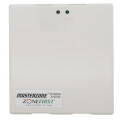
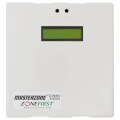
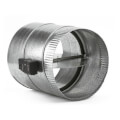

ZoneFirst is a manufacturer of HVAC zoning systems, zone dampers, zone control panels, and fresh air ventilation products for residential and commercial heating and cooling applications. ZoneFirst traces its origins to the 1950s, when the company's founders developed the first automatic motorized dampers for residential HVAC zoning. The company was formally established as Trolex Corporation in 1964 and has operated under the ZoneFirst name after re-entering the market in the 2000s following a period under Honeywell ownership. ZoneFirst Plug-in-Play zone dampers use 12VDC motors that consume 80 percent less energy than standard 24-volt zone damper motors. ZoneFirst offers a lifetime warranty on Plug-in-Play dampers, motors, and boards. HVAC contractors specify ZoneFirst where multi-zone comfort control, energy savings, and simplified damper wiring are the primary installation requirements.
ZoneFirst Product Lines
Plug-in-Play Zone Dampers
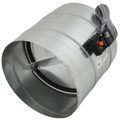
ZoneFirst Plug-in-Play zone dampers use 12VDC motors and barometric bypass damper technology to relieve excess duct static pressure in HVAC zoning systems without a separate bypass damper installation. The Plug-in-Play design simplifies field wiring by using a single multi-conductor cable that plugs directly into the zone control panel, eliminating individual wire connections for each damper at the panel. The 12VDC motor technology consumes 80 percent less energy than standard 24-volt zone damper motors, reducing parasitic electrical load in the zoning system. ZoneFirst Plug-in-Play dampers carry a lifetime warranty on the damper, motor, and board assembly. They are available in multiple round and rectangular duct sizes to cover residential and light commercial ductwork configurations.
Zone Control Panels
ZoneFirst zone control panels manage the zone dampers, thermostats, and equipment sequencing in multi-zone HVAC systems. The MDP3 (Ver. 04) is ZoneFirst's primary universal zone control panel, supporting Plug-in-Play damper wiring and accommodating multiple zone configurations. The MDPA2 (Ver. 04) is a 2-zone adder panel that expands an existing ZoneFirst system from its base zone count to additional zones without replacing the primary control panel. Zone control panels from ZoneFirst handle the equipment staging, zone priority, and bypass management logic required for multi-zone HVAC operation. ZoneFirst control panels carry a 5-year warranty, distinct from the lifetime warranty on the Plug-in-Play dampers.
Fresh Air Ventilation Products
ZoneFirst fresh air ventilation products include CO2 demand-controlled ventilation dampers, ventilation controllers, and makeup air dampers for residential and commercial HVAC systems. CO2 demand-controlled ventilation dampers open when indoor CO2 concentration rises above the set point, bringing in outdoor air to restore acceptable indoor air quality. Makeup air dampers provide controlled outdoor air introduction for exhaust-balanced ventilation in tight residential construction. ZoneFirst fresh air products integrate with ZoneFirst zone control panels and standard HVAC control wiring, allowing ventilation to be managed as part of the overall zoning system. Where zone dampers control comfort temperature zoning, ZoneFirst fresh air products control indoor air quality and ventilation.
Why Contractors Specify ZoneFirst
HVAC contractors specify ZoneFirst because the Plug-in-Play zone damper system substantially reduces field wiring time compared to traditional individually-wired zone damper installations. The 12VDC Plug-in-Play motor technology delivers 80 percent lower energy consumption than 24-volt motors, reducing the operating energy cost of the zoning system over its service life. The lifetime warranty on ZoneFirst Plug-in-Play dampers, motors, and boards reduces replacement risk for contractors and building owners over the life of the installation. ZoneFirst was the first company to develop and market HVAC zoning systems in the 1950s and introduced several industry firsts including automatic dampers, centralized zone controllers, and heat pump zoning. ZoneFirst products are available through HVAC supply distributors including SupplyHouse.
How to Choose a ZoneFirst Product
The primary selection variable for a ZoneFirst system is zone count. The ZoneFirst MDP3 universal zone control panel handles multi-zone applications; additional zones beyond the base panel capacity can be added with the MDPA2 adder panel. ZoneFirst zone control panels support from 2 to 12 zones in expandable configurations, covering single-family residential through larger multi-zone commercial applications.
The second variable is duct size. ZoneFirst Plug-in-Play zone dampers are available in round and rectangular duct sizes to match the existing ductwork at each zone branch. Measure the duct diameter or rectangular duct dimensions at the branch point for each zone before ordering ZoneFirst dampers. Confirm the damper size matches the duct opening, as oversized or undersized dampers will not seal effectively.
For fresh air integration, confirm whether the application requires CO2 demand-controlled ventilation (commercial or high-occupancy residential) or simple makeup air damper control (standard residential). CO2 dampers require a CO2 sensor input to the ZoneFirst controller; makeup air dampers operate on a simpler control logic tied to the HVAC fan status. Match the ZoneFirst fresh air product to the ventilation strategy specified for the project.
FAQs
When was ZoneFirst founded and what is its history?
ZoneFirst traces its origins to the 1950s when Richard (Dick) Foster developed the first automatic motorized dampers. The company was formally established as Trolex Corporation in 1964 and operated under the Trol-A-Temp brand before Honeywell acquired it in 1999. The company re-entered the market as Zone-A-Trol in 2004 and subsequently adopted the ZoneFirst name.
What warranty does ZoneFirst offer on its zone dampers and control panels?
ZoneFirst offers a lifetime warranty on Plug-in-Play zone dampers, motors, and boards. All other ZoneFirst products, including zone control panels and BLISS system components, carry a 5-year warranty. Confirm warranty terms with your ZoneFirst distributor or at zonefirst.com.
What is the difference between ZoneFirst Plug-in-Play dampers and standard zone dampers?
The difference between ZoneFirst Plug-in-Play dampers and standard zone dampers is the motor technology and wiring interface. Plug-in-Play dampers use 12VDC motors that consume 80 percent less energy than standard 24-volt motors and connect to the control panel via a single plug-in cable rather than individual wired connections. Standard zone dampers use 24-volt motors and require individual wire connections at the panel for each damper. Plug-in-Play dampers also carry a lifetime warranty versus standard panel and component warranties.
How many zones can a ZoneFirst system support?
ZoneFirst zone control systems can support from 2 to 12 zones using the MDP3 universal zone control panel combined with MDPA2 adder panels. The base MDP3 panel handles a set number of zones; additional MDPA2 adder panels expand capacity in 2-zone increments up to 12 total zones. Confirm the base and adder panel configuration with ZoneFirst documentation at zonefirst.com for the specific system capacity required.
Are ZoneFirst zone dampers compatible with heat pump systems?
ZoneFirst zone control systems are compatible with heat pump HVAC equipment. ZoneFirst introduced heat pump zoning capability as an industry first in the early 1970s. ZoneFirst zone control panels include logic for managing heat pump equipment staging and emergency heat sequencing in zoned applications. Confirm the specific ZoneFirst panel model includes heat pump compatibility for the heat pump system configuration at the installation site.
What is ZoneFirst CO2 demand-controlled ventilation?
ZoneFirst CO2 demand-controlled ventilation uses a CO2 sensor to monitor indoor carbon dioxide concentration and opens a fresh air damper when CO2 levels rise above the ventilation set point, bringing in outdoor air to restore indoor air quality. CO2 demand control is appropriate for commercial spaces and high-occupancy residential applications where occupancy levels vary and fixed-volume ventilation may be insufficient during peak occupancy or wasteful when the space is unoccupied.
