




50 Gallon Indirect Water Heaters

 --%3E %3Csvg version='1.1' id='Fill' xmlns='http://www.w3.org/2000/svg' xmlns:xlink='http://www.w3.org/1999/xlink' x='0px' y='0px' viewBox='0 0 100 100' enable-background='new 0 0 100 100' xml:space='preserve'%3E %3Cpath fill='%23F15C02' d='M79.44,0.95H20.56C9.78,0.95,0.95,9.78,0.95,20.56v58.87c0,10.79,8.82,19.61,19.61,19.61h58.87 c10.79,0,19.61-8.83,19.61-19.61V20.56C99.05,9.78,90.22,0.95,79.44,0.95z M65.38,58.24l9.38,29.58L49.69,69.78L24.5,87.82 l9.34-29.6L8.8,39.6l30.73-0.17c0,0,6.98-19.61,10-28.93c0.54,1.36,9.88,29.1,9.88,29.1H91.2L65.38,58.24z'/%3E %3C/svg%3E)
 --%3E %3Csvg version='1.1' id='Half' xmlns='http://www.w3.org/2000/svg' xmlns:xlink='http://www.w3.org/1999/xlink' x='0px' y='0px' viewBox='0 0 100 100' enable-background='new 0 0 100 100' xml:space='preserve'%3E %3Cg%3E %3Cpath fill='%23F15C02' d='M30.05,70.23l3.79-12.01L8.8,39.6l30.73-0.17c0,0,6.98-19.61,10-28.93c0.54,1.36,9.88,29.1,9.88,29.1h1.58 L93.71,7.18c-3.58-3.82-8.66-6.23-14.28-6.23H20.56C9.78,0.95,0.95,9.78,0.95,20.56v58.87c0,5.41,2.22,10.32,5.79,13.88 L30.05,70.23z'/%3E %3C/g%3E %3Cpath fill='%23FBC8B4' d='M93.71,7.18L60.98,39.6H91.2L65.38,58.24l9.38,29.58L49.69,69.78L24.5,87.82l5.55-17.59L6.75,93.32 c3.55,3.54,8.44,5.73,13.82,5.73h58.87c10.79,0,19.61-8.83,19.61-19.61V20.56C99.05,15.4,97.01,10.69,93.71,7.18z'/%3E %3C/svg%3E)


 --%3E %3Csvg version='1.1' id='With-RB' xmlns='http://www.w3.org/2000/svg' xmlns:xlink='http://www.w3.org/1999/xlink' x='0px' y='0px' viewBox='0 0 100 100' enable-background='new 0 0 100 100' xml:space='preserve'%3E %3Cpath fill='%23FBC8B4' d='M79.44,0.95H20.56C9.78,0.95,0.95,9.78,0.95,20.56v58.87c0,10.79,8.82,19.61,19.61,19.61h58.87 c10.79,0,19.61-8.83,19.61-19.61V20.56C99.05,9.78,90.22,0.95,79.44,0.95z M65.38,58.24l9.38,29.58L49.69,69.78L24.5,87.82 l9.34-29.6L8.8,39.6l30.73-0.17c0,0,6.98-19.61,10-28.93c0.54,1.36,9.88,29.1,9.88,29.1H91.2L65.38,58.24z'/%3E %3C/svg%3E)


 --%3E %3Csvg version='1.1' id='No-RB' xmlns='http://www.w3.org/2000/svg' xmlns:xlink='http://www.w3.org/1999/xlink' x='0px' y='0px' viewBox='0 0 100 100' enable-background='new 0 0 100 100' xml:space='preserve'%3E %3Cpath fill='%23CECECE' d='M79.44,0.95H20.56C9.78,0.95,0.95,9.78,0.95,20.56v58.87c0,10.79,8.82,19.61,19.61,19.61h58.87 c10.79,0,19.61-8.83,19.61-19.61V20.56C99.05,9.78,90.22,0.95,79.44,0.95z M65.38,58.24l9.38,29.58L49.69,69.78L24.5,87.82 l9.34-29.6L8.8,39.6l30.73-0.17c0,0,6.98-19.61,10-28.93c0.54,1.36,9.88,29.1,9.88,29.1H91.2L65.38,58.24z'/%3E %3C/svg%3E)





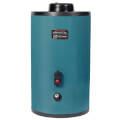
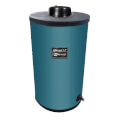
50 gallon indirect water heaters are storage tanks that use a boiler's heating loop, rather than a dedicated gas burner or electric element, to heat and store domestic hot water. A coil or internal heat exchanger inside the tank draws hot boiler water through it, transferring heat to the potable water without the two ever mixing. Hydronic heating contractors install this size most often in mid-size homes already running a boiler for space heating, since pairing water heating with an existing heat source is more efficient than running a separate standalone unit. A 50 gallon tank strikes a middle ground between smaller units that run short on recovery during heavy use and larger tanks that take up more mechanical room space than a typical install allows. Sizing the tank to the boiler's output is what actually determines recovery rate, not the tank alone.
Subcategories
- Standard Vertical Indirect Tanks: Standard vertical indirect tanks use a glass-lined steel construction similar to a conventional water heater, with an internal coil connected to the boiler loop. Residential hydronic installers use these most often as a straightforward swap into an existing mechanical room footprint. Anode rods inside the tank protect the steel lining from corrosion the same way they do in a standard gas or electric water heater. Replacing the anode on schedule extends tank life significantly.
- Stainless Steel Indirect Tanks: Stainless steel indirect tanks skip the glass lining and anode rod entirely, relying on the corrosion resistance of the tank material itself. Installers use them in areas with aggressive water chemistry or for customers who want to avoid anode-rod maintenance over the life of the tank. Stainless construction typically carries a longer warranty than glass-lined equivalents. The tradeoff is a higher upfront equipment cost for the reduced maintenance.
- Combination Boiler-Ready Indirect Tanks: Combination boiler-ready indirect tanks are packaged or matched with a specific boiler line so the coil sizing and connection points line up without field modification. Installers replacing an aging combination system use these to keep the boiler and tank performance specs matched as a set. Mismatched coil sizing between a tank and boiler is a common cause of underwhelming recovery complaints after an install. Confirming the tank is rated for the connected boiler's output avoids that callback.
Buying Guide
Sizing a 50 gallon indirect water heater correctly depends on the connected boiler's output, not the tank alone, since the coil only transfers as much heat as the boiler can supply. A large tank paired with an undersized boiler will still run out of hot water during heavy simultaneous use, while a properly matched boiler can make a 50 gallon tank perform like a much larger standalone unit.
Coil surface area is the detail that separates a fast-recovery installation from a sluggish one. A larger internal coil moves more boiler heat into the tank per minute, which matters most in homes with multiple bathrooms or high simultaneous demand. Confirming coil specifications against the boiler's rated output before ordering avoids installing a 50 gallon indirect water heater that technically fits the space but underperforms once occupied.
Construction material affects long-term maintenance more than day-to-day performance. Glass-lined tanks need periodic anode rod inspection and replacement to avoid premature tank failure, while stainless steel tanks trade a higher equipment cost for skipping that maintenance step entirely. Connection type and orientation, top-connect versus side-connect, also need to match the existing piping layout to avoid extra fittings or a reworked mechanical room.
Frequently Asked Questions
How is a 50 gallon indirect water heater different from a standard water heater?
An indirect water heater has no dedicated burner or electric element of its own; it relies entirely on hot water circulated from a boiler through an internal coil or heat exchanger. Its recovery speed and temperature both depend entirely on the connected boiler's output as a result.
What size boiler does a 50 gallon indirect tank need?
Boiler sizing depends on the coil's heat transfer rating and the household's peak simultaneous hot water demand, not a fixed rule of thumb. Checking the tank manufacturer's boiler-matching chart before finalizing equipment selection is the most reliable way to size the pair correctly.
Do indirect water heaters need an anode rod?
Glass-lined steel tanks do, and skipping anode replacement is one of the most common causes of early tank failure in this category. Stainless steel tanks don't use an anode rod, since the tank material itself resists corrosion.
Can an indirect tank run without the boiler firing constantly?
Yes, most systems use an aquastat or control that fires the boiler in short bursts only when tank temperature drops below a set point, rather than running continuously. Standby losses stay lower this way than running the boiler continuously for space heating alone.
What causes slow recovery on an indirect water heater?
An undersized boiler, a scaled or fouled internal coil, or a circulator pump that isn't moving enough boiler water through the coil are the most common causes. Checking circulator operation and coil condition before assuming the tank itself is undersized saves an unnecessary tank replacement.
