



Filters
SORT
Product Availability –
Brand –
Product Type –
Type –
Voltage –
Opening –
Amperage –
Review Score –
 --%3E %3Csvg version='1.1' id='Fill' xmlns='http://www.w3.org/2000/svg' xmlns:xlink='http://www.w3.org/1999/xlink' x='0px' y='0px' viewBox='0 0 100 100' enable-background='new 0 0 100 100' xml:space='preserve'%3E %3Cpath fill='%23F15C02' d='M79.44,0.95H20.56C9.78,0.95,0.95,9.78,0.95,20.56v58.87c0,10.79,8.82,19.61,19.61,19.61h58.87 c10.79,0,19.61-8.83,19.61-19.61V20.56C99.05,9.78,90.22,0.95,79.44,0.95z M65.38,58.24l9.38,29.58L49.69,69.78L24.5,87.82 l9.34-29.6L8.8,39.6l30.73-0.17c0,0,6.98-19.61,10-28.93c0.54,1.36,9.88,29.1,9.88,29.1H91.2L65.38,58.24z'/%3E %3C/svg%3E)
 --%3E %3Csvg version='1.1' id='With-RB' xmlns='http://www.w3.org/2000/svg' xmlns:xlink='http://www.w3.org/1999/xlink' x='0px' y='0px' viewBox='0 0 100 100' enable-background='new 0 0 100 100' xml:space='preserve'%3E %3Cpath fill='%23FBC8B4' d='M79.44,0.95H20.56C9.78,0.95,0.95,9.78,0.95,20.56v58.87c0,10.79,8.82,19.61,19.61,19.61h58.87 c10.79,0,19.61-8.83,19.61-19.61V20.56C99.05,9.78,90.22,0.95,79.44,0.95z M65.38,58.24l9.38,29.58L49.69,69.78L24.5,87.82 l9.34-29.6L8.8,39.6l30.73-0.17c0,0,6.98-19.61,10-28.93c0.54,1.36,9.88,29.1,9.88,29.1H91.2L65.38,58.24z'/%3E %3C/svg%3E)
Price Range –
A/C Disconnects and Surge Protectors

 --%3E %3Csvg version='1.1' id='No-RB' xmlns='http://www.w3.org/2000/svg' xmlns:xlink='http://www.w3.org/1999/xlink' x='0px' y='0px' viewBox='0 0 100 100' enable-background='new 0 0 100 100' xml:space='preserve'%3E %3Cpath fill='%23CECECE' d='M79.44,0.95H20.56C9.78,0.95,0.95,9.78,0.95,20.56v58.87c0,10.79,8.82,19.61,19.61,19.61h58.87 c10.79,0,19.61-8.83,19.61-19.61V20.56C99.05,9.78,90.22,0.95,79.44,0.95z M65.38,58.24l9.38,29.58L49.69,69.78L24.5,87.82 l9.34-29.6L8.8,39.6l30.73-0.17c0,0,6.98-19.61,10-28.93c0.54,1.36,9.88,29.1,9.88,29.1H91.2L65.38,58.24z'/%3E %3C/svg%3E)
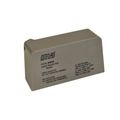
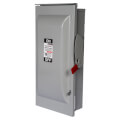

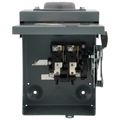

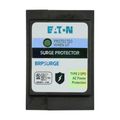
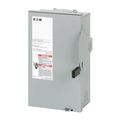
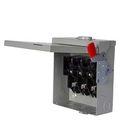
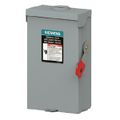
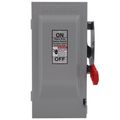
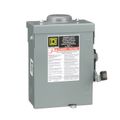
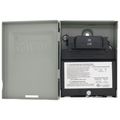
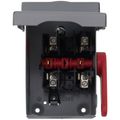
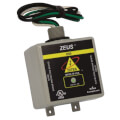
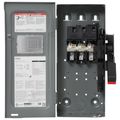
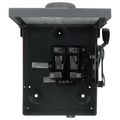
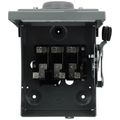
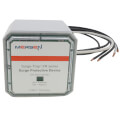
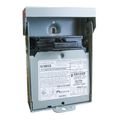
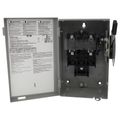
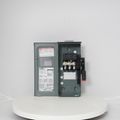
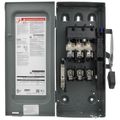
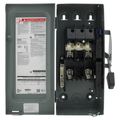
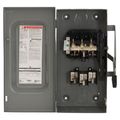
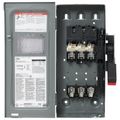
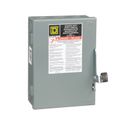
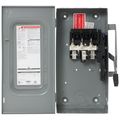
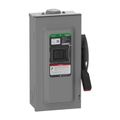
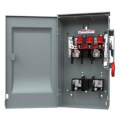
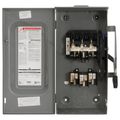
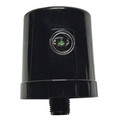
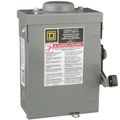
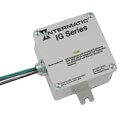
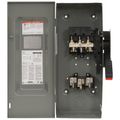
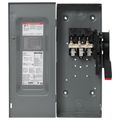

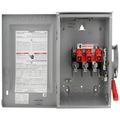
A/C disconnects and surge protectors are electrical safety components installed alongside outdoor condensing units, heat pumps, and other HVAC equipment.
A disconnect switch gives a visible, lockable point to cut power before service work begins, a feature most electrical codes require for outdoor cooling and heating equipment.
Surge protectors mount inline with that power supply and absorb voltage spikes from lightning strikes, utility switching, or nearby equipment cycling, keeping compressor and control-board electronics from taking damage.
Contractors choose between fused and non-fused disconnect styles depending on how the circuit is already protected upstream, and weatherproof enclosures hold up against outdoor exposure at a pad or wall-mount location.
Pairing a disconnect with a surge protector on every install adds a layer of protection that cuts down on warranty claims and callbacks, a detail that matters to service contractors and homeowners alike.
Subcategories
- Non-Fusible Disconnects: Non-fusible disconnects provide a simple on and off switch without built-in overcurrent protection, relying on the breaker already installed in the electrical panel. Contractors use them on circuits where panel-level protection already covers the equipment, keeping the disconnect itself simpler to install and replace. Techs favor this style for straightforward residential air conditioning and heat pump jobs. Outdoor-rated housings protect the switch mechanism from rain and sun exposure.
- Fusible Disconnects: Fusible disconnects add cartridge fuses inside the switch housing, giving a circuit a second layer of overcurrent protection beyond the panel breaker. Contractors reach for them when equipment manufacturers call for fuse protection at the disconnect or when local code requires it on a dedicated circuit. Swapping a blown fuse takes only a few minutes without disturbing the switch body. Commercial condensing units and larger residential systems often specify this style.
- Surge Protectors: Surge protectors absorb voltage spikes before they reach a unit's compressor, control board, or capacitors, clamping down excess voltage from lightning strikes or grid switching events. Techs install them inline with the disconnect or directly at the equipment's electrical whip, and many models include a status light so a tech can confirm the protector is still active on a service call. Homeowners in storm-prone regions often ask for one specifically after a prior lightning-related repair. Replacing a spent surge protector costs far less than replacing a damaged control board.
- Enclosures and Accessories: Enclosures, whips, and mounting hardware round out a disconnect installation, covering everything from the metal or nonmetallic box housing the switch to the flexible conduit connecting it to the unit. Contractors pick enclosure materials based on the install environment, since coastal or high-humidity locations call for corrosion-resistant materials over standard galvanized steel. Pre-wired whips speed up rough-in work on new construction jobs. Replacement blades, fuse pullers, and gaskets keep an existing disconnect in code-compliant working order.
Buying Guide
Selecting the right A/C disconnect and surge protector starts with confirming the amperage and voltage of the circuit feeding the outdoor unit, since an undersized disconnect creates a code violation and a safety hazard.
Local electrical code and the equipment manufacturer's installation instructions usually settle whether a fused or non-fused disconnect is required, so checking both before ordering saves a return trip to the supply house.
Enclosure material matters as much as the switch mechanism inside it: standard galvanized steel holds up fine in most inland climates, while coastal or high-humidity job sites call for a corrosion-resistant housing to avoid premature rust-through.
Surge protection is worth adding on every install, not just ones in known storm corridors, since utility-side switching events and nearby equipment cycling can spike a line even far from any storm.
Contractors running service routes across a mix of residential and light commercial work tend to stock a small range of A/C disconnects and surge protectors, covering the common amperage ratings and enclosure styles rather than special-ordering per job, which keeps a truck ready for whatever call comes in next.
Warranty terms on both the disconnect and the surge protector are worth a quick check too, since a failed protector that's still under warranty can often be swapped at no cost rather than billed to the customer.
Frequently Asked Questions
Do I need a disconnect switch for every outdoor condensing unit?
Most electrical codes require a visible, lockable disconnect within sight of any outdoor condensing unit or heat pump, so it's standard on nearly every install. Local jurisdictions can add specifics on distance and mounting height. Checking with the local code office before rough-in avoids a failed inspection.
What's the difference between a fused and non-fused disconnect?
A fused disconnect adds cartridge fuses inside the switch for a second layer of overcurrent protection, while a non-fused disconnect relies entirely on the panel breaker upstream. Equipment manufacturers or local code often dictate which style a given install needs. Fuse replacement takes only a few minutes when one blows.
Can a surge protector really prevent control board failures?
Surge protectors clamp excess voltage before it reaches sensitive compressor and control-board electronics, which meaningfully cuts down on storm and grid-switching related failures. No protector eliminates every risk, but a direct hit is far less common with one installed. Many models include a status light confirming the unit is still functioning.
What enclosure material should I choose for a coastal install?
Corrosion-resistant enclosures hold up far longer than standard galvanized steel in coastal or high-salt-air environments. Premature rust-through on a standard enclosure can expose wiring and create a safety issue within a few years. The added upfront selection pays off in fewer service calls down the road.
How do I know what amperage disconnect to install?
The equipment's nameplate lists the minimum circuit ampacity and maximum overcurrent protection, which determines the disconnect size needed. Matching the disconnect to those numbers, rather than guessing based on the unit's tonnage, keeps the install code-compliant. The manufacturer's installation manual usually spells this out clearly.
