



Filters
SORT
Product Availability –
Size –
Review Score –
 --%3E %3Csvg version='1.1' id='Fill' xmlns='http://www.w3.org/2000/svg' xmlns:xlink='http://www.w3.org/1999/xlink' x='0px' y='0px' viewBox='0 0 100 100' enable-background='new 0 0 100 100' xml:space='preserve'%3E %3Cpath fill='%23F15C02' d='M79.44,0.95H20.56C9.78,0.95,0.95,9.78,0.95,20.56v58.87c0,10.79,8.82,19.61,19.61,19.61h58.87 c10.79,0,19.61-8.83,19.61-19.61V20.56C99.05,9.78,90.22,0.95,79.44,0.95z M65.38,58.24l9.38,29.58L49.69,69.78L24.5,87.82 l9.34-29.6L8.8,39.6l30.73-0.17c0,0,6.98-19.61,10-28.93c0.54,1.36,9.88,29.1,9.88,29.1H91.2L65.38,58.24z'/%3E %3C/svg%3E)
 --%3E %3Csvg version='1.1' id='With-RB' xmlns='http://www.w3.org/2000/svg' xmlns:xlink='http://www.w3.org/1999/xlink' x='0px' y='0px' viewBox='0 0 100 100' enable-background='new 0 0 100 100' xml:space='preserve'%3E %3Cpath fill='%23FBC8B4' d='M79.44,0.95H20.56C9.78,0.95,0.95,9.78,0.95,20.56v58.87c0,10.79,8.82,19.61,19.61,19.61h58.87 c10.79,0,19.61-8.83,19.61-19.61V20.56C99.05,9.78,90.22,0.95,79.44,0.95z M65.38,58.24l9.38,29.58L49.69,69.78L24.5,87.82 l9.34-29.6L8.8,39.6l30.73-0.17c0,0,6.98-19.61,10-28.93c0.54,1.36,9.88,29.1,9.88,29.1H91.2L65.38,58.24z'/%3E %3C/svg%3E)
Price Range –
ACR Copper Fittings



 --%3E %3Csvg version='1.1' id='No-RB' xmlns='http://www.w3.org/2000/svg' xmlns:xlink='http://www.w3.org/1999/xlink' x='0px' y='0px' viewBox='0 0 100 100' enable-background='new 0 0 100 100' xml:space='preserve'%3E %3Cpath fill='%23CECECE' d='M79.44,0.95H20.56C9.78,0.95,0.95,9.78,0.95,20.56v58.87c0,10.79,8.82,19.61,19.61,19.61h58.87 c10.79,0,19.61-8.83,19.61-19.61V20.56C99.05,9.78,90.22,0.95,79.44,0.95z M65.38,58.24l9.38,29.58L49.69,69.78L24.5,87.82 l9.34-29.6L8.8,39.6l30.73-0.17c0,0,6.98-19.61,10-28.93c0.54,1.36,9.88,29.1,9.88,29.1H91.2L65.38,58.24z'/%3E %3C/svg%3E)

 --%3E %3Csvg version='1.1' id='Half' xmlns='http://www.w3.org/2000/svg' xmlns:xlink='http://www.w3.org/1999/xlink' x='0px' y='0px' viewBox='0 0 100 100' enable-background='new 0 0 100 100' xml:space='preserve'%3E %3Cg%3E %3Cpath fill='%23F15C02' d='M30.05,70.23l3.79-12.01L8.8,39.6l30.73-0.17c0,0,6.98-19.61,10-28.93c0.54,1.36,9.88,29.1,9.88,29.1h1.58 L93.71,7.18c-3.58-3.82-8.66-6.23-14.28-6.23H20.56C9.78,0.95,0.95,9.78,0.95,20.56v58.87c0,5.41,2.22,10.32,5.79,13.88 L30.05,70.23z'/%3E %3C/g%3E %3Cpath fill='%23FBC8B4' d='M93.71,7.18L60.98,39.6H91.2L65.38,58.24l9.38,29.58L49.69,69.78L24.5,87.82l5.55-17.59L6.75,93.32 c3.55,3.54,8.44,5.73,13.82,5.73h58.87c10.79,0,19.61-8.83,19.61-19.61V20.56C99.05,15.4,97.01,10.69,93.71,7.18z'/%3E %3C/svg%3E)
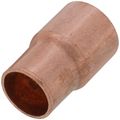
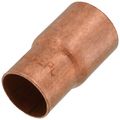
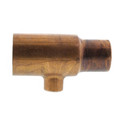
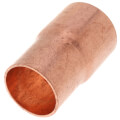
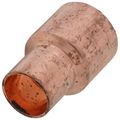
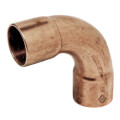
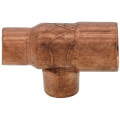
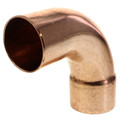

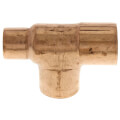
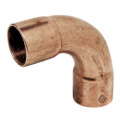
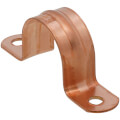
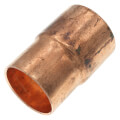

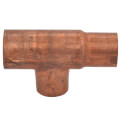
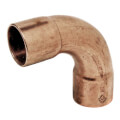
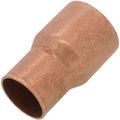
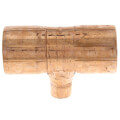
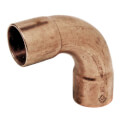

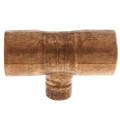
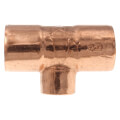

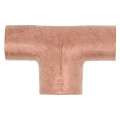

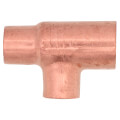


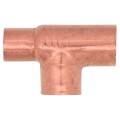

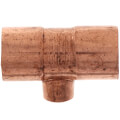
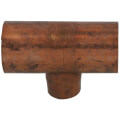
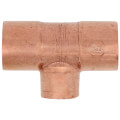
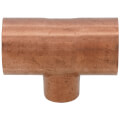
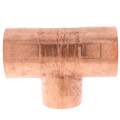
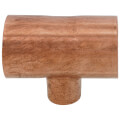


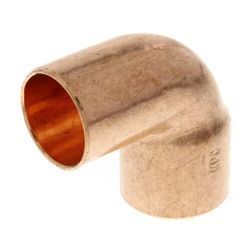
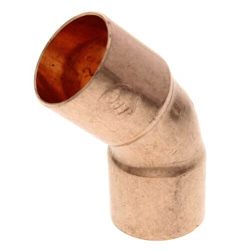
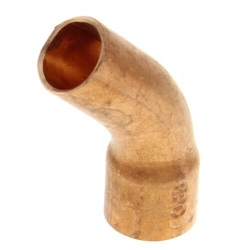
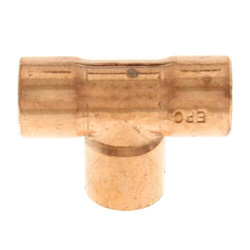
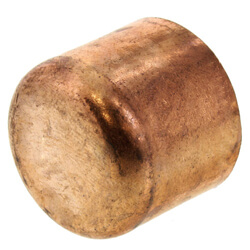
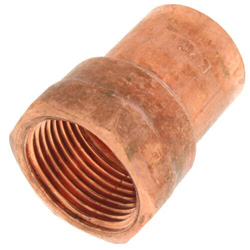
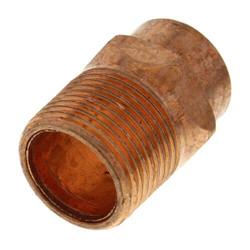
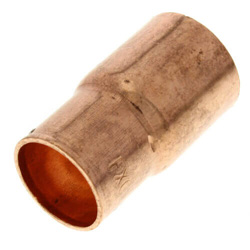
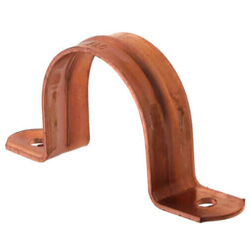
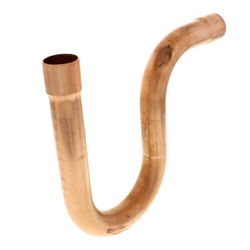
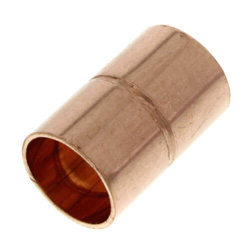
ACR Copper Fittings are copper fittings manufactured and cleaned to ACR standards for use in refrigerant lines on air conditioning and refrigeration systems. The lineup includes 90 degree long turn elbows, 90 degree street elbows, 45 degree elbows, couplings, tees, reducing tees, caps, adapters, and fitting reducers, covering the connection types needed to run and branch refrigerant piping. The Elkhart 20156 is a 3/4 inch OD ACR copper coupling, a common size on residential and light commercial split system line sets. ACR Copper Press Fittings extend the lineup with a press-to-connect option, sized from 1/4 inch up to 1-3/8 inch OD for HVAC and VRF applications, giving installers a torch-free alternative to brazing on jobs where open flame isn't practical or permitted. Picking the right fitting type and size keeps refrigerant line sets sized correctly for the system's tonnage and refrigerant velocity requirements.
Subcategories
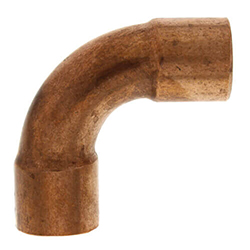
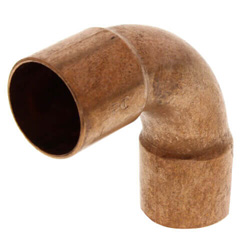
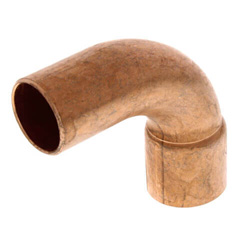
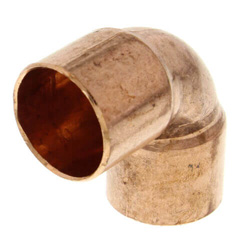
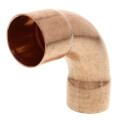
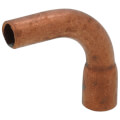
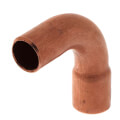
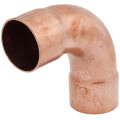
- ACR Elbows: ACR elbows change direction in a refrigerant line set without restricting flow more than necessary. The lineup includes 90 degree long turn elbows, 90 degree street elbows, and 45 degree elbows, each suited to different routing situations. Long turn 90s create a wider bend radius than a standard short turn elbow, which reduces turbulence and pressure drop in the refrigerant line. Street elbows connect directly to another fitting or valve without needing a separate coupling, which saves a joint on tight line set runs.
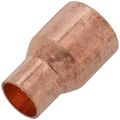
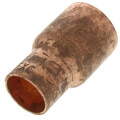
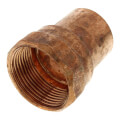
- ACR Couplings and Reducers: Couplings join two lengths of copper tubing in the same size, while reducers step a line set down from one tube size to a smaller one. The Elkhart 20156 is a 3/4 inch OD ACR copper coupling, a size commonly used on residential and light commercial split system line sets. Technicians use reducers when transitioning between the liquid and suction line sizes called for by equipment manufacturers, which often differ from each other on the same system.
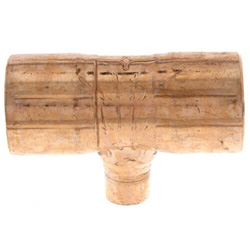
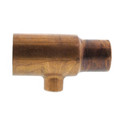
- ACR Tees and Reducing Tees: Tees branch a refrigerant line into two paths, which comes up on multi-evaporator systems or when adding a second indoor unit to an existing line set. Reducing tees combine that branching function with a size change at the branch outlet, useful when the branch line runs a smaller capacity than the main line. Refrigeration and VRF installers rely on this fitting type when a single outdoor unit feeds multiple indoor evaporators at different distances or capacities.
- ACR Copper Press Fittings: ACR Copper Press Fittings, including Zoomlock MAX and RLS lines, connect with a press tool instead of a torch, sized from 1/4 inch up to 1-3/8 inch OD for HVAC and VRF applications. The press connection method removes the open flame from the joint, which matters on occupied buildings, tight mechanical rooms, or jobs where a hot work permit adds time and cost. Press fittings also speed up rough-in compared to brazing, since each joint doesn't need cooling time before the line gets pressurized.
Buying Guide
Selecting fittings for a refrigerant line set starts with matching outside diameter to the line set size called for by the equipment manufacturer, since liquid and suction lines on the same system often run different diameters and need different reducer or adapter sizes at the connection point. ACR Copper Fittings differ from standard plumbing copper fittings in cleaning and manufacturing process, since refrigerant lines require an internally clean, dry fitting free of oxidation that would otherwise contaminate the refrigerant circuit, so fittings rated for ACR use shouldn't get substituted with standard DWV or water service copper fittings. Connection routing comes next: long turn 90 degree elbows reduce turbulence and pressure drop compared to a short turn elbow, which matters more on longer line set runs or systems sensitive to pressure drop, while street elbows save a joint where space is tight. For jobs where open flame isn't practical, ACR Copper Press Fittings offer a brazing alternative sized from 1/4 inch up to 1-3/8 inch OD, covering most residential and light commercial split system and VRF line set sizes. Branching for multi-evaporator or VRF systems calls for tees or reducing tees sized to the branch line's actual capacity rather than matching the main line size by default, since an oversized branch line can affect oil return and refrigerant velocity in systems designed around specific line sizing tables from the equipment manufacturer.
Frequently Asked Questions
What's the difference between ACR copper fittings and standard plumbing copper fittings?
ACR copper fittings are cleaned and manufactured for refrigerant line use, meaning they're internally clean and dry without the oxidation or residue that could contaminate a refrigerant circuit. Standard plumbing fittings aren't held to that same cleaning standard, so they shouldn't get substituted on refrigerant lines.
When should a long turn elbow be used instead of a street elbow?
Long turn 90 degree elbows reduce turbulence and pressure drop compared to a short turn or street elbow, which matters more on longer refrigerant line runs. Street elbows save space and a joint on tight routing where minimizing pressure drop is less critical than fitting the line into a confined area.
Can ACR Copper Press Fittings replace brazed joints?
Yes, ACR Copper Press Fittings like the Zoomlock MAX and RLS lines connect with a press tool instead of a torch, covering sizes from 1/4 inch up to 1-3/8 inch OD. They remove the open flame from the connection, which helps on occupied buildings or jobs where a hot work permit adds time.
What size coupling fits a typical residential split system line set?
The Elkhart 20156, a 3/4 inch OD ACR copper coupling, is a common size on residential and light commercial split system line sets. Actual size still depends on the equipment manufacturer's line set sizing specification for the system being installed.
When does a job need a reducing tee instead of a standard tee?
A reducing tee is needed when a branch line off the main refrigerant line runs a smaller size than the main line, which comes up on multi-evaporator or VRF systems feeding indoor units with different capacities. A standard tee works when the branch line matches the main line size.
