




Filters
SORT
Product Availability –
BTU Output –
Number Of Plates –
Review Score –
 --%3E %3Csvg version='1.1' id='Fill' xmlns='http://www.w3.org/2000/svg' xmlns:xlink='http://www.w3.org/1999/xlink' x='0px' y='0px' viewBox='0 0 100 100' enable-background='new 0 0 100 100' xml:space='preserve'%3E %3Cpath fill='%23F15C02' d='M79.44,0.95H20.56C9.78,0.95,0.95,9.78,0.95,20.56v58.87c0,10.79,8.82,19.61,19.61,19.61h58.87 c10.79,0,19.61-8.83,19.61-19.61V20.56C99.05,9.78,90.22,0.95,79.44,0.95z M65.38,58.24l9.38,29.58L49.69,69.78L24.5,87.82 l9.34-29.6L8.8,39.6l30.73-0.17c0,0,6.98-19.61,10-28.93c0.54,1.36,9.88,29.1,9.88,29.1H91.2L65.38,58.24z'/%3E %3C/svg%3E)
 --%3E %3Csvg version='1.1' id='With-RB' xmlns='http://www.w3.org/2000/svg' xmlns:xlink='http://www.w3.org/1999/xlink' x='0px' y='0px' viewBox='0 0 100 100' enable-background='new 0 0 100 100' xml:space='preserve'%3E %3Cpath fill='%23FBC8B4' d='M79.44,0.95H20.56C9.78,0.95,0.95,9.78,0.95,20.56v58.87c0,10.79,8.82,19.61,19.61,19.61h58.87 c10.79,0,19.61-8.83,19.61-19.61V20.56C99.05,9.78,90.22,0.95,79.44,0.95z M65.38,58.24l9.38,29.58L49.69,69.78L24.5,87.82 l9.34-29.6L8.8,39.6l30.73-0.17c0,0,6.98-19.61,10-28.93c0.54,1.36,9.88,29.1,9.88,29.1H91.2L65.38,58.24z'/%3E %3C/svg%3E)
Price Range –
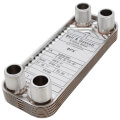
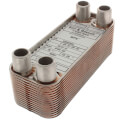
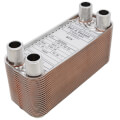
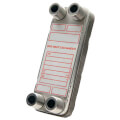
Bell & Gossett Low Pressure BPX Brazed Plate Heat Exchangers



 --%3E %3Csvg version='1.1' id='Half' xmlns='http://www.w3.org/2000/svg' xmlns:xlink='http://www.w3.org/1999/xlink' x='0px' y='0px' viewBox='0 0 100 100' enable-background='new 0 0 100 100' xml:space='preserve'%3E %3Cg%3E %3Cpath fill='%23F15C02' d='M30.05,70.23l3.79-12.01L8.8,39.6l30.73-0.17c0,0,6.98-19.61,10-28.93c0.54,1.36,9.88,29.1,9.88,29.1h1.58 L93.71,7.18c-3.58-3.82-8.66-6.23-14.28-6.23H20.56C9.78,0.95,0.95,9.78,0.95,20.56v58.87c0,5.41,2.22,10.32,5.79,13.88 L30.05,70.23z'/%3E %3C/g%3E %3Cpath fill='%23FBC8B4' d='M93.71,7.18L60.98,39.6H91.2L65.38,58.24l9.38,29.58L49.69,69.78L24.5,87.82l5.55-17.59L6.75,93.32 c3.55,3.54,8.44,5.73,13.82,5.73h58.87c10.79,0,19.61-8.83,19.61-19.61V20.56C99.05,15.4,97.01,10.69,93.71,7.18z'/%3E %3C/svg%3E)
 --%3E %3Csvg version='1.1' id='No-RB' xmlns='http://www.w3.org/2000/svg' xmlns:xlink='http://www.w3.org/1999/xlink' x='0px' y='0px' viewBox='0 0 100 100' enable-background='new 0 0 100 100' xml:space='preserve'%3E %3Cpath fill='%23CECECE' d='M79.44,0.95H20.56C9.78,0.95,0.95,9.78,0.95,20.56v58.87c0,10.79,8.82,19.61,19.61,19.61h58.87 c10.79,0,19.61-8.83,19.61-19.61V20.56C99.05,9.78,90.22,0.95,79.44,0.95z M65.38,58.24l9.38,29.58L49.69,69.78L24.5,87.82 l9.34-29.6L8.8,39.6l30.73-0.17c0,0,6.98-19.61,10-28.93c0.54,1.36,9.88,29.1,9.88,29.1H91.2L65.38,58.24z'/%3E %3C/svg%3E)


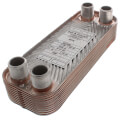
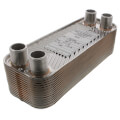
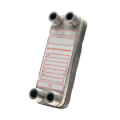


Bell & Gossett Low Pressure BPX Brazed Plate Heat Exchangers transfer heat between two separate fluid loops without letting them mix, a common requirement in hydronic heating and domestic hot water systems. The BPX line stacks stainless steel plates brazed together with copper, packing a large heat-transfer surface area into a compact footprint compared with older shell-and-tube designs. Contractors specify a BPX exchanger when a boiler loop needs to stay isolated from a domestic water loop, when a snow-melt system needs a glycol barrier, or when a building runs several heating zones that each need controlled, indirect heat. The plates route fluid in a counter-flow pattern, so the units transfer heat efficiently even with a modest temperature difference between the two sides. Matching plate count and connection size to the system's actual flow rate and heating load is what separates a properly sized installation from one that runs inefficiently, which is why sizing matters more than simply picking the largest available model.
Subcategories
- Single-Wall BPX Units: Single-wall exchangers work well in closed-loop hydronic heating, where a boiler loop is isolated from radiant or baseboard zones that never touch potable water. Contractors installing multi-zone hot water heat rely on these units to separate the primary boiler loop from each secondary zone. A single brazed plate pack sits between the two sides, keeping the unit compact and easy to mount on a mechanical room wall.
- Double-Wall BPX Units: Many local plumbing codes require a double-wall exchanger whenever potable water passes through a unit that also carries boiler loop fluid, since the vented gap between plates gives a visible warning if a plate ever fails. Contractors producing domestic hot water off a boiler loop typically default to this configuration to stay code-compliant. The extra wall adds a small amount of thermal resistance but protects the potable side from cross-contamination.
- Compact Wall-Mount Models: Smaller BPX units with fewer plates suit mechanical rooms with limited wall space, common in residential retrofits and light-commercial boiler rooms. These models still handle a full zone of radiant or baseboard heat but in a shorter, lighter housing that two people can mount without special lifting equipment. Contractors reach for compact models when the heating load is modest and space is the deciding factor.
- High-Capacity BPX Units: Larger plate counts give these units more surface area for multi-family buildings, schools, and other commercial jobs where several apartments or zones draw hot water at once. Contractors sizing a central plant around simultaneous demand from multiple units choose a high-capacity BPX to avoid a temperature lag during peak draw. Connection sizes step up accordingly, so piping and pump selection need to match the larger flow rate.
Buying Guide
Start with the heating or domestic hot water load the exchanger needs to cover, since plate count and surface area are sized to BTU output, not to the physical space available. A unit that is too small will struggle to keep up during peak demand, while an oversized unit adds cost and takes up more wall space than the job needs. Next, confirm whether local code or the specific application calls for a single-wall or double-wall design; any installation where boiler loop fluid could contact potable water generally needs the double-wall configuration.
Connection size and port orientation matter for retrofit jobs, since swapping in a Bell & Gossett Low Pressure BPX Brazed Plate Heat Exchanger for an aging shell-and-tube unit often means adapting to different pipe stub-outs. Check the existing piping layout before ordering to avoid a return trip for adapters or extra fittings.
Flow rate on both the primary and secondary sides should be balanced to the plate design; a mismatch between the boiler loop flow and the domestic water demand reduces the efficiency of the heat transfer even if the total capacity looks adequate on paper. Pumps and expansion tanks sized for the original shell-and-tube unit may need a second look when moving to a plate exchanger, since plate units typically create more pressure drop per pass than older designs.
Glycol content in the primary loop is another factor worth checking against the manufacturer's rating, since higher glycol percentages reduce heat-transfer efficiency and may call for a larger plate pack to hit the same output. Snow-melt and geothermal jobs that run higher glycol concentrations should size up rather than assume a straight BTU-for-BTU swap from a water-only calculation.
Finally, plan for maintenance access. Brazed plate units are not field-serviceable in the way that gasketed plate exchangers are, so periodic flushing and a strainer on the inlet side go a long way toward protecting the investment from scale buildup, particularly in areas with hard water feeding the domestic side.
Frequently Asked Questions
What's the difference between a single-wall and double-wall BPX exchanger?
A double-wall unit has two brazed plates with a vented gap between them, so a leak shows up at the vent instead of letting boiler loop fluid mix with potable water. Single-wall units use one plate pack and are typically reserved for closed hydronic loops that never touch domestic water.
Can a BPX exchanger replace an old shell-and-tube unit directly?
In most cases, yes, but connection size and stub-out location often differ between the two designs, so plan on adapting the piping rather than a straight bolt-in swap. Confirming the existing pipe layout before ordering avoids delays on install day.
How do I know what size BPX exchanger my job needs?
Sizing comes down to the BTU output required on the secondary side and the flow rate and temperature available on the primary loop. A mechanical contractor or the load calculation for the building should drive plate count selection rather than matching the physical size of the old unit.
Does glycol affect how a BPX exchanger performs?
Yes, higher glycol concentrations reduce the fluid's heat-transfer efficiency compared to straight water, so snow-melt and geothermal systems running higher glycol percentages may need a larger plate pack to hit the same output as a water-only system.
What maintenance do brazed plate heat exchangers need?
Brazed units aren't field-serviceable like gasketed plate exchangers, so a strainer on the inlet and periodic flushing to control scale buildup are the main upkeep tasks. Hard water on the domestic side is the biggest risk factor for reduced performance over time.
