




Bray Butterfly Valves

 --%3E %3Csvg version='1.1' id='No-RB' xmlns='http://www.w3.org/2000/svg' xmlns:xlink='http://www.w3.org/1999/xlink' x='0px' y='0px' viewBox='0 0 100 100' enable-background='new 0 0 100 100' xml:space='preserve'%3E %3Cpath fill='%23CECECE' d='M79.44,0.95H20.56C9.78,0.95,0.95,9.78,0.95,20.56v58.87c0,10.79,8.82,19.61,19.61,19.61h58.87 c10.79,0,19.61-8.83,19.61-19.61V20.56C99.05,9.78,90.22,0.95,79.44,0.95z M65.38,58.24l9.38,29.58L49.69,69.78L24.5,87.82 l9.34-29.6L8.8,39.6l30.73-0.17c0,0,6.98-19.61,10-28.93c0.54,1.36,9.88,29.1,9.88,29.1H91.2L65.38,58.24z'/%3E %3C/svg%3E)


 --%3E %3Csvg version='1.1' id='Fill' xmlns='http://www.w3.org/2000/svg' xmlns:xlink='http://www.w3.org/1999/xlink' x='0px' y='0px' viewBox='0 0 100 100' enable-background='new 0 0 100 100' xml:space='preserve'%3E %3Cpath fill='%23F15C02' d='M79.44,0.95H20.56C9.78,0.95,0.95,9.78,0.95,20.56v58.87c0,10.79,8.82,19.61,19.61,19.61h58.87 c10.79,0,19.61-8.83,19.61-19.61V20.56C99.05,9.78,90.22,0.95,79.44,0.95z M65.38,58.24l9.38,29.58L49.69,69.78L24.5,87.82 l9.34-29.6L8.8,39.6l30.73-0.17c0,0,6.98-19.61,10-28.93c0.54,1.36,9.88,29.1,9.88,29.1H91.2L65.38,58.24z'/%3E %3C/svg%3E)
 --%3E %3Csvg version='1.1' id='With-RB' xmlns='http://www.w3.org/2000/svg' xmlns:xlink='http://www.w3.org/1999/xlink' x='0px' y='0px' viewBox='0 0 100 100' enable-background='new 0 0 100 100' xml:space='preserve'%3E %3Cpath fill='%23FBC8B4' d='M79.44,0.95H20.56C9.78,0.95,0.95,9.78,0.95,20.56v58.87c0,10.79,8.82,19.61,19.61,19.61h58.87 c10.79,0,19.61-8.83,19.61-19.61V20.56C99.05,9.78,90.22,0.95,79.44,0.95z M65.38,58.24l9.38,29.58L49.69,69.78L24.5,87.82 l9.34-29.6L8.8,39.6l30.73-0.17c0,0,6.98-19.61,10-28.93c0.54,1.36,9.88,29.1,9.88,29.1H91.2L65.38,58.24z'/%3E %3C/svg%3E)

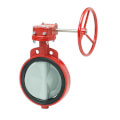
Bray butterfly valves are compact, quarter-turn shutoff and throttling valves used in place of a bulkier gate or ball valve across commercial and industrial piping systems. Bray manufactures the disc edge on its resilient-seated valves with a spherical, hand-polished finish designed to produce bubble-tight shutoff with minimum operating torque. Mechanical contractors use these valves across HVAC, potable water, and industrial fluid-handling systems where a wafer or lug body style needs to fit into a tight pipe run. Every valve in the line is pressure tested to 110 percent of its rated pressure before it leaves the factory, which is the kind of verification a contractor can point to when a spec calls for a tested shutoff valve. Choosing between wafer and lug body styles mainly comes down to whether the valve needs to support dead-end service on one side of the line.
Subcategories
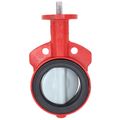
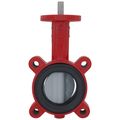
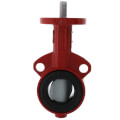
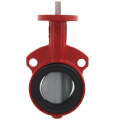
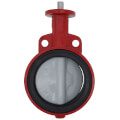
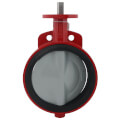
- Wafer-Style Butterfly Valves: Wafer-style butterfly valves sandwich between two pipe flanges without their own bolt holes extending past the flange face, which keeps the installation compact. Mechanical contractors use this style in HVAC and process piping where space between flanges is limited. Because a wafer valve relies on the surrounding flange bolts for support, it isn't rated for dead-end service where one side of the pipe is unbolted. Centering the valve properly during installation keeps the seat sealing evenly around the disc.
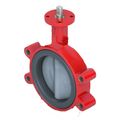
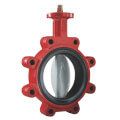
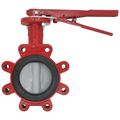
- Lug-Style Butterfly Valves: Lug-style butterfly valves use threaded lugs that extend past the flange face, allowing one side of the line to be unbolted and removed while the valve still holds pressure on the other side. Contractors use this style for isolation applications where a downstream section needs servicing without draining the whole system. Dead-end capability like this makes lug valves a common choice at the end of a branch line. Torquing the lug bolts evenly during installation is important for consistent seat compression around the disc.
- High-Temperature Resilient-Seated Valves: High-temperature resilient-seated valves use elastomer seats rated for a wider operating range, with some Bray series rated from negative 20 to 250 degrees Fahrenheit using Buna-N or EPDM material. Contractors specify these for HVAC, steam-adjacent, and industrial process lines where standard elastomer seats would degrade faster. Matching the seat elastomer to the actual fluid and temperature range in the line is what determines service life more than the valve body itself. Buna-N and EPDM handle different fluid types, so confirming compatibility before ordering avoids a seat failure down the line.
Buying Guide
Selecting a Bray butterfly valve starts with body style, since wafer and lug configurations solve different installation problems even though the disc and seat technology inside is often similar. A wafer valve keeps the installation compact but depends on flange bolts from both sides for support, while a lug-style valve allows one side of the line to be isolated and serviced without draining the entire system.
Seat material is the second major decision, and it should be driven by the fluid and temperature range in the line rather than convenience. Standard Buna-N seats cover many general HVAC and potable water applications, but higher-temperature or more aggressive fluid conditions call for EPDM or a similarly rated elastomer instead. Ordering Bray butterfly valves without confirming the seat material against the application is one of the more common ways a valve ends up leaking within its first year of service.
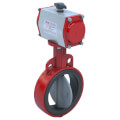
Actuation method also affects long-term reliability. A manually operated lever handle works for simple on-off applications, but throttling duty or systems that need to be automated benefit from a gear operator or an actuator rated for the valve's torque requirements. Confirming pressure rating against the piping system's actual operating pressure, not just its nominal rating, avoids installing a valve that is technically compatible but undersized for real-world pressure spikes.
Frequently Asked Questions
What's the difference between a wafer and lug body Bray butterfly valve?
A wafer body sits between two flanges and depends on the surrounding flange bolts for support, while a lug body has its own threaded lugs that let one side of the pipe be unbolted while the valve still holds pressure. Lug valves are the better choice any time a line needs to be isolated for downstream service without draining the whole system.
Are Bray butterfly valves rated for bubble-tight shutoff?
Yes, Bray manufactures the disc edge on its resilient-seated valves with a spherical, hand-polished finish specifically to produce bubble-tight shutoff at minimum operating torque. Every valve in the line is also pressure tested to 110 percent of its rated pressure before leaving the factory.
What seat material should be used for a hot water HVAC loop?
Standard Buna-N seats handle most general HVAC hot water applications within their rated temperature range. For higher-temperature or more demanding conditions, an EPDM-seated valve rated for a wider temperature range is the safer choice.
Can a Bray butterfly valve be used for throttling, not just on-off shutoff?
Yes, resilient-seated butterfly valves can throttle flow, though sustained partial-open operation causes more seat wear than a valve dedicated to full on-off duty. A gear operator makes throttling control more precise than a simple lever handle.
How is a Bray butterfly valve sized for an existing pipe run?
Sizing matches the valve to the pipe's nominal diameter and confirms the actual operating pressure of the system against the valve's rated pressure, not just its nominal class. Body style, wafer or lug, should also match whether the line needs dead-end isolation capability.
