




Filters
SORT
Product Availability –
Diameter (Inches) –
BTU Input –
Capacity (Gallons) –
Review Score –
 --%3E %3Csvg version='1.1' id='Fill' xmlns='http://www.w3.org/2000/svg' xmlns:xlink='http://www.w3.org/1999/xlink' x='0px' y='0px' viewBox='0 0 100 100' enable-background='new 0 0 100 100' xml:space='preserve'%3E %3Cpath fill='%23F15C02' d='M79.44,0.95H20.56C9.78,0.95,0.95,9.78,0.95,20.56v58.87c0,10.79,8.82,19.61,19.61,19.61h58.87 c10.79,0,19.61-8.83,19.61-19.61V20.56C99.05,9.78,90.22,0.95,79.44,0.95z M65.38,58.24l9.38,29.58L49.69,69.78L24.5,87.82 l9.34-29.6L8.8,39.6l30.73-0.17c0,0,6.98-19.61,10-28.93c0.54,1.36,9.88,29.1,9.88,29.1H91.2L65.38,58.24z'/%3E %3C/svg%3E)
 --%3E %3Csvg version='1.1' id='With-RB' xmlns='http://www.w3.org/2000/svg' xmlns:xlink='http://www.w3.org/1999/xlink' x='0px' y='0px' viewBox='0 0 100 100' enable-background='new 0 0 100 100' xml:space='preserve'%3E %3Cpath fill='%23FBC8B4' d='M79.44,0.95H20.56C9.78,0.95,0.95,9.78,0.95,20.56v58.87c0,10.79,8.82,19.61,19.61,19.61h58.87 c10.79,0,19.61-8.83,19.61-19.61V20.56C99.05,9.78,90.22,0.95,79.44,0.95z M65.38,58.24l9.38,29.58L49.69,69.78L24.5,87.82 l9.34-29.6L8.8,39.6l30.73-0.17c0,0,6.98-19.61,10-28.93c0.54,1.36,9.88,29.1,9.88,29.1H91.2L65.38,58.24z'/%3E %3C/svg%3E)
Price Range –
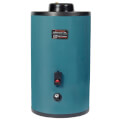
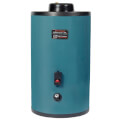
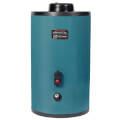
Burnham Alliance Indirect Water Heaters

 --%3E %3Csvg version='1.1' id='No-RB' xmlns='http://www.w3.org/2000/svg' xmlns:xlink='http://www.w3.org/1999/xlink' x='0px' y='0px' viewBox='0 0 100 100' enable-background='new 0 0 100 100' xml:space='preserve'%3E %3Cpath fill='%23CECECE' d='M79.44,0.95H20.56C9.78,0.95,0.95,9.78,0.95,20.56v58.87c0,10.79,8.82,19.61,19.61,19.61h58.87 c10.79,0,19.61-8.83,19.61-19.61V20.56C99.05,9.78,90.22,0.95,79.44,0.95z M65.38,58.24l9.38,29.58L49.69,69.78L24.5,87.82 l9.34-29.6L8.8,39.6l30.73-0.17c0,0,6.98-19.61,10-28.93c0.54,1.36,9.88,29.1,9.88,29.1H91.2L65.38,58.24z'/%3E %3C/svg%3E)
 --%3E %3Csvg version='1.1' id='Half' xmlns='http://www.w3.org/2000/svg' xmlns:xlink='http://www.w3.org/1999/xlink' x='0px' y='0px' viewBox='0 0 100 100' enable-background='new 0 0 100 100' xml:space='preserve'%3E %3Cg%3E %3Cpath fill='%23F15C02' d='M30.05,70.23l3.79-12.01L8.8,39.6l30.73-0.17c0,0,6.98-19.61,10-28.93c0.54,1.36,9.88,29.1,9.88,29.1h1.58 L93.71,7.18c-3.58-3.82-8.66-6.23-14.28-6.23H20.56C9.78,0.95,0.95,9.78,0.95,20.56v58.87c0,5.41,2.22,10.32,5.79,13.88 L30.05,70.23z'/%3E %3C/g%3E %3Cpath fill='%23FBC8B4' d='M93.71,7.18L60.98,39.6H91.2L65.38,58.24l9.38,29.58L49.69,69.78L24.5,87.82l5.55-17.59L6.75,93.32 c3.55,3.54,8.44,5.73,13.82,5.73h58.87c10.79,0,19.61-8.83,19.61-19.61V20.56C99.05,15.4,97.01,10.69,93.71,7.18z'/%3E %3C/svg%3E)
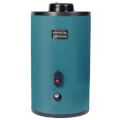
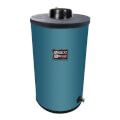
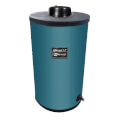
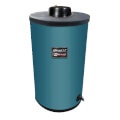
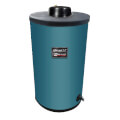



Burnham Alliance indirect water heaters are storage tanks that use a home's boiler as the heat source instead of a dedicated burner or electric element, drawing on the boiler's higher output to recover hot water faster than a conventional tank-style heater. U.S. Boiler Company, headquartered in Lancaster, Pennsylvania, builds the Alliance line in three tank constructions: Alliance SST with a passivated stainless steel tank, Alliance LT with a thermoplastic liner resistant to rust and corrosion, and Alliance SL with a Hydrastone lining built for acidic, hard, or otherwise aggressive water conditions. Because an indirect heater relies on boiler output that can exceed 100,000 BTUs compared to roughly 34,000 BTUs from a typical standalone unit, recovery time is faster and better matched to households running a boiler for space heating anyway. Choosing among the three tank types comes down to local water chemistry and how much standby heat loss the installation can tolerate.
Subcategories
- Alliance SST (Stainless Steel Tank): The SST model uses a passivated stainless steel tank built for long service life and corrosion resistance. It carries an 8-year leak-free warranty that can be upgraded to a lifetime warranty at no additional charge. Stainless steel construction makes it a common choice where tank longevity is the top priority. It integrates with an existing boiler's piping the same way as the other Alliance tank types.
- Alliance LT (Thermoplastic Liner): The LT model uses a thermoplastic tank liner resistant to rust and corrosion, backed by a 10-year warranty with an optional lifetime upgrade. It is built for extremely low standby heat loss, rated under 0.8 degrees Fahrenheit per hour, which reduces the boiler's idle cycling to maintain tank temperature. This makes it a fit for installations where standby efficiency matters as much as recovery speed. The liner construction differs from the stainless and Hydrastone-lined options in how it resists scale buildup.
- Alliance SL (Hydrastone Lined): The SL model uses a Hydrastone lining designed for exceptional longevity in acidic, hard, or otherwise aggressive water environments. It carries the same 10-year warranty with an optional lifetime upgrade as the LT model. This tank type is suited to regions where water chemistry would shorten the service life of a standard tank lining. Selecting SL over SST or LT typically comes down to local water quality rather than boiler compatibility.
Buying Guide
Choosing among the three Alliance tank types starts with local water chemistry. Acidic, hard, or otherwise aggressive water conditions favor the Hydrastone-lined SL model, which is built specifically for that kind of environment, while the SST stainless tank and LT thermoplastic-lined tank both perform well under more typical water conditions.
Standby heat loss is a second factor worth weighing against recovery speed. The LT model's low standby loss rating, under 0.8 degrees Fahrenheit per hour, reduces how often the boiler cycles just to maintain tank temperature, which can matter in installations where the boiler also serves space heating zones and unnecessary cycling adds wear.
Warranty terms differ slightly by model: the SST tank carries an 8-year leak-free warranty upgradeable to lifetime, while both the LT and SL tanks carry a 10-year warranty with the same lifetime upgrade option. Confirming the upgrade process and any registration requirements at the time of installation secures the longer coverage.
Because an indirect heater draws its heat from the boiler rather than a dedicated burner, confirming the boiler has enough spare output capacity for the expected hot water demand, on top of its space heating load, avoids undersizing the system before the tank is even installed.
Frequently Asked Questions
How does an indirect water heater differ from a standard tank water heater?
An indirect water heater uses the home's boiler as its heat source instead of a dedicated burner or electric element. Because a boiler typically produces more heating output than a standalone water heater's burner, recovery time is faster.
Which Alliance tank type handles hard or acidic water best?
The Alliance SL model, with its Hydrastone lining, is built for exceptional longevity in acidic, hard, or otherwise aggressive water environments, making it the better choice where local water chemistry is a concern.
What warranty comes with an Alliance indirect water heater?
The SST stainless tank carries an 8-year leak-free warranty upgradeable to lifetime at no charge, while the LT and SL models both carry a 10-year warranty with the same lifetime upgrade option.
Does the boiler need extra capacity to run an indirect water heater?
Yes, the boiler needs enough spare output beyond its space heating load to meet expected hot water demand, since the indirect tank relies entirely on the boiler as its heat source.
What makes the Alliance LT model different from the SST model?
The LT model uses a thermoplastic liner rather than stainless steel and is rated for extremely low standby heat loss, under 0.8 degrees Fahrenheit per hour, which reduces boiler cycling just to maintain tank temperature.
