




Class J Fuses


 --%3E %3Csvg version='1.1' id='No-RB' xmlns='http://www.w3.org/2000/svg' xmlns:xlink='http://www.w3.org/1999/xlink' x='0px' y='0px' viewBox='0 0 100 100' enable-background='new 0 0 100 100' xml:space='preserve'%3E %3Cpath fill='%23CECECE' d='M79.44,0.95H20.56C9.78,0.95,0.95,9.78,0.95,20.56v58.87c0,10.79,8.82,19.61,19.61,19.61h58.87 c10.79,0,19.61-8.83,19.61-19.61V20.56C99.05,9.78,90.22,0.95,79.44,0.95z M65.38,58.24l9.38,29.58L49.69,69.78L24.5,87.82 l9.34-29.6L8.8,39.6l30.73-0.17c0,0,6.98-19.61,10-28.93c0.54,1.36,9.88,29.1,9.88,29.1H91.2L65.38,58.24z'/%3E %3C/svg%3E)



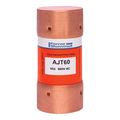

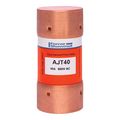

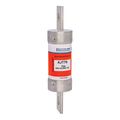





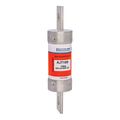

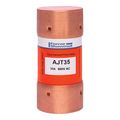


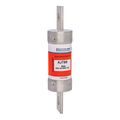
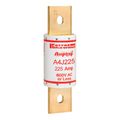
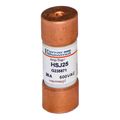

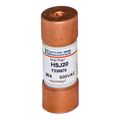
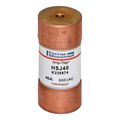


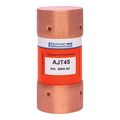
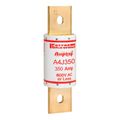

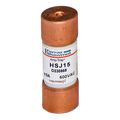

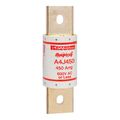


Class J Fuses are circuit protection fuses that include both fast-acting and time-delay types, and every model reviewed here carries a 600 volt rating. Amperage runs from the 20 amp Edison JFL20 to the 350 amp Mersen AJT350 in the models reviewed. The Littelfuse JLS040 is a 40 amp fast-acting fuse and the Mersen AJT150 is a 150 amp time-delay fuse. The Mersen AJT350, AJT150 and A4J50 each list a 200 kA rating at AC. Dimensions vary as well, with the A4J50 listed at 27 mm diameter, the AJT150 at 41.3 mm and the AJT350 at 54 mm, so fuse holders need to match. Because fast-acting and time-delay fuses respond differently to inrush current, matching the fuse type to the load is the main decision for any installer.
Subcategories
- Time-Delay Class J Fuses: Time-delay fuses are built to tolerate brief inrush currents while still protecting the circuit. The Mersen AJT150 is rated 150 amps at 600 VAC and 400 VDC with a 41.3 mm diameter, and the AJT350 steps to 350 amps at 54 mm. Littelfuse points to time-delay fuses for circuits with motors or other inductive loads. Installers use them where startup current would open a fast-acting fuse.
- Fast-Acting Class J Fuses: Fast-acting fuses provide overload and short-circuit protection with a quick response. The Littelfuse JLS040 is a 40 amp, 600 volt fuse for general purpose circuits with little or no motor load, including resistive loads. The Mersen A4J50 is a 50 amp fast-acting fuse at 27 mm diameter, rated 600 VAC and 300 VDC. On motor or other inductive loads, Littelfuse says the ampere rating of the JLS series must be increased to prevent nuisance opening, and the fuse may provide only short circuit protection.
- Quick-Acting Current-Limiting Class J Fuses: Quick-acting current-limiting fuses protect circuits from short-circuit current. The Edison JFL20 is a 20 amp, 600V fuse described as well suited for lighting and heating circuits. It protects low interrupting capacity circuit breakers and limits short-circuit current to meet the interrupting capacity requirements of existing equipment. Contractors working on older systems use this style when available short-circuit current may exceed what the breakers can interrupt.
Buying Guide
Start with the load. Fast-acting fuses suit general purpose circuits with little or no motor load, including resistive loads, while time-delay fuses suit circuits with motors or other inductive loads that draw inrush current. Littelfuse states that the ampere rating of a fast-acting JLS series fuse must be increased on inductive loads to prevent nuisance opening.
Next, match the amperage and voltage. The models reviewed run from 20 amps on the Edison JFL20 to 350 amps on the Mersen AJT350, with voltage ratings of 600V on the Edison and Littelfuse fuses and 600 VAC on the Mersen fuses. DC ratings differ by model, at 300 VDC on the A4J50 and 400 VDC on the AJT150 and AJT350, so check the circuit type before ordering.
When selecting Class J Fuses, also check physical size and short-circuit data. Diameter is listed at 27 mm for the A4J50, 41.3 mm for the AJT150 and 54 mm for the AJT350, so the fuse holder or block must accept the size. Mersen lists a 200 kA rating at AC on all three, and the AJT150 and AJT350 also list 300 kA at DC as self-certified. Verify the rating on the exact product page.
Finally, consider the protection goal. Edison describes the JFL20 as protecting low interrupting capacity circuit breakers and limiting short-circuit current on older systems, so the application should drive the fuse choice.
Frequently Asked Questions
When should I use a time-delay Class J fuse instead of a fast-acting one?
Class J Fuses with time delay, such as the Mersen AJT150, suit circuits with motors or other inductive loads that draw inrush current. Littelfuse notes that its fast-acting JLS series needs a greater ampere rating on those loads to prevent nuisance opening. Fast-acting versions fit general purpose circuits with little or no motor load.
What voltage are Class J fuses rated for?
The Class J Fuses reviewed here carry 600 volt ratings, listed as 600V on the Edison JFL20 and Littelfuse JLS040 and 600 VAC on the Mersen models. DC ratings vary, with 300 VDC on the A4J50 and 400 VDC on the AJT150 and AJT350. Confirm the rating on the exact model for the circuit being protected.
What amp ratings do Class J fuses come in?
Among the Class J Fuses reviewed, ratings include 20 amps for the Edison JFL20, 40 amps for the Littelfuse JLS040, 50 amps for the Mersen A4J50, 150 amps for the Mersen AJT150 and 350 amps for the Mersen AJT350. Amperage is published per model, so verify it on the product page.
Can a Class J fuse protect a circuit breaker?
Class J fuses like the Edison JFL20 are described as protecting low interrupting capacity circuit breakers. On older systems, available short-circuit current may exceed the breaker interrupting capacity, and the fuse limits short-circuit current. Check the product details before applying it to existing equipment.
How do I match a Class J fuse to a fuse holder?
Class J Fuses differ in diameter by model, with the Mersen A4J50 at 27 mm, the AJT150 at 41.3 mm and the AJT350 at 54 mm. The holder or block must accept the fuse size and match its amperage and voltage. Check the specifications for the exact fuse before ordering.
