




Copper Elbows
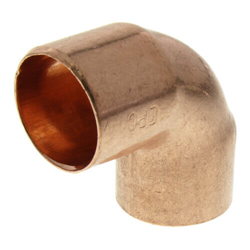
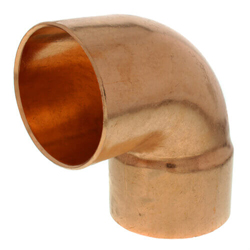
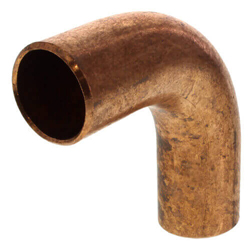
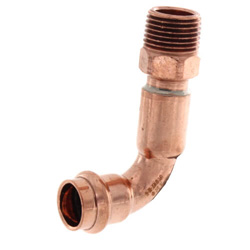
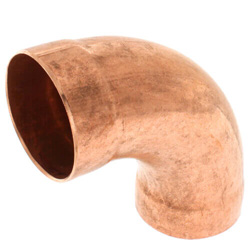
Copper elbows are fittings that change the direction of a copper pipe run, typically at 45 or 90 degree angles, in plumbing, heating, and refrigeration installations. Contractors rely on them to route supply lines around obstacles, connect fixtures, and complete drain, waste, and vent assemblies without cutting and re-threading pipe. Solder-joint, press-fit, and DWV styles cover most residential and light commercial applications, and each connection method suits different code requirements and installation timelines.
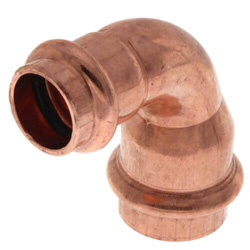
Selecting the right elbow depends on the pipe size, the joining method already used elsewhere in the system, and whether the fitting sits on a pressure line or a drain line. A press-fit elbow speeds up installation on occupied buildings where open flame is restricted, while a soldered fitting remains common on new construction where a torch is already part of the workflow. Matching elbow angle and end connection to the rest of the run helps prevent leaks and callbacks.





Subcategories
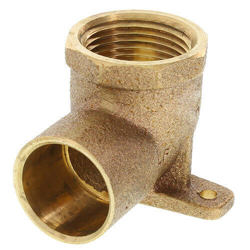
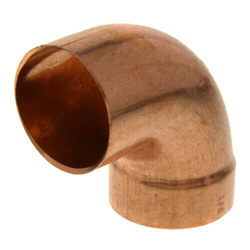
- 90° Drop Ear Elbows CxC: 90 degree drop ear elbows with cup by cup solder connections are designed for mounting fixtures such as hose bibs and shower valves directly to wall framing. The ears include screw holes that let installers anchor the fitting to a stud, keeping the connection rigid instead of relying on the pipe alone for support. Plumbers use this style when both connecting pipes are cut to length for a soldered joint.
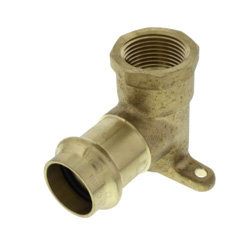
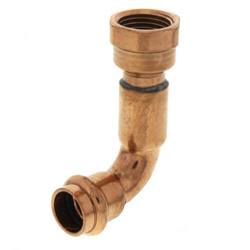
- 90° Drop Ear Elbows CxF: 90 degree drop ear elbows with a cup by female thread configuration solder to copper pipe on one side and accept a threaded fixture connection, such as a hose bib or shower arm, on the other. Like the CxC version, the mounting ears anchor the fitting to a wall stud for a secure fixture connection. Contractors use it when the fixture end requires a threaded connection rather than a second sweat joint.
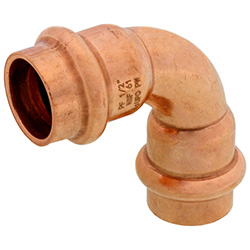
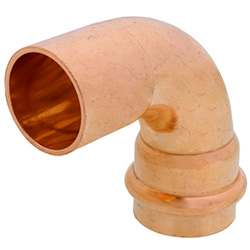
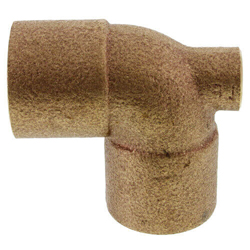
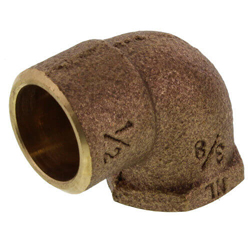
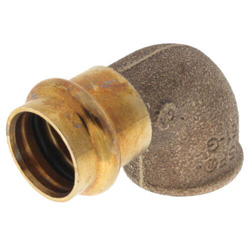
- 90° Elbows CxF: 90 degree elbows with a cup by female thread configuration solder to copper pipe on one end and accept a male threaded fitting or valve on the other. They let installers transition from soldered copper to a threaded connection without an additional adapter, a configuration common wherever a valve or appliance connector has male threads.
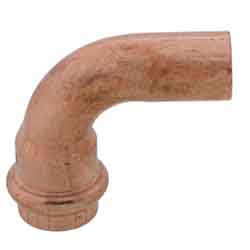
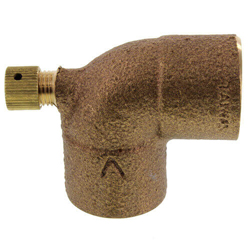
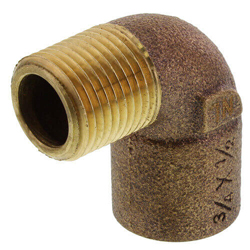
- 90° Elbows CxM: 90 degree elbows with a cup by male thread configuration solder to copper pipe on one end and thread directly into a female fitting, valve, or appliance port on the other. They combine a direction change and a thread transition in a single fitting, reducing the number of joints in a run. Contractors reach for this style when connecting copper supply lines to threaded valves or water heater fittings.
- Baseboard Tees: Baseboard tees connect a hydronic baseboard heating element into the main supply or return line without cutting the run into three separate soldered joints. They are sized to match residential baseboard tubing and get installed at each zone or room connection point. Heating contractors use them throughout radiant and baseboard installations to keep branch connections consistent.
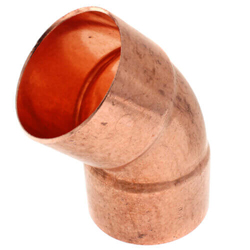
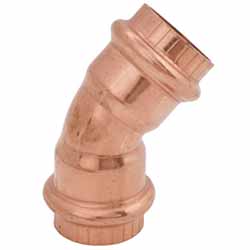
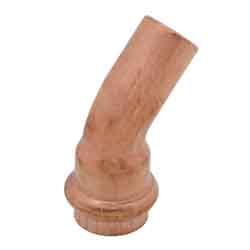
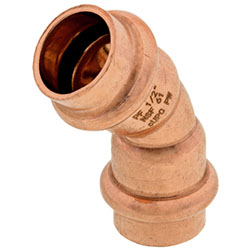
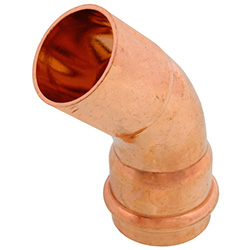
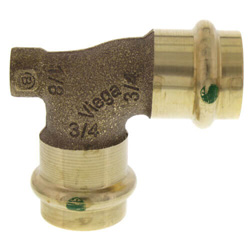
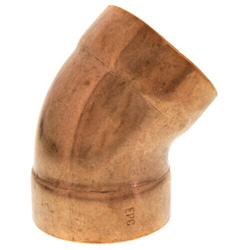
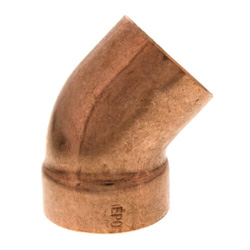
- Copper 45° Elbows: Copper 45 degree elbows create a gentler direction change than a 90 degree fitting, which helps maintain flow and reduces strain on the pipe at tight bends. Both ends are sized for solder joints, matching standard copper tube sizes used in plumbing and heating runs. Installers use them where a full 90 degree turn is not needed or would create excess strain on the assembly.
Buying Guide
Choosing the correct copper elbow starts with identifying what the fitting needs to connect ahead of anything else. A pressure line carrying potable water or refrigerant needs a fitting rated for that pressure and application, while a drain, waste, and vent line calls for a DWV-style elbow built to the different wall thickness and joint depth those systems use. Confirming the application first narrows the options quickly and helps prevent ordering the wrong wall thickness for the job.
Pipe diameter has to match on both ends of the fitting, so measuring the existing run before ordering avoids a mismatched joint. Copper elbows are sized to nominal copper tube sizes, and mixing a slightly different size in a repair can leave a gap that will not seal properly even with extra solder or flux. When a transition between sizes is required, a reducing fitting handles that job better than forcing a standard elbow to fit.
The connection method should match how the rest of the run is built. A soldered joint is the traditional choice on new construction where an open flame is allowed and a torch is already part of the crew's process. A press-fit elbow speeds up repair and retrofit work in occupied spaces where flame permits are restricted, since it only requires a press tool and the correct jaw size. Threaded elbows come into play wherever the fitting needs to land on a valve, appliance connector, or other component with male or female pipe threads.
Some elbows serve a specific mounting or layout purpose beyond changing direction. Drop ear elbows include screw holes so a fixture connection, like a hose bib or tub spout, can be anchored to wall framing instead of relying on the pipe alone. Baseboard tees exist to branch a hydronic heating line into a room's baseboard element without adding extra joints to the main run. Matching the fitting to that specific job, rather than a generic elbow, keeps the installation both stronger and easier to service later.
Fittings that meet ASTM and ASME standards for wall thickness and alloy composition hold up better under years of thermal cycling and water pressure. Buying enough of a single style and size for a full job, rather than mixing suppliers mid-project, keeps solder and press tool compatibility consistent across the run. Working with a supplier that stocks a full range of angles, connection types, and specialty styles like drop ear and baseboard tees reduces the number of separate orders a job requires.
Frequently Asked Questions
What is the difference between a CxC and CxF copper elbow?
A CxC elbow has two cup, solder-joint ends, so both connections are made with a torch and solder. A CxF elbow has one cup end for soldering and one female threaded end, letting it connect to a male-threaded valve or fixture without an additional adapter.
When should a contractor use a 45 degree elbow instead of a 90 degree elbow?
A 45 degree elbow works well when a full 90 degree turn is not needed or would put unnecessary strain on the pipe run. It creates a gentler direction change, which can also help maintain steadier flow through the line compared to a sharper bend.
What is a drop ear elbow used for?
A drop ear elbow includes ears with screw holes so it can be anchored directly to wall framing, and that mounting point lets a fixture connection, such as a hose bib or shower arm, stay rigid and supported instead of relying on the pipe alone.
Can copper elbows be used on drain lines?
DWV-style copper elbows are built for drain, waste, and vent applications and use a different wall thickness and joint depth than pressure-rated elbows. Standard pressure elbows are not a substitute for DWV fittings on those lines.
What is a baseboard tee and where is it installed?
A baseboard tee branches a hydronic heating line into a room's baseboard element without cutting the main supply or return line into three separate soldered joints. It gets installed at each zone or room connection point in a baseboard or radiant heating system.
Resources
Subcategories
- 90° Drop Ear Elbows CxC: 90 degree drop ear elbows with cup by cup solder connections are designed for mounting fixtures such as hose bibs and shower valves directly to wall framing. The ears include screw holes that let installers anchor the fitting to a stud, keeping the connection rigid instead of relying on the pipe alone for support. Plumbers use this style when both connecting pipes are cut to length for a soldered joint.
- 90° Drop Ear Elbows CxF: 90 degree drop ear elbows with a cup by female thread configuration solder to copper pipe on one side and accept a threaded fixture connection, such as a hose bib or shower arm, on the other. Like the CxC version, the mounting ears anchor the fitting to a wall stud for a secure fixture connection. Contractors use it when the fixture end requires a threaded connection rather than a second sweat joint.
- 90° Elbows CxF: 90 degree elbows with a cup by female thread configuration solder to copper pipe on one end and accept a male threaded fitting or valve on the other. They let installers transition from soldered copper to a threaded connection without an additional adapter, a configuration common wherever a valve or appliance connector has male threads.
- 90° Elbows CxM: 90 degree elbows with a cup by male thread configuration solder to copper pipe on one end and thread directly into a female fitting, valve, or appliance port on the other. They combine a direction change and a thread transition in a single fitting, reducing the number of joints in a run. Contractors reach for this style when connecting copper supply lines to threaded valves or water heater fittings.
- Baseboard Tees: Baseboard tees connect a hydronic baseboard heating element into the main supply or return line without cutting the run into three separate soldered joints. They are sized to match residential baseboard tubing and get installed at each zone or room connection point. Heating contractors use them throughout radiant and baseboard installations to keep branch connections consistent.
- Copper 45° Elbows: Copper 45 degree elbows create a gentler direction change than a 90 degree fitting, which helps maintain flow and reduces strain on the pipe at tight bends. Both ends are sized for solder joints, matching standard copper tube sizes used in plumbing and heating runs. Installers use them where a full 90 degree turn is not needed or would create excess strain on the assembly.
Buying Guide
Choosing the correct copper elbow starts with identifying what the fitting needs to connect ahead of anything else. A pressure line carrying potable water or refrigerant needs a fitting rated for that pressure and application, while a drain, waste, and vent line calls for a DWV-style elbow built to the different wall thickness and joint depth those systems use. Confirming the application first narrows the options quickly and helps prevent ordering the wrong wall thickness for the job.
Pipe diameter has to match on both ends of the fitting, so measuring the existing run before ordering avoids a mismatched joint. Copper elbows are sized to nominal copper tube sizes, and mixing a slightly different size in a repair can leave a gap that will not seal properly even with extra solder or flux. When a transition between sizes is required, a reducing fitting handles that job better than forcing a standard elbow to fit.
The connection method should match how the rest of the run is built. A soldered joint is the traditional choice on new construction where an open flame is allowed and a torch is already part of the crew's process. A press-fit elbow speeds up repair and retrofit work in occupied spaces where flame permits are restricted, since it only requires a press tool and the correct jaw size. Threaded elbows come into play wherever the fitting needs to land on a valve, appliance connector, or other component with male or female pipe threads.
Some elbows serve a specific mounting or layout purpose beyond changing direction. Drop ear elbows include screw holes so a fixture connection, like a hose bib or tub spout, can be anchored to wall framing instead of relying on the pipe alone. Baseboard tees exist to branch a hydronic heating line into a room's baseboard element without adding extra joints to the main run. Matching the fitting to that specific job, rather than a generic elbow, keeps the installation both stronger and easier to service later.
Fittings that meet ASTM and ASME standards for wall thickness and alloy composition hold up better under years of thermal cycling and water pressure. Buying enough of a single style and size for a full job, rather than mixing suppliers mid-project, keeps solder and press tool compatibility consistent across the run. Working with a supplier that stocks a full range of angles, connection types, and specialty styles like drop ear and baseboard tees reduces the number of separate orders a job requires.
Frequently Asked Questions
What is the difference between a CxC and CxF copper elbow?
A CxC elbow has two cup, solder-joint ends, so both connections are made with a torch and solder. A CxF elbow has one cup end for soldering and one female threaded end, letting it connect to a male-threaded valve or fixture without an additional adapter.
When should a contractor use a 45 degree elbow instead of a 90 degree elbow?
A 45 degree elbow works well when a full 90 degree turn is not needed or would put unnecessary strain on the pipe run. It creates a gentler direction change, which can also help maintain steadier flow through the line compared to a sharper bend.
What is a drop ear elbow used for?
A drop ear elbow includes ears with screw holes so it can be anchored directly to wall framing, and that mounting point lets a fixture connection, such as a hose bib or shower arm, stay rigid and supported instead of relying on the pipe alone.
Can copper elbows be used on drain lines?
DWV-style copper elbows are built for drain, waste, and vent applications and use a different wall thickness and joint depth than pressure-rated elbows. Standard pressure elbows are not a substitute for DWV fittings on those lines.
What is a baseboard tee and where is it installed?
A baseboard tee branches a hydronic heating line into a room's baseboard element without cutting the main supply or return line into three separate soldered joints. It gets installed at each zone or room connection point in a baseboard or radiant heating system.