




Copper Riser Clamps

 --%3E %3Csvg version='1.1' id='Fill' xmlns='http://www.w3.org/2000/svg' xmlns:xlink='http://www.w3.org/1999/xlink' x='0px' y='0px' viewBox='0 0 100 100' enable-background='new 0 0 100 100' xml:space='preserve'%3E %3Cpath fill='%23F15C02' d='M79.44,0.95H20.56C9.78,0.95,0.95,9.78,0.95,20.56v58.87c0,10.79,8.82,19.61,19.61,19.61h58.87 c10.79,0,19.61-8.83,19.61-19.61V20.56C99.05,9.78,90.22,0.95,79.44,0.95z M65.38,58.24l9.38,29.58L49.69,69.78L24.5,87.82 l9.34-29.6L8.8,39.6l30.73-0.17c0,0,6.98-19.61,10-28.93c0.54,1.36,9.88,29.1,9.88,29.1H91.2L65.38,58.24z'/%3E %3C/svg%3E)



 --%3E %3Csvg version='1.1' id='No-RB' xmlns='http://www.w3.org/2000/svg' xmlns:xlink='http://www.w3.org/1999/xlink' x='0px' y='0px' viewBox='0 0 100 100' enable-background='new 0 0 100 100' xml:space='preserve'%3E %3Cpath fill='%23CECECE' d='M79.44,0.95H20.56C9.78,0.95,0.95,9.78,0.95,20.56v58.87c0,10.79,8.82,19.61,19.61,19.61h58.87 c10.79,0,19.61-8.83,19.61-19.61V20.56C99.05,9.78,90.22,0.95,79.44,0.95z M65.38,58.24l9.38,29.58L49.69,69.78L24.5,87.82 l9.34-29.6L8.8,39.6l30.73-0.17c0,0,6.98-19.61,10-28.93c0.54,1.36,9.88,29.1,9.88,29.1H91.2L65.38,58.24z'/%3E %3C/svg%3E)


 --%3E %3Csvg version='1.1' id='With-RB' xmlns='http://www.w3.org/2000/svg' xmlns:xlink='http://www.w3.org/1999/xlink' x='0px' y='0px' viewBox='0 0 100 100' enable-background='new 0 0 100 100' xml:space='preserve'%3E %3Cpath fill='%23FBC8B4' d='M79.44,0.95H20.56C9.78,0.95,0.95,9.78,0.95,20.56v58.87c0,10.79,8.82,19.61,19.61,19.61h58.87 c10.79,0,19.61-8.83,19.61-19.61V20.56C99.05,9.78,90.22,0.95,79.44,0.95z M65.38,58.24l9.38,29.58L49.69,69.78L24.5,87.82 l9.34-29.6L8.8,39.6l30.73-0.17c0,0,6.98-19.61,10-28.93c0.54,1.36,9.88,29.1,9.88,29.1H91.2L65.38,58.24z'/%3E %3C/svg%3E)


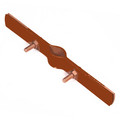


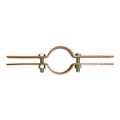


Copper Riser Clamps support vertical runs of copper tubing at each floor level, keeping the weight of the pipe from resting on fittings below. Each clamp bolts around the tubing, typically just below a coupling or fitting, so the tube's own weight transfers into the clamp rather than pulling on the joint beneath it. A 3/4 inch clamp, sized for 7/8 inch OD copper tube, carries a maximum recommended load of around 75 pounds, with larger sizes rated for proportionally more weight. Clamps are typically made of low carbon steel with a copper epoxy coated finish, which protects the tube surface from direct contact with bare steel. Plumbers installing risers in multi-story buildings need a clamp rated for both the tube diameter and the weight of the vertical run to keep the piping properly supported over the life of the building.
Subcategories
- Small Diameter Clamps (up to 1 in): This size range covers common residential riser sizes, including 3/4 inch tube rated for a maximum recommended load of about 75 pounds and 1 inch tube rated for about 120 pounds. Plumbers use these on domestic water and heating risers running through floor penetrations in residential buildings. The copper epoxy coated finish protects the tube from direct contact with the steel clamp body.
- Mid Diameter Clamps (1-1/2 in): This size covers 1-1/2 inch tube, rated for a maximum recommended load of about 150 pounds. Plumbers select this size on larger residential risers or smaller commercial branch risers. The clamp still bolts around the tube just below a coupling or fitting to transfer the pipe's weight away from the joint.
- Large Diameter Clamps (2 in and larger): Larger clamps cover tube sizes up to 6 inches and are used on commercial and institutional riser installations. Mechanical contractors specify this range on larger mains where riser weight and load demand exceed what smaller clamps can support. These clamps follow the same coupling-adjacent mounting method as smaller sizes, scaled up for the larger tube diameter.
Buying Guide
Match the clamp size to the tube's actual outside diameter rather than its nominal size, since Copper Riser Clamps are manufactured to fit the OD of the tube exactly and a mismatched clamp will not seat or support the load correctly. Check the maximum recommended load rating for the clamp size against the weight of the riser section it will support, since a 3/4 inch clamp rated for about 75 pounds is not a substitute for a larger clamp on a heavier run. Confirm the clamp meets the applicable standard, since riser clamps used in commercial or code-inspected installations are generally expected to comply with Federal Specification A-A-1192A and ANSI/MSS SP-58. Installation location matters as much as sizing: clamps are meant to be fitted and bolted just below a coupling or fitting on the tubing, so the pipe's weight transfers into the clamp rather than pulling on the joint above it. Finish is worth checking as well, since a copper epoxy coated clamp protects the tube surface from galvanic contact with bare steel, which matters on long-term installations where corrosion at the contact point could weaken the tube over time. Getting the size, load rating, and mounting location right on the first pass avoids callbacks for sagging or improperly supported risers.
Frequently Asked Questions
Where should a riser clamp be installed on a vertical pipe run?
A riser clamp is fitted and bolted just below a coupling or fitting on the tubing at each floor level. This positioning transfers the pipe's weight into the clamp rather than letting it pull on the joint above.
What is the maximum load rating for a standard riser clamp?
Load rating depends on clamp size. A 3/4 inch clamp is rated for about 75 pounds, a 1 inch clamp for about 120 pounds, and a 1-1/2 inch clamp for about 150 pounds of maximum recommended load.
What are copper riser clamps made of?
Riser clamps are typically made of low carbon steel with a copper epoxy coated finish. The coating protects the copper tube from direct contact with the bare steel clamp body.
Do riser clamps need to meet a specific standard?
Copper riser clamps used on code-inspected installations are generally expected to comply with Federal Specification A-A-1192A and ANSI/MSS SP-58. Confirming compliance matters most on commercial and institutional jobs subject to inspection.
What size range do copper riser clamps come in?
Copper riser clamps are available for tube sizes ranging from small residential diameters up to 6 inches for larger commercial installations. Matching the clamp to the tube's actual outside diameter, not just its nominal size, is necessary for a proper fit.
