



Filters
SORT
Product Availability –
Category –
Brand –
Category –
Product Type –
Series –
Color –
Material –
Review Score –
 --%3E %3Csvg version='1.1' id='Fill' xmlns='http://www.w3.org/2000/svg' xmlns:xlink='http://www.w3.org/1999/xlink' x='0px' y='0px' viewBox='0 0 100 100' enable-background='new 0 0 100 100' xml:space='preserve'%3E %3Cpath fill='%23F15C02' d='M79.44,0.95H20.56C9.78,0.95,0.95,9.78,0.95,20.56v58.87c0,10.79,8.82,19.61,19.61,19.61h58.87 c10.79,0,19.61-8.83,19.61-19.61V20.56C99.05,9.78,90.22,0.95,79.44,0.95z M65.38,58.24l9.38,29.58L49.69,69.78L24.5,87.82 l9.34-29.6L8.8,39.6l30.73-0.17c0,0,6.98-19.61,10-28.93c0.54,1.36,9.88,29.1,9.88,29.1H91.2L65.38,58.24z'/%3E %3C/svg%3E)
 --%3E %3Csvg version='1.1' id='With-RB' xmlns='http://www.w3.org/2000/svg' xmlns:xlink='http://www.w3.org/1999/xlink' x='0px' y='0px' viewBox='0 0 100 100' enable-background='new 0 0 100 100' xml:space='preserve'%3E %3Cpath fill='%23FBC8B4' d='M79.44,0.95H20.56C9.78,0.95,0.95,9.78,0.95,20.56v58.87c0,10.79,8.82,19.61,19.61,19.61h58.87 c10.79,0,19.61-8.83,19.61-19.61V20.56C99.05,9.78,90.22,0.95,79.44,0.95z M65.38,58.24l9.38,29.58L49.69,69.78L24.5,87.82 l9.34-29.6L8.8,39.6l30.73-0.17c0,0,6.98-19.61,10-28.93c0.54,1.36,9.88,29.1,9.88,29.1H91.2L65.38,58.24z'/%3E %3C/svg%3E)
Price Range –
Diffusers

 --%3E %3Csvg version='1.1' id='No-RB' xmlns='http://www.w3.org/2000/svg' xmlns:xlink='http://www.w3.org/1999/xlink' x='0px' y='0px' viewBox='0 0 100 100' enable-background='new 0 0 100 100' xml:space='preserve'%3E %3Cpath fill='%23CECECE' d='M79.44,0.95H20.56C9.78,0.95,0.95,9.78,0.95,20.56v58.87c0,10.79,8.82,19.61,19.61,19.61h58.87 c10.79,0,19.61-8.83,19.61-19.61V20.56C99.05,9.78,90.22,0.95,79.44,0.95z M65.38,58.24l9.38,29.58L49.69,69.78L24.5,87.82 l9.34-29.6L8.8,39.6l30.73-0.17c0,0,6.98-19.61,10-28.93c0.54,1.36,9.88,29.1,9.88,29.1H91.2L65.38,58.24z'/%3E %3C/svg%3E)



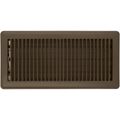
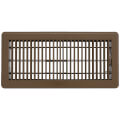
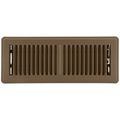
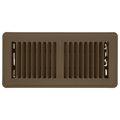

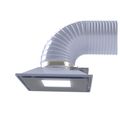

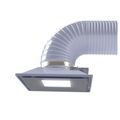
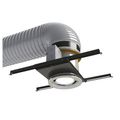
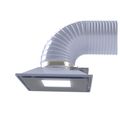
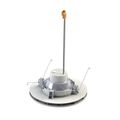
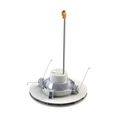
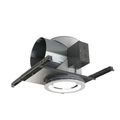
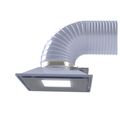


Diffusers are the ceiling or wall-mounted terminals that release conditioned air from the ductwork into an occupied space, spreading airflow evenly rather than letting it blast directly on occupants below. Unlike a simple grille, a diffuser uses angled vanes or a cone-shaped pattern to mix supply air with room air before it reaches head level, which reduces drafts and helps a space feel evenly conditioned rather than having hot or cold spots near the outlet. Diffusers are sized and selected based on the room's airflow requirement in cubic feet per minute, the duct connection size feeding it, and the throw pattern needed for the ceiling height and layout. Getting diffuser selection right affects both comfort and noise level, since an undersized diffuser forces air through at a higher velocity and creates noticeable whistling or rushing sound.
Subcategories
- Square and Rectangular Diffusers: Square and rectangular diffusers are the most common style in commercial ceilings, typically installed in a suspended ceiling grid alongside lighting fixtures. They distribute air in a four-way or adjustable pattern, letting a contractor block off one or more directions when the diffuser sits near a wall or corner. Core sizes are matched to the connected duct or plenum box, and most models accept a damper for balancing airflow after installation. These diffusers are a standard spec item on new commercial tenant build-outs.
- Round Diffusers: Round diffusers mount to a round duct connection and spread air in a circular pattern, often used where ductwork runs in round trunk and branch configurations rather than rectangular plenum systems. They're common in light commercial and some residential retrofit work where round flexible duct feeds directly to the ceiling outlet. Because the connection is round rather than square, matching the diffuser's neck size precisely to the duct diameter keeps installation simple and airtight. Some round diffusers include an integral splitter or damper for balancing at the outlet itself.
- Linear Diffusers: Linear diffusers run in long, narrow strips rather than a compact square or round footprint, often used along a wall of windows or in architectural ceiling details where a visible square diffuser wouldn't fit the design. They typically connect to a plenum box that spans the length of the diffuser and distributes air evenly along its run. Linear diffusers are frequently specified for their appearance as much as their performance, so matching finish and length to the architectural plan matters as much as the airflow calculation. Throw pattern and mounting depth vary more between manufacturers on linear styles than on standard square diffusers.
- Perforated Face Diffusers: Perforated face diffusers use a flat, evenly punched face plate instead of visible vanes, giving a cleaner architectural look while still distributing air in a wide pattern. They're common in office ceilings and retail spaces where the diffuser needs to blend visually with the ceiling tile rather than stand out. Airflow performance depends heavily on the plenum box behind the face plate, so the box style needs to match the diffuser model rather than being treated as a generic fitting. These diffusers often see use where a low-profile appearance is prioritized over maximum throw distance.
Buying Guide
Sizing a diffuser correctly starts with the room's required airflow in cubic feet per minute, which comes from the load calculation or the existing duct design rather than the diffuser's physical size alone. An oversized diffuser for the connected duct can starve airflow and reduce throw distance, while an undersized diffuser forces air through at a higher velocity, creating noise and drafts directly beneath the outlet. Matching the diffuser's neck size to the duct or plenum box connection keeps the installation straightforward and avoids field-fabricated transitions.
Throw pattern matters as much as airflow volume. A diffuser mounted in the center of an open room typically needs a four-way throw pattern, while one installed near a wall or corner often needs a three-way or adjustable pattern to avoid blowing directly against a nearby surface. Ceiling height also affects diffuser selection, since a higher ceiling generally needs a diffuser engineered for a longer throw to keep conditioned air reaching the occupied zone rather than stratifying near the ceiling.
Diffusers also come in a range of finishes and mounting styles to match ceiling type, whether a lay-in tile grid, a hard ceiling requiring a surface-mount frame, or a linear architectural application. Noise criteria ratings are worth checking on any project where quiet operation matters, such as a conference room or bedroom, since diffuser velocity and duct static pressure both contribute to audible airflow noise at the outlet. Balancing the diffuser's damper after installation is the final step that brings actual delivered airflow in line with the design target.
Frequently Asked Questions
What's the difference between a diffuser and a grille?
A diffuser uses angled vanes or a shaped face to mix supply air with room air and spread it in a wide pattern before it reaches occupants, while a grille is typically a flatter, simpler opening used more often on return air or transfer applications. Diffusers are almost always used on supply air outlets where directional throw and mixing matter most. Grilles can technically be used on supply runs too, but they lack the engineered throw pattern a diffuser provides.
How is diffuser size determined for a given room?
Diffuser size is based on the room's calculated airflow requirement in cubic feet per minute along with the connected duct or plenum box size, not simply the room's square footage. A larger core size generally handles more airflow at a lower, quieter velocity, so oversizing slightly for noise control is common practice in sensitive spaces. Checking the manufacturer's performance data for a specific model against the target airflow is the most reliable way to confirm sizing.
Why is a diffuser whistling or making noise after installation?
Whistling or rushing noise usually points to airflow velocity that's too high for the diffuser's core size, often caused by an undersized diffuser, a partially closed damper, or duct static pressure that's higher than the diffuser was designed for. Checking the damper position and confirming the diffuser is sized correctly for the actual measured airflow typically resolves the issue. A diffuser that was quiet at commissioning but becomes noisy later can also point to a duct obstruction increasing static pressure.
Can a round duct connect directly to a square diffuser?
Most square and rectangular diffusers connect to a plenum box that includes a round collar for exactly this purpose, so a round duct can feed a square-faced diffuser through that transition box. Buying the diffuser and matching plenum box together as a set avoids a mismatched connection in the field. Without the proper plenum box, a round duct forced directly onto a square diffuser neck will leak air at the connection.
What throw pattern should be chosen for a diffuser near a wall?
A diffuser installed close to a wall or corner typically needs a three-way or adjustable-blank pattern so it doesn't direct air straight into the nearby surface, which would create a dead zone on one side of the room. Most square diffusers ship with removable or adjustable vane sections that let a contractor block unwanted directions in the field. Choosing the correct pattern up front avoids having to special-order a different core after installation.
