




Filters
SORT
Product Availability –
Category –
Brand –
Series –
Width (Wall Opening) –
Height (Wall Opening) –
Overall Size –
Review Score –
 --%3E %3Csvg version='1.1' id='Fill' xmlns='http://www.w3.org/2000/svg' xmlns:xlink='http://www.w3.org/1999/xlink' x='0px' y='0px' viewBox='0 0 100 100' enable-background='new 0 0 100 100' xml:space='preserve'%3E %3Cpath fill='%23F15C02' d='M79.44,0.95H20.56C9.78,0.95,0.95,9.78,0.95,20.56v58.87c0,10.79,8.82,19.61,19.61,19.61h58.87 c10.79,0,19.61-8.83,19.61-19.61V20.56C99.05,9.78,90.22,0.95,79.44,0.95z M65.38,58.24l9.38,29.58L49.69,69.78L24.5,87.82 l9.34-29.6L8.8,39.6l30.73-0.17c0,0,6.98-19.61,10-28.93c0.54,1.36,9.88,29.1,9.88,29.1H91.2L65.38,58.24z'/%3E %3C/svg%3E)
 --%3E %3Csvg version='1.1' id='With-RB' xmlns='http://www.w3.org/2000/svg' xmlns:xlink='http://www.w3.org/1999/xlink' x='0px' y='0px' viewBox='0 0 100 100' enable-background='new 0 0 100 100' xml:space='preserve'%3E %3Cpath fill='%23FBC8B4' d='M79.44,0.95H20.56C9.78,0.95,0.95,9.78,0.95,20.56v58.87c0,10.79,8.82,19.61,19.61,19.61h58.87 c10.79,0,19.61-8.83,19.61-19.61V20.56C99.05,9.78,90.22,0.95,79.44,0.95z M65.38,58.24l9.38,29.58L49.69,69.78L24.5,87.82 l9.34-29.6L8.8,39.6l30.73-0.17c0,0,6.98-19.61,10-28.93c0.54,1.36,9.88,29.1,9.88,29.1H91.2L65.38,58.24z'/%3E %3C/svg%3E)
Price Range –
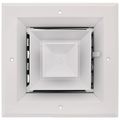
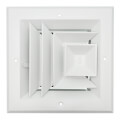
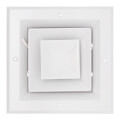
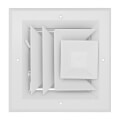
Aluminum Square Ceiling Diffusers (A500 Series)

 --%3E %3Csvg version='1.1' id='Half' xmlns='http://www.w3.org/2000/svg' xmlns:xlink='http://www.w3.org/1999/xlink' x='0px' y='0px' viewBox='0 0 100 100' enable-background='new 0 0 100 100' xml:space='preserve'%3E %3Cg%3E %3Cpath fill='%23F15C02' d='M30.05,70.23l3.79-12.01L8.8,39.6l30.73-0.17c0,0,6.98-19.61,10-28.93c0.54,1.36,9.88,29.1,9.88,29.1h1.58 L93.71,7.18c-3.58-3.82-8.66-6.23-14.28-6.23H20.56C9.78,0.95,0.95,9.78,0.95,20.56v58.87c0,5.41,2.22,10.32,5.79,13.88 L30.05,70.23z'/%3E %3C/g%3E %3Cpath fill='%23FBC8B4' d='M93.71,7.18L60.98,39.6H91.2L65.38,58.24l9.38,29.58L49.69,69.78L24.5,87.82l5.55-17.59L6.75,93.32 c3.55,3.54,8.44,5.73,13.82,5.73h58.87c10.79,0,19.61-8.83,19.61-19.61V20.56C99.05,15.4,97.01,10.69,93.71,7.18z'/%3E %3C/svg%3E)

 --%3E %3Csvg version='1.1' id='No-RB' xmlns='http://www.w3.org/2000/svg' xmlns:xlink='http://www.w3.org/1999/xlink' x='0px' y='0px' viewBox='0 0 100 100' enable-background='new 0 0 100 100' xml:space='preserve'%3E %3Cpath fill='%23CECECE' d='M79.44,0.95H20.56C9.78,0.95,0.95,9.78,0.95,20.56v58.87c0,10.79,8.82,19.61,19.61,19.61h58.87 c10.79,0,19.61-8.83,19.61-19.61V20.56C99.05,9.78,90.22,0.95,79.44,0.95z M65.38,58.24l9.38,29.58L49.69,69.78L24.5,87.82 l9.34-29.6L8.8,39.6l30.73-0.17c0,0,6.98-19.61,10-28.93c0.54,1.36,9.88,29.1,9.88,29.1H91.2L65.38,58.24z'/%3E %3C/svg%3E)
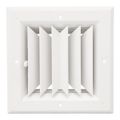
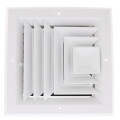
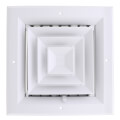
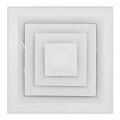
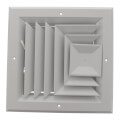
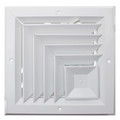
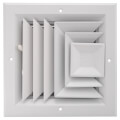
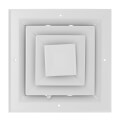
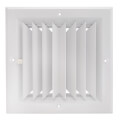
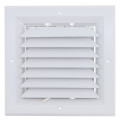
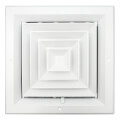
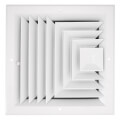
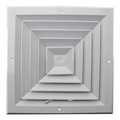
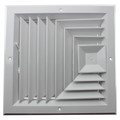
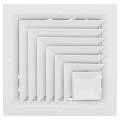
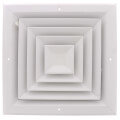
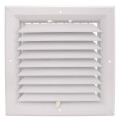
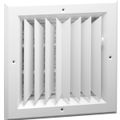
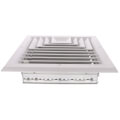
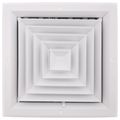
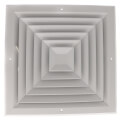
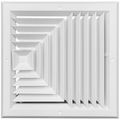
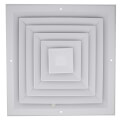
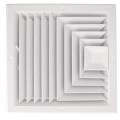
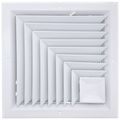
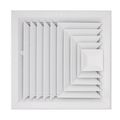
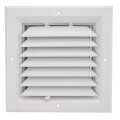
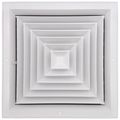
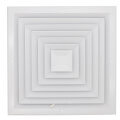
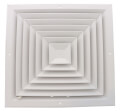
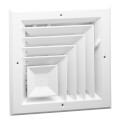
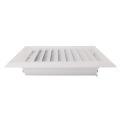
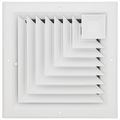
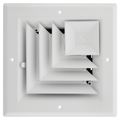
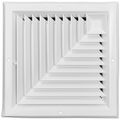
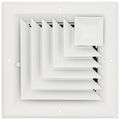

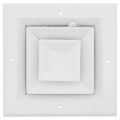
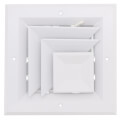
Aluminum Square Ceiling Diffusers (A500 Series) are supply air diffusers designed to distribute conditioned air evenly across a room from a ceiling-mounted grille. Built from aluminum, they resist corrosion better than comparable steel diffusers in spaces with higher humidity, such as kitchens, locker rooms, and coastal buildings. The square face pattern directs air in four directions, which helps prevent the drafts that a single-direction register can create directly below it. Contractors commonly install these diffusers in drop ceilings and hard ceilings alike, matching the frame style to the finished ceiling type on the job. Because they mount flush with the surrounding ceiling, they blend into finished spaces without drawing attention away from the room's design. Choosing the right size and throw pattern keeps air distribution even and avoids the cold or hot spots that come from an undersized or mismatched diffuser.
Subcategories
- Fixed Pattern Diffusers: Fixed pattern diffusers direct air in a set four-way pattern that can't be adjusted after installation. Contractors specify them for rooms with a predictable layout, since the diffuser's throw pattern is chosen to match the space before it goes in. They cost less than adjustable models and work well in standard offices, classrooms, and retail spaces. Because the pattern is fixed, matching diffuser size to room layout during design matters more than it does with adjustable options.
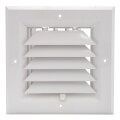
- Adjustable Pattern Diffusers: Adjustable pattern diffusers let a technician change the direction of airflow after the unit is installed, which helps when a room's layout shifts after construction. Facility managers use them in spaces that get reconfigured often, like open offices or retail floors with movable displays. The adjustable core typically pops out for cleaning or pattern changes without removing the whole diffuser. They add flexibility at a higher price point than fixed pattern units.
- Diffusers with Volume Dampers: Diffusers with volume dampers include a built-in damper that balances airflow at the diffuser instead of relying only on duct-mounted balancing dampers. Balancing contractors use them to fine-tune air volume room by room during system commissioning. They suit branch duct runs where individual room balancing is difficult to reach elsewhere in the ductwork. The damper adjusts from the diffuser face, so no ceiling access beyond the diffuser itself is needed.
- Multi-Core Directional Diffusers: Multi-core directional diffusers use a series of adjustable cones or blades to fine-tune throw distance and spread beyond what a standard fixed pattern face allows. Designers specify them in larger rooms or spaces with higher ceilings, where standard diffusers might not reach the occupied zone evenly. Mechanical engineers often factor in ceiling height and room volume when selecting these over standard square diffusers. Installation follows the same ceiling mounting process as other A500 Series diffusers.
Buying Guide
Sizing an aluminum square ceiling diffuser starts with the room's required airflow, measured against the duct size feeding it. A diffuser that's too small for the connected duct restricts airflow and creates noise, while an oversized diffuser can leave air velocity too low to reach the occupied zone. Matching neck size to duct size is the first step in avoiding both problems.
Ceiling type comes next. Drop ceilings typically use a lay-in frame that rests on the grid, while hard ceilings need a surface mount or plaster frame installed during finishing. Confirming which frame style a job requires before ordering avoids a mismatched return trip.
Throw pattern matters just as much as size. A four-way pattern spreads air evenly in open rooms, while rooms with furniture or partitions close to the diffuser may need an adjustable or directional pattern to avoid blowing air directly onto occupants. Ceiling height and room shape both factor into which pattern performs best.
Material choice affects long-term performance. Aluminum Square Ceiling Diffusers (A500 Series) hold up well in humid or corrosive environments compared with uncoated steel alternatives, which makes them a common choice for kitchens, pool areas, and coastal installations. For standard interior spaces without elevated humidity, either material can perform well, so the decision often comes down to finish preferences and budget alongside airflow requirements.
Frequently Asked Questions
What's the difference between fixed and adjustable pattern diffusers?
Fixed pattern diffusers direct air in a set four-way spread that can't be changed after installation, while adjustable models let a technician alter the throw direction later. Fixed units typically cost less and suit rooms with a stable layout. Adjustable diffusers add flexibility for spaces that get reconfigured over time.
How does neck size affect diffuser performance?
Neck size needs to match the connected duct size to avoid restricting airflow or creating excess noise. An undersized neck forces air through a smaller opening, which raises velocity and noise at the diffuser face. Matching neck size to duct size during the takeoff calculation keeps airflow and sound levels in a comfortable range.
Can Aluminum Square Ceiling Diffusers (A500 Series) be used in humid spaces like kitchens or pool areas?
Aluminum resists corrosion better than uncoated steel, which makes these diffusers a common choice in kitchens, locker rooms, and other humid or corrosive environments. Standard interior spaces without elevated humidity can use either material without a performance difference. The decision usually comes down to environment, finish preference, and budget.
What frame style works with a drop ceiling versus a hard ceiling?
Drop ceilings typically use a lay-in frame that rests directly on the ceiling grid without additional fasteners. Hard ceilings need a surface mount or plaster frame installed as part of the ceiling finish. Confirming the ceiling type before ordering avoids receiving the wrong frame style.
When should a diffuser with a volume damper be specified instead of a standard model?
Diffusers with a built-in volume damper let a balancing contractor fine-tune airflow at the diffuser itself rather than relying solely on duct-mounted dampers upstream. They work well on branch runs where accessing a duct damper is difficult. Specifying them during system design saves a callback if room-by-room balancing turns out to be necessary.
