



Filters
SORT
Product Availability –
Category –
Amperage –
Voltage –
Poles –
Review Score –
 --%3E %3Csvg version='1.1' id='Fill' xmlns='http://www.w3.org/2000/svg' xmlns:xlink='http://www.w3.org/1999/xlink' x='0px' y='0px' viewBox='0 0 100 100' enable-background='new 0 0 100 100' xml:space='preserve'%3E %3Cpath fill='%23F15C02' d='M79.44,0.95H20.56C9.78,0.95,0.95,9.78,0.95,20.56v58.87c0,10.79,8.82,19.61,19.61,19.61h58.87 c10.79,0,19.61-8.83,19.61-19.61V20.56C99.05,9.78,90.22,0.95,79.44,0.95z M65.38,58.24l9.38,29.58L49.69,69.78L24.5,87.82 l9.34-29.6L8.8,39.6l30.73-0.17c0,0,6.98-19.61,10-28.93c0.54,1.36,9.88,29.1,9.88,29.1H91.2L65.38,58.24z'/%3E %3C/svg%3E)
 --%3E %3Csvg version='1.1' id='With-RB' xmlns='http://www.w3.org/2000/svg' xmlns:xlink='http://www.w3.org/1999/xlink' x='0px' y='0px' viewBox='0 0 100 100' enable-background='new 0 0 100 100' xml:space='preserve'%3E %3Cpath fill='%23FBC8B4' d='M79.44,0.95H20.56C9.78,0.95,0.95,9.78,0.95,20.56v58.87c0,10.79,8.82,19.61,19.61,19.61h58.87 c10.79,0,19.61-8.83,19.61-19.61V20.56C99.05,9.78,90.22,0.95,79.44,0.95z M65.38,58.24l9.38,29.58L49.69,69.78L24.5,87.82 l9.34-29.6L8.8,39.6l30.73-0.17c0,0,6.98-19.61,10-28.93c0.54,1.36,9.88,29.1,9.88,29.1H91.2L65.38,58.24z'/%3E %3C/svg%3E)
Price Range –
Electrical Contactors

 --%3E %3Csvg version='1.1' id='No-RB' xmlns='http://www.w3.org/2000/svg' xmlns:xlink='http://www.w3.org/1999/xlink' x='0px' y='0px' viewBox='0 0 100 100' enable-background='new 0 0 100 100' xml:space='preserve'%3E %3Cpath fill='%23CECECE' d='M79.44,0.95H20.56C9.78,0.95,0.95,9.78,0.95,20.56v58.87c0,10.79,8.82,19.61,19.61,19.61h58.87 c10.79,0,19.61-8.83,19.61-19.61V20.56C99.05,9.78,90.22,0.95,79.44,0.95z M65.38,58.24l9.38,29.58L49.69,69.78L24.5,87.82 l9.34-29.6L8.8,39.6l30.73-0.17c0,0,6.98-19.61,10-28.93c0.54,1.36,9.88,29.1,9.88,29.1H91.2L65.38,58.24z'/%3E %3C/svg%3E)
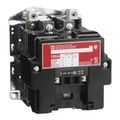
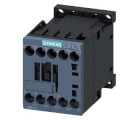

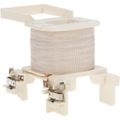
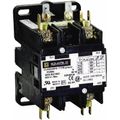
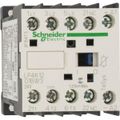
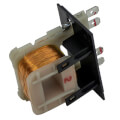
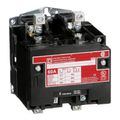
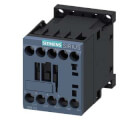

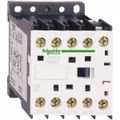
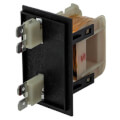
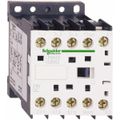
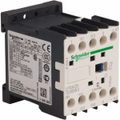
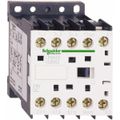
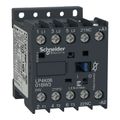

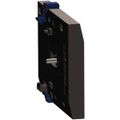
Contactors are electromechanical switches that use a low-voltage control signal to open and close a higher-voltage power circuit, most commonly the circuit that feeds a compressor, condenser fan motor, or other large HVAC or electrical load. A thermostat or control board sends a small signal to energize the contactor's coil, which pulls a set of contacts together and completes the high-voltage circuit without routing that heavier current through the control wiring itself. HVAC technicians replace contactors more often than almost any other electrical component in a split system, since the contacts see repeated arcing every time the compressor or fan cycles on and off. A pitted, burned, or stuck contactor is a common cause of equipment that will not start, that hums without running, or that keeps running after the thermostat is satisfied. Contactors are sized by coil voltage, number of poles, and current rating, and matching all three to the application is what keeps a replacement working safely in place of the original.
Subcategories
- Single-Pole Contactors: Single-pole contactors switch one leg of the power circuit while the other leg stays connected directly, a configuration common on smaller residential condensing units and single-phase loads. They cost less and take up less panel space than multi-pole versions, which makes them a common original-equipment choice on lighter-duty equipment. Technicians confirm the coil voltage and current rating match the original part before swapping one in, since an undersized contactor will fail quickly under the same load. Single-pole units are typically the most frequently replaced contactor type on residential service calls.
- Double-Pole and Two-Pole Contactors: Double-pole contactors switch both legs of a two-wire power circuit simultaneously, fully disconnecting the load rather than leaving one leg energized. This configuration is common on larger residential and light commercial condensing units where fully isolating the compressor circuit is the standard design approach. Replacing a double-pole contactor with a single-pole unit is not a safe substitution even if the coil voltage matches, since the circuit design depends on both legs switching together. Technicians check the original wiring diagram when the pole configuration is not obvious from the failed part alone.
- Three-Pole Contactors: Three-pole contactors switch all three legs of a three-phase power circuit, a configuration used almost exclusively on commercial and light industrial HVAC equipment rather than typical residential split systems. Failure symptoms mirror single and double-pole units, including pitted contacts, a stuck armature, or a coil that no longer pulls in reliably. Because three-phase equipment often carries higher current loads, three-pole contactors are built with heavier contact material to handle the added electrical stress. Matching current rating and coil voltage remains the deciding factor when selecting a replacement, the same as with lower pole-count contactors.
- Definite Purpose Contactors: Definite purpose contactors are built specifically for a narrow range of applications, most often HVAC compressor and fan loads, rather than the broader industrial control uses that a general-purpose contactor covers. Their compact size and simplified mounting make them the standard choice for residential and light commercial condensing unit replacement work. Technicians stock definite purpose contactors in the most common voltage and pole configurations since these cover the large majority of service calls. Choosing a definite purpose model built for the specific application avoids paying for features meant for industrial control panels that a condensing unit will never use.
Buying Guide
Matching a replacement contactor to the failed original starts with three specifications: coil voltage, number of poles, and full-load or resistive current rating. Coil voltage refers to the low-voltage signal that energizes the contactor, commonly a value supplied by the control transformer, and it needs to match exactly since a contactor with the wrong coil voltage either will not pull in or will burn out quickly from overvoltage. Pole count determines how many legs of the power circuit the contactor switches, and current rating determines how much load the contacts can handle without excessive arcing or premature failure.
Physical size and terminal configuration matter for a clean installation, since Contactors mount inside a tight electrical compartment where a slightly larger or differently shaped replacement may not fit the existing bracket or wiring layout without modification. Comparing the physical footprint of a proposed replacement against the failed part before ordering avoids a return trip when the new contactor does not clear the panel enclosure.
Technicians working service routes across a mix of residential and light commercial equipment generally keep the most common single-pole and double-pole configurations on the truck, since these cover the majority of everyday calls. Three-pole contactors and less common voltage combinations are usually ordered once the specific unit's requirements are confirmed on site rather than stocked in bulk, since commercial three-phase equipment makes up a smaller share of most residential-focused service work.
Frequently Asked Questions
What are the signs that a contactor needs to be replaced?
A unit that hums but will not start, a compressor or fan that keeps running after the thermostat is satisfied, or visible pitting and burn marks on the contacts all point toward a failing contactor. A contactor that chatters or buzzes audibly when energized is also a common warning sign. Testing the coil for continuity and checking the contacts for excessive wear confirms the diagnosis before ordering a replacement.
How is coil voltage different from the contactor's power circuit voltage?
Coil voltage is the low-voltage signal, typically supplied through the control transformer, that energizes the contactor and pulls the contacts together. The power circuit voltage is the separate, usually much higher, voltage that the contacts switch on and off to run the compressor or fan motor. Both values need to be checked separately since matching one without the other will not produce a working replacement.
Can a single-pole contactor be replaced with a double-pole model?
A double-pole contactor can generally replace a single-pole unit as long as coil voltage and current rating match, since the extra pole simply switches the additional leg without disconnecting anything unusual. The reverse substitution, replacing a double-pole contactor with a single-pole unit, is not safe since it leaves one leg of the circuit energized when it should be fully disconnected. Checking the original wiring diagram before making the swap avoids this mistake.
Why do HVAC contactors fail more often than other electrical components?
Contactors switch a large electrical load every time the compressor or fan cycles on and off, and that repeated arcing gradually wears down the contact material until the connection becomes unreliable. Units that cycle frequently, such as during a hot summer with heavy air conditioning use, put more cumulative wear on the contactor than equipment that runs for longer, less frequent cycles. This wear pattern makes contactors one of the most commonly replaced parts in HVAC service work.
Is it safe to bypass a failed contactor temporarily?
Bypassing a contactor removes the low-voltage control point that allows the thermostat to safely start and stop the compressor or fan, which creates both a safety hazard and a risk of equipment damage from uncontrolled operation. A temporary bypass is not a substitute for a proper repair and should not be left in place beyond diagnosing the fault. Replacing the failed contactor with a correctly matched part is the only reliable fix.
