




Filters
SORT
Product Availability –
Product Type –
Review Score –
 --%3E %3Csvg version='1.1' id='Fill' xmlns='http://www.w3.org/2000/svg' xmlns:xlink='http://www.w3.org/1999/xlink' x='0px' y='0px' viewBox='0 0 100 100' enable-background='new 0 0 100 100' xml:space='preserve'%3E %3Cpath fill='%23F15C02' d='M79.44,0.95H20.56C9.78,0.95,0.95,9.78,0.95,20.56v58.87c0,10.79,8.82,19.61,19.61,19.61h58.87 c10.79,0,19.61-8.83,19.61-19.61V20.56C99.05,9.78,90.22,0.95,79.44,0.95z M65.38,58.24l9.38,29.58L49.69,69.78L24.5,87.82 l9.34-29.6L8.8,39.6l30.73-0.17c0,0,6.98-19.61,10-28.93c0.54,1.36,9.88,29.1,9.88,29.1H91.2L65.38,58.24z'/%3E %3C/svg%3E)
 --%3E %3Csvg version='1.1' id='With-RB' xmlns='http://www.w3.org/2000/svg' xmlns:xlink='http://www.w3.org/1999/xlink' x='0px' y='0px' viewBox='0 0 100 100' enable-background='new 0 0 100 100' xml:space='preserve'%3E %3Cpath fill='%23FBC8B4' d='M79.44,0.95H20.56C9.78,0.95,0.95,9.78,0.95,20.56v58.87c0,10.79,8.82,19.61,19.61,19.61h58.87 c10.79,0,19.61-8.83,19.61-19.61V20.56C99.05,9.78,90.22,0.95,79.44,0.95z M65.38,58.24l9.38,29.58L49.69,69.78L24.5,87.82 l9.34-29.6L8.8,39.6l30.73-0.17c0,0,6.98-19.61,10-28.93c0.54,1.36,9.88,29.1,9.88,29.1H91.2L65.38,58.24z'/%3E %3C/svg%3E)
Price Range –
FLIR

 --%3E %3Csvg version='1.1' id='Half' xmlns='http://www.w3.org/2000/svg' xmlns:xlink='http://www.w3.org/1999/xlink' x='0px' y='0px' viewBox='0 0 100 100' enable-background='new 0 0 100 100' xml:space='preserve'%3E %3Cg%3E %3Cpath fill='%23F15C02' d='M30.05,70.23l3.79-12.01L8.8,39.6l30.73-0.17c0,0,6.98-19.61,10-28.93c0.54,1.36,9.88,29.1,9.88,29.1h1.58 L93.71,7.18c-3.58-3.82-8.66-6.23-14.28-6.23H20.56C9.78,0.95,0.95,9.78,0.95,20.56v58.87c0,5.41,2.22,10.32,5.79,13.88 L30.05,70.23z'/%3E %3C/g%3E %3Cpath fill='%23FBC8B4' d='M93.71,7.18L60.98,39.6H91.2L65.38,58.24l9.38,29.58L49.69,69.78L24.5,87.82l5.55-17.59L6.75,93.32 c3.55,3.54,8.44,5.73,13.82,5.73h58.87c10.79,0,19.61-8.83,19.61-19.61V20.56C99.05,15.4,97.01,10.69,93.71,7.18z'/%3E %3C/svg%3E)


 --%3E %3Csvg version='1.1' id='No-RB' xmlns='http://www.w3.org/2000/svg' xmlns:xlink='http://www.w3.org/1999/xlink' x='0px' y='0px' viewBox='0 0 100 100' enable-background='new 0 0 100 100' xml:space='preserve'%3E %3Cpath fill='%23CECECE' d='M79.44,0.95H20.56C9.78,0.95,0.95,9.78,0.95,20.56v58.87c0,10.79,8.82,19.61,19.61,19.61h58.87 c10.79,0,19.61-8.83,19.61-19.61V20.56C99.05,9.78,90.22,0.95,79.44,0.95z M65.38,58.24l9.38,29.58L49.69,69.78L24.5,87.82 l9.34-29.6L8.8,39.6l30.73-0.17c0,0,6.98-19.61,10-28.93c0.54,1.36,9.88,29.1,9.88,29.1H91.2L65.38,58.24z'/%3E %3C/svg%3E)



FLIR Systems was founded in 1978 to develop high-performance infrared imaging systems originally built for airborne applications. The company name comes from forward-looking infrared, a reference to its original aviation thermal imaging work. Headquartered in Wilsonville, Oregon, FLIR expanded over several decades from aviation and defense imaging into a broad range of thermal cameras used across industrial, electrical, and building diagnostic fields.
In 2021, FLIR became part of Teledyne Technologies and now operates as Teledyne FLIR, though products continue to carry the FLIR name. Decades of infrared sensor development inform the cameras and imaging tools now used by tradespeople for diagnostic work in the field.
Product Lines
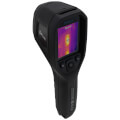
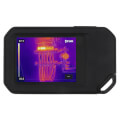
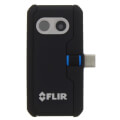
FLIR's lineup carried on SupplyHouse centers on handheld and compact thermal imaging cameras built for field diagnostics, ranging from pocket-sized imaging attachments to standalone handheld cameras with built-in visual and infrared lenses. Many models combine thermal and visible-light imaging in a single device, letting a technician overlay temperature data onto a normal photo for documentation and reporting.
Why Contractors Specify FLIR
Electrical, plumbing, and HVAC contractors use thermal cameras to locate problems that are not visible to the naked eye, such as overheating connections, missing insulation, water intrusion behind walls, and refrigerant or hot water leaks inside finished surfaces. A thermal scan lets a technician narrow down a problem area before opening walls or removing equipment, cutting down on guesswork during diagnostic calls.
How to Choose FLIR Products
Selecting a thermal camera starts with matching resolution and thermal sensitivity to the type of work being performed. Electrical inspection work generally calls for finer thermal resolution to spot small temperature differences at connections and breakers, while general building or plumbing diagnostics can often be handled with a more basic imaging range. Battery life, screen size, and whether the device needs to pair with a smartphone or operate as a standalone camera are also worth weighing against how the tool will be used day to day on the job.
Frequently Asked Questions
What is a thermal imaging camera used for in HVAC and plumbing work?
A thermal imaging camera converts infrared radiation into a visible image, allowing a technician to see temperature differences across a surface. In trade work, the tool helps locate hot electrical connections, hidden moisture, insulation gaps, and leaking pipes without removing drywall or equipment covers.
Can a FLIR camera detect a refrigerant leak?
A thermal camera cannot directly see refrigerant gas, but the temperature change caused by a leak, such as a cold line or frosted fitting, often shows up clearly on an infrared scan, helping narrow down the leak location before further testing.
What resolution is needed for electrical inspection work?
Finer thermal resolution helps when distinguishing small temperature differences between adjacent terminals or breakers in a panel. Lower-resolution cameras can still flag a clearly overheating component but may struggle to pinpoint the exact source in a crowded panel.
Are FLIR cameras durable enough for daily job site use?
Handheld models built for trade use are generally designed with rugged housings to handle drops, dust, and temperature swings common on job sites, though care should still be taken to store the camera properly between uses.
Does a thermal camera replace the need for a moisture meter?
Not entirely. Thermal imaging highlights temperature patterns that often correspond to moisture, but a dedicated moisture meter confirms actual moisture content at a suspected spot, so many technicians use the two tools together.
