




Filters
SORT
Product Availability –
Review Score –
 --%3E %3Csvg version='1.1' id='Fill' xmlns='http://www.w3.org/2000/svg' xmlns:xlink='http://www.w3.org/1999/xlink' x='0px' y='0px' viewBox='0 0 100 100' enable-background='new 0 0 100 100' xml:space='preserve'%3E %3Cpath fill='%23F15C02' d='M79.44,0.95H20.56C9.78,0.95,0.95,9.78,0.95,20.56v58.87c0,10.79,8.82,19.61,19.61,19.61h58.87 c10.79,0,19.61-8.83,19.61-19.61V20.56C99.05,9.78,90.22,0.95,79.44,0.95z M65.38,58.24l9.38,29.58L49.69,69.78L24.5,87.82 l9.34-29.6L8.8,39.6l30.73-0.17c0,0,6.98-19.61,10-28.93c0.54,1.36,9.88,29.1,9.88,29.1H91.2L65.38,58.24z'/%3E %3C/svg%3E)
Price Range –
Globe Valve Actuators


 --%3E %3Csvg version='1.1' id='No-RB' xmlns='http://www.w3.org/2000/svg' xmlns:xlink='http://www.w3.org/1999/xlink' x='0px' y='0px' viewBox='0 0 100 100' enable-background='new 0 0 100 100' xml:space='preserve'%3E %3Cpath fill='%23CECECE' d='M79.44,0.95H20.56C9.78,0.95,0.95,9.78,0.95,20.56v58.87c0,10.79,8.82,19.61,19.61,19.61h58.87 c10.79,0,19.61-8.83,19.61-19.61V20.56C99.05,9.78,90.22,0.95,79.44,0.95z M65.38,58.24l9.38,29.58L49.69,69.78L24.5,87.82 l9.34-29.6L8.8,39.6l30.73-0.17c0,0,6.98-19.61,10-28.93c0.54,1.36,9.88,29.1,9.88,29.1H91.2L65.38,58.24z'/%3E %3C/svg%3E)
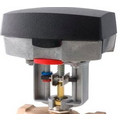
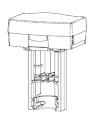
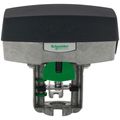

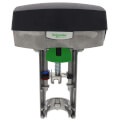
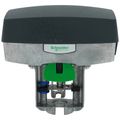
Globe Valve Actuators drive the stem of a globe valve to open, close, or modulate flow in a hydronic heating or cooling system without a technician turning a hand wheel. The category includes Honeywell's M6410A1029 cartridge actuator, rated at 40.5 lbf and built for floating or modulating control of individual room valves, alongside Siemens' SSB series non-spring-return actuator, which operates on a 0 to 10 Vdc signal. Both actuator types mount directly onto a matching globe valve body and convert an electronic control signal from a thermostat or building automation system into mechanical stem movement. Building engineers choose a specific actuator based on the control signal already in use, the force needed to drive the connected valve size, and whether the application calls for proportional modulation or simple floating control. Matching actuator to valve body correctly keeps a zone or room responding the way the control sequence intends.
Subcategories
- Cartridge-Style Actuators: Cartridge-style actuators, like Honeywell's M6410A1029, mount directly onto a matching cartridge valve body for individual room or zone control. Rated at 40.5 lbf with a 1/4-inch stroke, this actuator provides floating or modulating control on two-way and three-way valve bodies. Controls technicians use cartridge actuators where panel space is tight and a full-size valve actuator would not fit.
- Non-Spring-Return Electronic Actuators: Non-spring-return actuators, such as Siemens' SSB series, hold their last commanded position instead of snapping back to a default state when power is removed. The SSB61U operates on a 0 to 10 Vdc control signal, giving a building automation system proportional control over valve position. Zones that should not fail toward a fixed position during a power interruption typically specify this actuator type.
- Floating Control Actuators: Floating control actuators respond to a three-wire floating control signal, driving the valve stem open or closed in small increments rather than jumping to a fixed position. Honeywell's cartridge actuator supports floating control alongside modulating control, which lets the same actuator work with either control strategy depending on how the room controller is configured.
Buying Guide
Choosing from a Globe Valve Actuators listing starts with the control signal already running to the valve location, since an actuator built for a 0 to 10 Vdc signal will not respond correctly to a floating control input and vice versa. Confirm whether the building automation system or room controller sends a floating three-wire signal, a 0 to 10 Vdc proportional signal, or a simple two-position command before selecting a replacement actuator. Force rating comes next: the actuator needs enough stem force to fully stroke the connected valve body, and an actuator rated for a smaller valve will not seat a larger one reliably. Honeywell's cartridge actuator, rated at 40.5 lbf, is sized for individual room valves rather than larger zone or main distribution valves. Spring-return versus non-spring-return matters for fail-safe behavior. A spring-return actuator drives the valve to a predetermined position, usually closed, when power is lost, which some applications require for safety. A non-spring-return actuator, like the Siemens SSB series, holds its last position instead, which suits zones where an unexpected valve closure during a power interruption would cause more harm than good. Mounting style should also match the existing valve body exactly, since cartridge actuators only fit cartridge-style valve bodies and will not adapt to a different valve stem configuration without a separate linkage kit.
Frequently Asked Questions
How is the right globe valve actuator chosen for a replacement?
Choosing the right globe valve actuator starts with matching the control signal already wired to the location, whether that's a floating three-wire signal or a 0 to 10 Vdc proportional signal. The actuator's force rating and mounting style also need to match the existing valve body exactly for a direct replacement.
What does non-spring-return mean on a globe valve actuator?
A non-spring-return globe valve actuator holds its last commanded position when power is lost instead of driving the valve to a default position. Siemens' SSB series actuators in this category use this non-spring-return design, which suits zones where a sudden valve closure during a power interruption would be a problem.
What is a cartridge-style globe valve actuator used for?
A cartridge-style actuator, like Honeywell's M6410A1029, mounts directly onto a matching cartridge valve body for individual room or zone control. Rated at 40.5 lbf, it provides floating or modulating control in a compact footprint suited to space-limited installations.
What's the difference between floating control and 0 to 10 Vdc control on these actuators?
Floating control uses a three-wire signal to drive the valve stem open or closed in small increments, while a 0 to 10 Vdc signal gives a building automation system direct proportional control over valve position. Some actuators in this category, including Honeywell's cartridge model, support floating control, while the Siemens SSB series uses the 0 to 10 Vdc input.
Can any globe valve actuator fit any globe valve body?
A globe valve actuator only fits a valve body with a matching mounting and stem configuration, so a cartridge actuator will not adapt to a different valve type without a separate linkage kit. Checking the connected valve's stroke and force requirement against the actuator's rating avoids an actuator that cannot fully seat the valve.
