




Filters
SORT
Product Availability –
Brand –
Size –
Color –
Review Score –
 --%3E %3Csvg version='1.1' id='Fill' xmlns='http://www.w3.org/2000/svg' xmlns:xlink='http://www.w3.org/1999/xlink' x='0px' y='0px' viewBox='0 0 100 100' enable-background='new 0 0 100 100' xml:space='preserve'%3E %3Cpath fill='%23F15C02' d='M79.44,0.95H20.56C9.78,0.95,0.95,9.78,0.95,20.56v58.87c0,10.79,8.82,19.61,19.61,19.61h58.87 c10.79,0,19.61-8.83,19.61-19.61V20.56C99.05,9.78,90.22,0.95,79.44,0.95z M65.38,58.24l9.38,29.58L49.69,69.78L24.5,87.82 l9.34-29.6L8.8,39.6l30.73-0.17c0,0,6.98-19.61,10-28.93c0.54,1.36,9.88,29.1,9.88,29.1H91.2L65.38,58.24z'/%3E %3C/svg%3E)
Price Range –
Hart & Cooley Dampers


 --%3E %3Csvg version='1.1' id='No-RB' xmlns='http://www.w3.org/2000/svg' xmlns:xlink='http://www.w3.org/1999/xlink' x='0px' y='0px' viewBox='0 0 100 100' enable-background='new 0 0 100 100' xml:space='preserve'%3E %3Cpath fill='%23CECECE' d='M79.44,0.95H20.56C9.78,0.95,0.95,9.78,0.95,20.56v58.87c0,10.79,8.82,19.61,19.61,19.61h58.87 c10.79,0,19.61-8.83,19.61-19.61V20.56C99.05,9.78,90.22,0.95,79.44,0.95z M65.38,58.24l9.38,29.58L49.69,69.78L24.5,87.82 l9.34-29.6L8.8,39.6l30.73-0.17c0,0,6.98-19.61,10-28.93c0.54,1.36,9.88,29.1,9.88,29.1H91.2L65.38,58.24z'/%3E %3C/svg%3E)

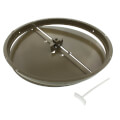
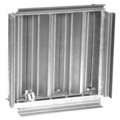
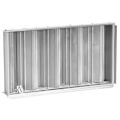


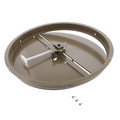



Hart & Cooley Dampers are airflow control devices installed behind grilles, registers, and diffusers to balance HVAC systems room by room. The 92OOV opposed blade damper, for example, is built from steel and controls air volume from full flow to shut-off in sizes from 6 inch by 4 inch up to 24 inch by 24 inch in a single piece. Covering that size range lets most residential branch runs and many commercial trunk lines fit without a custom fabrication. Balancing contractors use these dampers during commissioning to bring each room to its design airflow, and building staff adjust them afterward to fine-tune comfort as seasons change. Because the damper mounts directly behind the visible grille or diffuser, matching damper size and blade style to the fixture keeps the assembly airtight when closed and free of rattle when open. Choosing the right damper type up front saves a truck roll later, since swapping a damper usually means pulling the grille and duct collar apart again.
Subcategories
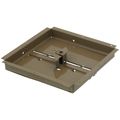
- 92OOV Steel Opposed Blade Damper: The 92OOV is a steel opposed blade damper built for models 92, 94, RE5, and PFG grille bodies, sized from 6 inch by 4 inch up to 24 inch by 24 inch as a single piece. Its opposed blade design lets a technician dial airflow anywhere from full flow to complete shut-off rather than only open or closed. Sheet metal contractors specify it when the grille body itself is steel, keeping the damper and visible fixture the same material and finish. Ordering requires the model number along with width and height, since the damper ships matched to the specific grille it sits behind.
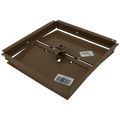
- AD Aluminum Opposed Blade Damper: The AD damper uses extruded aluminum construction instead of steel, covering the same 6 inch by 4 inch minimum up to a 24 inch by 24 inch one-piece maximum, with larger openings handled by ganging multiple units up to 48 inch by 48 inch. Aluminum resists corrosion better than steel in humid mechanical rooms or coastal installations. Contractors pair it with aluminum grille and diffuser bodies for a consistent look and weight. The opposed blade design still delivers the same full flow to shut-off control as the steel version.
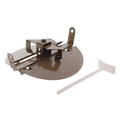
- RD Radial Damper: The RD damper is built from galvanized steel with a mill finish and comes in 6, 8, 10, 12, and 14 inch sizes to match round neck diffusers. Its face-adjustable design lets a technician set airflow from the front of the diffuser without removing the ceiling fixture. Balancing crews favor this style on finished ceilings where pulling a diffuser to reach a damper behind it would mean patching paint or drywall afterward. The round profile matches standard round duct takeoffs feeding ceiling diffusers.
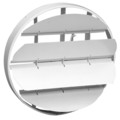
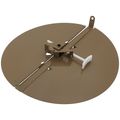
- Butterfly Damper for Model 16 Diffuser: The butterfly damper for the number 16 diffuser uses all-steel construction with a Golden Sand enamel finish, in 6, 8, 10, 12, 14, and 18 inch sizes. A removable knob operator adjusts the blade from closed to fully open, giving even airflow control across the whole diffuser opening. Diffuser installers pick this damper specifically for number 16 round diffusers rather than a universal opposed blade unit, since it is sized and shaped to match that body exactly. The knob sits flush with the diffuser face, so the adjustment point stays accessible without removing the fixture.
Buying Guide
Start by matching damper type to how airflow gets adjusted after installation. Opposed blade dampers like the 92OOV or AD mount behind the grille and get set once during balancing, which suits ductwork that will not need frequent adjustment. Radial and butterfly dampers face the room and adjust from the front, which suits diffusers on finished ceilings where pulling the fixture to reach a rear-mounted damper is impractical.
Material choice comes next. Steel dampers cost less and hold up fine in dry mechanical spaces and typical residential ductwork. Aluminum dampers resist corrosion better in humid basements, bathrooms, or coastal climates where steel can eventually rust at the blade pivots. Matching damper material to grille material keeps the finish consistent where both parts are visible in the room.
Hart & Cooley Dampers also need to match the exact fixture behind or in front of them, not just the duct size. A 92OOV damper only fits models 92, 94, RE5, and PFG grille bodies, and the butterfly damper for the number 16 diffuser only fits that specific diffuser. Ordering the wrong damper for the fixture usually means a return trip once the mismatch shows up on site, so confirm the grille or diffuser model number before placing the order, not just the duct dimensions.
Finally, check whether the opening needs a single-piece damper or a ganged assembly. One-piece dampers top out at 24 inch by 24 inch, and openings larger than that need multiple units joined to cover the full duct face.
Frequently Asked Questions
What is the difference between an opposed blade damper and a radial damper?
Opposed blade dampers such as the 92OOV or AD mount behind the grille or diffuser and get adjusted once during system balancing, since reaching them again means removing the fixture. Radial dampers face the room and adjust from the front of a round diffuser without pulling the fixture off the ceiling. Both styles move air from full flow to shut-off, but the access point for making that adjustment is what separates them.
Can a steel damper be swapped for an aluminum one on the same job?
Steel and aluminum opposed blade dampers cover the same size range, from 6 inch by 4 inch up to 24 inch by 24 inch in one piece, so either material fits the same duct opening. Aluminum holds up better in humid basements, bathrooms, and coastal climates where steel blades can eventually rust at the pivot points. Matching the damper material to the grille material keeps a consistent finish where both parts show in the room.
What size openings need more than one damper section?
Single-piece opposed blade dampers top out at 24 inch by 24 inch. Openings larger than that need multiple damper sections ganged together to cover the full face of the opening, up to 48 inch by 48 inch on the aluminum AD damper. Confirming the total opening size before ordering avoids discovering the size limit after the duct is already framed in.
Does a damper need to match a specific grille or diffuser model?
Some Hart & Cooley dampers are built for a specific fixture rather than a generic duct size. The 92OOV, for example, only fits models 92, 94, RE5, and PFG grille bodies, and the butterfly damper for the number 16 diffuser only fits that one diffuser body. Ordering by model number along with width and height keeps the damper matched to the exact fixture it will sit behind or inside.
How does a face-adjustable damper work on a finished ceiling?
The RD radial damper adjusts from the front of a round diffuser, so a technician can set airflow without removing the diffuser from a finished ceiling. Avoiding fixture removal matters on jobs where pulling it would otherwise mean patching paint or drywall afterward. Balancing crews favor this style specifically for finished spaces where the ceiling is already painted or textured.
