




HydroCheck

 --%3E %3Csvg version='1.1' id='Fill' xmlns='http://www.w3.org/2000/svg' xmlns:xlink='http://www.w3.org/1999/xlink' x='0px' y='0px' viewBox='0 0 100 100' enable-background='new 0 0 100 100' xml:space='preserve'%3E %3Cpath fill='%23F15C02' d='M79.44,0.95H20.56C9.78,0.95,0.95,9.78,0.95,20.56v58.87c0,10.79,8.82,19.61,19.61,19.61h58.87 c10.79,0,19.61-8.83,19.61-19.61V20.56C99.05,9.78,90.22,0.95,79.44,0.95z M65.38,58.24l9.38,29.58L49.69,69.78L24.5,87.82 l9.34-29.6L8.8,39.6l30.73-0.17c0,0,6.98-19.61,10-28.93c0.54,1.36,9.88,29.1,9.88,29.1H91.2L65.38,58.24z'/%3E %3C/svg%3E)
 --%3E %3Csvg version='1.1' id='With-RB' xmlns='http://www.w3.org/2000/svg' xmlns:xlink='http://www.w3.org/1999/xlink' x='0px' y='0px' viewBox='0 0 100 100' enable-background='new 0 0 100 100' xml:space='preserve'%3E %3Cpath fill='%23FBC8B4' d='M79.44,0.95H20.56C9.78,0.95,0.95,9.78,0.95,20.56v58.87c0,10.79,8.82,19.61,19.61,19.61h58.87 c10.79,0,19.61-8.83,19.61-19.61V20.56C99.05,9.78,90.22,0.95,79.44,0.95z M65.38,58.24l9.38,29.58L49.69,69.78L24.5,87.82 l9.34-29.6L8.8,39.6l30.73-0.17c0,0,6.98-19.61,10-28.93c0.54,1.36,9.88,29.1,9.88,29.1H91.2L65.38,58.24z'/%3E %3C/svg%3E)

 --%3E %3Csvg version='1.1' id='No-RB' xmlns='http://www.w3.org/2000/svg' xmlns:xlink='http://www.w3.org/1999/xlink' x='0px' y='0px' viewBox='0 0 100 100' enable-background='new 0 0 100 100' xml:space='preserve'%3E %3Cpath fill='%23CECECE' d='M79.44,0.95H20.56C9.78,0.95,0.95,9.78,0.95,20.56v58.87c0,10.79,8.82,19.61,19.61,19.61h58.87 c10.79,0,19.61-8.83,19.61-19.61V20.56C99.05,9.78,90.22,0.95,79.44,0.95z M65.38,58.24l9.38,29.58L49.69,69.78L24.5,87.82 l9.34-29.6L8.8,39.6l30.73-0.17c0,0,6.98-19.61,10-28.93c0.54,1.36,9.88,29.1,9.88,29.1H91.2L65.38,58.24z'/%3E %3C/svg%3E)

HydroCheck is a Minnesota-based manufacturer that designs and builds electronic float switches for sump and utility pumps. The company was founded in 1998 as a family-owned business. It has stayed focused on a single product category rather than expanding into broader pump manufacturing. Engineering effort concentrates on the switch mechanisms that trigger pump activation. Laurene Ritten founded the company and continues to serve as its CEO.
Product development centers on the failure modes that plumbing contractors most commonly report with mechanical float switches. Examples include tethered floats snagging on pit walls and debris fouling a moving part. SupplyHouse carries HydroCheck's electronic float switch lineup for contractors working on sump pit, sewage ejector, and utility pump installations in residential and light commercial settings.
Product Lines
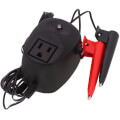
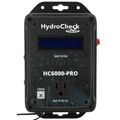
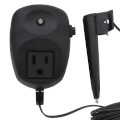
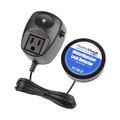
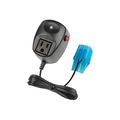
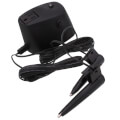
HydroCheck's core offering is its electronic float switch line, built around solid-state sensing rather than a moving mechanical float arm. These switches are designed to control single pumps in sump pits and utility basins, as well as multi-pump configurations where alternating or simultaneous operation is needed during high-inflow events.
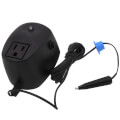
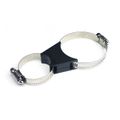
The company also produces replacement and retrofit switches sized to fit pump housings from multiple pump manufacturers. This gives contractors a way to upgrade an existing mechanical-float installation without replacing the pump itself.
Why Contractors Specify HydroCheck
Plumbing contractors turn to HydroCheck switches on jobs where a mechanical float has a history of getting stuck or hanging up in a tight sump pit. The switching mechanism has no moving float arm to catch on the pit wall or a discharge pipe. It holds up better in narrow or crowded basins where clearance is limited.
Electronic switching also gives contractors more predictable on and off trigger points across repeated cycles. This matters on service calls where a homeowner has reported a pump running too long or short-cycling. That consistency reduces the number of callbacks tied to erratic float behavior, a common complaint with older mechanical designs.
How to Choose HydroCheck Products
Start by confirming pit diameter and available clearance around the pump. The switch has to sit at the correct height to set accurate on and off levels without contacting the pit wall. For retrofit jobs, match the switch to the pump's horsepower and voltage rating rather than assuming a universal fit across brands.
For installations with two pumps sharing a pit, look at HydroCheck's multi-pump switch options, which coordinate alternation and simultaneous operation instead of wiring two single-pump switches independently. On any replacement job, verify the amperage rating of the switch against the connected pump's running current before final hookup.
Frequently Asked Questions
What is the main advantage of an electronic float switch over a mechanical one?
An electronic switch has no moving float arm to snag on a pit wall or discharge pipe. This reduces the stuck-float failures that are common in narrow or crowded sump pits.
Can a HydroCheck switch replace an existing mechanical float switch?
Yes, HydroCheck makes retrofit switches sized for pump housings from multiple manufacturers, so a contractor can swap out a mechanical float without replacing the pump.
Are HydroCheck switches suitable for dual-pump systems?
HydroCheck offers multi-pump switch configurations designed to coordinate alternating or simultaneous operation between two pumps sharing a single pit.
What should a contractor check before installing a HydroCheck switch?
Confirm the pit diameter and clearance around the pump. Match the switch's voltage and amperage rating to the connected pump before wiring it in.
Where is HydroCheck based?
HydroCheck is headquartered in Minnesota. It was founded in 1998 as a family-owned business.
