




Filters
SORT
Product Availability –
Product Type –
Brand –
Color –
Wattage –
NEMA Rating –
Review Score –
 --%3E %3Csvg version='1.1' id='Fill' xmlns='http://www.w3.org/2000/svg' xmlns:xlink='http://www.w3.org/1999/xlink' x='0px' y='0px' viewBox='0 0 100 100' enable-background='new 0 0 100 100' xml:space='preserve'%3E %3Cpath fill='%23F15C02' d='M79.44,0.95H20.56C9.78,0.95,0.95,9.78,0.95,20.56v58.87c0,10.79,8.82,19.61,19.61,19.61h58.87 c10.79,0,19.61-8.83,19.61-19.61V20.56C99.05,9.78,90.22,0.95,79.44,0.95z M65.38,58.24l9.38,29.58L49.69,69.78L24.5,87.82 l9.34-29.6L8.8,39.6l30.73-0.17c0,0,6.98-19.61,10-28.93c0.54,1.36,9.88,29.1,9.88,29.1H91.2L65.38,58.24z'/%3E %3C/svg%3E)
 --%3E %3Csvg version='1.1' id='With-RB' xmlns='http://www.w3.org/2000/svg' xmlns:xlink='http://www.w3.org/1999/xlink' x='0px' y='0px' viewBox='0 0 100 100' enable-background='new 0 0 100 100' xml:space='preserve'%3E %3Cpath fill='%23FBC8B4' d='M79.44,0.95H20.56C9.78,0.95,0.95,9.78,0.95,20.56v58.87c0,10.79,8.82,19.61,19.61,19.61h58.87 c10.79,0,19.61-8.83,19.61-19.61V20.56C99.05,9.78,90.22,0.95,79.44,0.95z M65.38,58.24l9.38,29.58L49.69,69.78L24.5,87.82 l9.34-29.6L8.8,39.6l30.73-0.17c0,0,6.98-19.61,10-28.93c0.54,1.36,9.88,29.1,9.88,29.1H91.2L65.38,58.24z'/%3E %3C/svg%3E)
Price Range –
Lamp Holders


 --%3E %3Csvg version='1.1' id='No-RB' xmlns='http://www.w3.org/2000/svg' xmlns:xlink='http://www.w3.org/1999/xlink' x='0px' y='0px' viewBox='0 0 100 100' enable-background='new 0 0 100 100' xml:space='preserve'%3E %3Cpath fill='%23CECECE' d='M79.44,0.95H20.56C9.78,0.95,0.95,9.78,0.95,20.56v58.87c0,10.79,8.82,19.61,19.61,19.61h58.87 c10.79,0,19.61-8.83,19.61-19.61V20.56C99.05,9.78,90.22,0.95,79.44,0.95z M65.38,58.24l9.38,29.58L49.69,69.78L24.5,87.82 l9.34-29.6L8.8,39.6l30.73-0.17c0,0,6.98-19.61,10-28.93c0.54,1.36,9.88,29.1,9.88,29.1H91.2L65.38,58.24z'/%3E %3C/svg%3E)


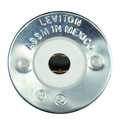


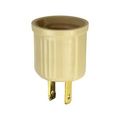
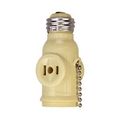


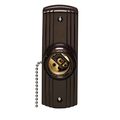

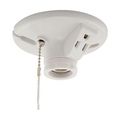

Lamp holders are the sockets that mount a light bulb to a fixture, outlet box, or cord and complete the electrical connection between the wiring and the lamp. Electricians and maintenance crews rely on them for everything from replacing a burned-out porcelain socket in a utility room to wiring a new pendant fixture on a job site. Medium base keyless lampholders carry a 660 watt, 250 volt rating, which covers most incandescent and compatible LED replacement bulbs used in commercial and residential settings. Porcelain and phenolic housings resist heat buildup better than plastic, so crews often specify porcelain versions for enclosed fixtures or high-wattage applications. Mounting styles vary too: some lamp holders thread directly into an outlet box, others clamp onto a pipe or stud, and pull chain versions add a built-in switch for standalone use. Getting the base type, mount style, and wattage rating right the first time keeps a repair call from turning into a second trip for a replacement part.
Subcategories
- Medium Base (E26) Lampholders: Medium base lampholders use the E26 socket, the same standard-size base found on most household and commercial incandescent and LED bulbs. Keyless medium base models rated at 660 watts and 250 volts show up constantly in utility rooms, stairwells, and basements where a fixture needs a simple on/off connection without a built-in switch. Porcelain versions handle sustained heat from higher-wattage bulbs better than plastic housings, making them a common choice for enclosed or recessed fixtures. Electricians reach for these when replacing a worn socket in an existing fixture or wiring new outlet box mount fixtures.
- Candelabra Base (E12) Lampholders: Candelabra base lampholders use the smaller E12 socket, designed for decorative fixtures like chandeliers, sconces, and nightlights rather than general work lighting. One-piece keyless designs in unglazed porcelain hold up in enclosed fixtures where heat has nowhere to escape. Contractors installing decorative lighting packages in finished spaces typically stock these alongside medium base holders since the two base sizes aren't interchangeable without an adapter. The smaller footprint also makes them useful in tight fixture housings where a standard E26 socket won't fit.
- Pull Chain Lampholders: Pull chain lampholders add a built-in switch to a medium base socket, letting a fixture turn on and off without a separate wall switch. Porcelain outlet box mount versions are common in basements, closets, garages, and attics where a hardwired switch was never installed. Maintenance techs favor this style for retrofit work since it eliminates the need to run new switch wiring. The mechanism sits inside the housing, so the fixture keeps a clean profile even with the added switch function.
- Weatherproof Lampholders: Weatherproof lampholders are built for wet or damp locations, with sealed housings that keep moisture out of the socket and wiring connections. Models rated for 660 watts at 250 volts on a single circuit, with factory-attached leads for a direct wire connection instead of screw terminals, are common on exterior fixtures. Contractors use them on porches, exterior utility lights, and outdoor sign fixtures where a standard interior-rated socket would corrode or fail. The sealed design also holds up better against dust and debris in unconditioned spaces like crawlspaces and attics.
Buying Guide
Start with the bulb base size the fixture calls for, since E26 medium base and E12 candelabra base sockets aren't interchangeable without an adapter. Most general-purpose fixtures, from ceiling boxes to work lights, use medium base holders, while chandeliers, sconces, and other decorative fixtures typically call for candelabra base. Next, match the wattage and voltage rating to the bulb being installed; a 660 watt, 250 volt rating covers the vast majority of incandescent and LED-compatible applications, but higher-output fixtures may need a holder rated for more. Housing material matters more than it seems: porcelain and phenolic resist heat buildup in enclosed fixtures, while plastic works fine in open, low-wattage applications where cost and weight are the bigger concern. Mounting style narrows the choice further. Outlet box mount lamp holders thread directly into a standard box, pipe mount versions clamp onto threaded pipe or stud, and pull chain styles add a built-in switch for locations without a wall switch. For exterior or damp-location work, choosing Lamp Holders rated for wet or damp locations prevents moisture from reaching the socket contacts and wiring. Getting these four factors right, base size, wattage rating, housing material, and mounting style, before ordering avoids a mismatched part and a second trip for a straightforward fixture repair or install.
Frequently Asked Questions
What's the difference between a medium base and candelabra base lamp holder?
Medium base lamp holders use the E26 socket, the standard size for most household and commercial bulbs, while candelabra base holders use the smaller E12 socket found in chandeliers, sconces, and decorative fixtures. The two aren't interchangeable without an adapter, so matching the base size to the fixture and bulb is the first step in choosing a replacement. Mixing them up means the bulb simply won't thread into the socket.
Can lamp holders be installed outdoors?
Certain lamp holders are built specifically for wet or damp locations, with sealed housings and factory-attached leads that keep moisture away from the electrical connections. Standard interior-rated lamp holders aren't designed for that exposure and can corrode or fail outdoors. Checking the location rating on the packaging or spec sheet before installing on a porch, exterior fixture, or unconditioned space prevents an early failure.
What wattage rating do lamp holders need?
Most medium base keyless lamp holders carry a 660 watt, 250 volt rating, which covers the large majority of incandescent and LED-compatible bulbs used in general lighting. Higher-wattage fixtures or specialty applications may call for a holder rated beyond that range. Matching the holder's rating to the bulb and fixture keeps the connection operating within its designed limits.
Why choose porcelain over plastic lamp holders?
Porcelain and phenolic housings handle sustained heat better than plastic, which matters most in enclosed fixtures or applications running higher-wattage bulbs. Plastic holders work fine in open, low-wattage fixtures where heat has room to dissipate. Enclosed fixture housings, recessed cans, and higher-wattage sign or utility lighting are common spots where porcelain earns its keep.
What's the purpose of a pull chain lamp holder?
Pull chain lamp holders build a switch into the socket housing, so a fixture can turn on and off without a separate wall switch. Retrofit jobs in basements, closets, attics, and garages commonly use this style since it avoids running new switch wiring. The switch mechanism sits inside the housing, keeping the fixture's profile the same as a standard keyless holder.
