



Filters
SORT
Product Availability –
Fuel Type –
Capacity (Gallons) –
Review Score –
 --%3E %3Csvg version='1.1' id='Fill' xmlns='http://www.w3.org/2000/svg' xmlns:xlink='http://www.w3.org/1999/xlink' x='0px' y='0px' viewBox='0 0 100 100' enable-background='new 0 0 100 100' xml:space='preserve'%3E %3Cpath fill='%23F15C02' d='M79.44,0.95H20.56C9.78,0.95,0.95,9.78,0.95,20.56v58.87c0,10.79,8.82,19.61,19.61,19.61h58.87 c10.79,0,19.61-8.83,19.61-19.61V20.56C99.05,9.78,90.22,0.95,79.44,0.95z M65.38,58.24l9.38,29.58L49.69,69.78L24.5,87.82 l9.34-29.6L8.8,39.6l30.73-0.17c0,0,6.98-19.61,10-28.93c0.54,1.36,9.88,29.1,9.88,29.1H91.2L65.38,58.24z'/%3E %3C/svg%3E)
 --%3E %3Csvg version='1.1' id='With-RB' xmlns='http://www.w3.org/2000/svg' xmlns:xlink='http://www.w3.org/1999/xlink' x='0px' y='0px' viewBox='0 0 100 100' enable-background='new 0 0 100 100' xml:space='preserve'%3E %3Cpath fill='%23FBC8B4' d='M79.44,0.95H20.56C9.78,0.95,0.95,9.78,0.95,20.56v58.87c0,10.79,8.82,19.61,19.61,19.61h58.87 c10.79,0,19.61-8.83,19.61-19.61V20.56C99.05,9.78,90.22,0.95,79.44,0.95z M65.38,58.24l9.38,29.58L49.69,69.78L24.5,87.82 l9.34-29.6L8.8,39.6l30.73-0.17c0,0,6.98-19.61,10-28.93c0.54,1.36,9.88,29.1,9.88,29.1H91.2L65.38,58.24z'/%3E %3C/svg%3E)
Price Range –
Lochinvar Shield Commercial Water Heaters

 --%3E %3Csvg version='1.1' id='No-RB' xmlns='http://www.w3.org/2000/svg' xmlns:xlink='http://www.w3.org/1999/xlink' x='0px' y='0px' viewBox='0 0 100 100' enable-background='new 0 0 100 100' xml:space='preserve'%3E %3Cpath fill='%23CECECE' d='M79.44,0.95H20.56C9.78,0.95,0.95,9.78,0.95,20.56v58.87c0,10.79,8.82,19.61,19.61,19.61h58.87 c10.79,0,19.61-8.83,19.61-19.61V20.56C99.05,9.78,90.22,0.95,79.44,0.95z M65.38,58.24l9.38,29.58L49.69,69.78L24.5,87.82 l9.34-29.6L8.8,39.6l30.73-0.17c0,0,6.98-19.61,10-28.93c0.54,1.36,9.88,29.1,9.88,29.1H91.2L65.38,58.24z'/%3E %3C/svg%3E)

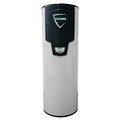
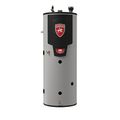
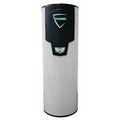
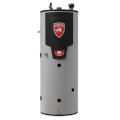
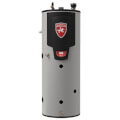
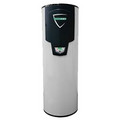
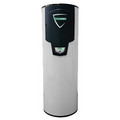
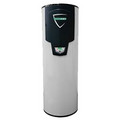
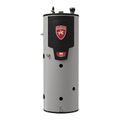
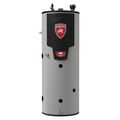
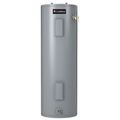
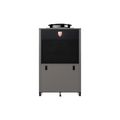


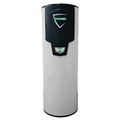
Lochinvar Shield Commercial Water Heaters are gas-fired storage water heaters built around a stainless steel heat transfer system instead of flue tubes routed through the tank. Because the water heats in a separate stainless steel heat exchanger rather than tubes inside the tank, lime scale buildup that normally degrades flue tube performance over time has nowhere to accumulate against a heat transfer surface, which keeps thermal efficiency at 96% for the life of the unit. High water velocity through that external heat exchanger also keeps the heat transfer surfaces clean rather than relying on water treatment alone. The SNR126-065 model delivers 125,000 BTU input from a 65 gallon tank, while larger ASME-stamped Shield models scale up past 400,000 BTU input for higher-demand commercial applications. Contractors can match a Shield model to anything from a small multi-family building to a larger commercial kitchen or laundry facility without changing water heater platforms across that range.
Subcategories
- Shield Standard Commercial Water Heaters: Standard Shield models cover smaller commercial and multi-family hot water loads without requiring an ASME-stamped tank. The SNR126-065 delivers 125,000 BTU input from a 65 gallon tank and runs on natural gas. Contractors spec this tier for buildings where local code doesn't require an ASME tank, which keeps equipment cost and footprint down compared to the ASME Shield lineup. The same stainless steel heat transfer system used across the Shield line backs this model's 96% thermal efficiency rating.
- Shield ASME Commercial Water Heaters: ASME Shield models add an ASME-stamped tank for installations where local code, insurance requirements, or building classification call for it. The SWA285L delivers 285,000 BTU input from a 110 gallon tank on LP gas, and the SWA400N scales up to 399,999 BTU input from a 120 gallon tank on natural gas. High-rise buildings and certain commercial occupancies commonly require the ASME stamp, so confirming that requirement early avoids ordering the wrong tank type.
- Mid-Capacity Shield Models (90 to 91 Gallon): Mid-capacity models bridge smaller multi-family buildings and larger commercial kitchens or laundry facilities. The SNA201-100 delivers 199,999 BTU input from a 90 gallon tank on natural gas, and the SWA200N delivers the same 199,999 BTU input from a 91 gallon tank, also on natural gas. Contractors sizing a replacement in this range typically compare recovery rate against peak demand periods, like a commercial kitchen's morning rush, rather than just matching tank gallon for gallon against the old unit.
- High-Capacity Shield Models: High-capacity Shield models serve facilities with sustained high hot water demand, like larger commercial kitchens, laundromats, or multi-building properties on a shared loop. The SWA400N delivers 399,999 BTU input from a 120 gallon ASME-stamped tank running natural gas. Because Shield's stainless steel heat transfer system keeps thermal efficiency at 96% regardless of tank size, contractors don't lose efficiency by stepping up to a higher-capacity model when demand calls for it.
Buying Guide
Sizing a commercial water heater starts with recovery rate against peak demand rather than just tank gallon capacity, since a building with a short, intense demand period like a commercial kitchen's lunch rush needs different recovery characteristics than a multi-family building with demand spread evenly across the day. Lochinvar Shield Commercial Water Heaters range from 125,000 BTU input on the smallest standard model up past 399,999 BTU input on the largest ASME models, which covers everything from small multi-family buildings to larger commercial kitchens and laundry facilities. ASME tank certification is the next decision point, and it's worth checking local code, insurance requirements, and the building's occupancy classification before ordering, since switching from a standard tank to an ASME-stamped tank after the fact usually means ordering an entirely different model rather than a simple swap. Fuel type narrows the field further; natural gas and LP gas models exist across both the standard and ASME Shield lines, so confirming what fuel is actually available or planned for the mechanical room avoids a mismatch at delivery. Because Shield's stainless steel heat transfer system sits outside the tank rather than running flue tubes through it, lime scale buildup doesn't degrade heat transfer efficiency the way it can on tank designs with internal flue tubes, which is worth factoring into a total cost comparison against other commercial water heater platforms, particularly in hard water regions where scale accumulates faster.
Frequently Asked Questions
What makes Lochinvar Shield water heaters different from tank water heaters with internal flue tubes?
Shield models heat water in a separate stainless steel heat exchanger instead of running flue tubes through the storage tank. The design keeps lime scale from degrading heat transfer the way it can on tank designs with internal flue tubes, and Shield models hold 96% thermal efficiency as a result.
Does a Lochinvar Shield water heater need an ASME-stamped tank?
It depends on local code, insurance requirements, and building occupancy classification. Lochinvar offers Shield models both with and without ASME-stamped tanks, like the SWA285L and SWA400N on the ASME side, so confirming the requirement before ordering avoids getting the wrong tank type.
What size Lochinvar Shield model fits a mid-size commercial kitchen?
Models in the 90 to 91 gallon range, like the SNA201-100 and SWA200N, both rated at 199,999 BTU input, typically fit mid-size commercial kitchen and laundry demand. Final sizing should weigh recovery rate against the kitchen's peak demand period rather than tank gallon capacity alone.
What fuel types are available on Lochinvar Shield water heaters?
Shield models run on natural gas or LP gas, with both fuel types available across the standard and ASME tank lines. The SWA285L, for example, runs on LP gas while the SWA400N runs on natural gas.
How does Lochinvar Shield maintain efficiency over the life of the unit?
High water velocity through the external stainless steel heat exchanger keeps the heat transfer surfaces clean, and the absence of internal flue tubes means lime scale has no flue surface to build up against inside the tank. Together those design choices keep thermal efficiency at 96% throughout the unit's service life.
