




Filters
SORT
Product Availability –
Size –
Review Score –
 --%3E %3Csvg version='1.1' id='Fill' xmlns='http://www.w3.org/2000/svg' xmlns:xlink='http://www.w3.org/1999/xlink' x='0px' y='0px' viewBox='0 0 100 100' enable-background='new 0 0 100 100' xml:space='preserve'%3E %3Cpath fill='%23F15C02' d='M79.44,0.95H20.56C9.78,0.95,0.95,9.78,0.95,20.56v58.87c0,10.79,8.82,19.61,19.61,19.61h58.87 c10.79,0,19.61-8.83,19.61-19.61V20.56C99.05,9.78,90.22,0.95,79.44,0.95z M65.38,58.24l9.38,29.58L49.69,69.78L24.5,87.82 l9.34-29.6L8.8,39.6l30.73-0.17c0,0,6.98-19.61,10-28.93c0.54,1.36,9.88,29.1,9.88,29.1H91.2L65.38,58.24z'/%3E %3C/svg%3E)
Price Range –
Mission




 --%3E %3Csvg version='1.1' id='No-RB' xmlns='http://www.w3.org/2000/svg' xmlns:xlink='http://www.w3.org/1999/xlink' x='0px' y='0px' viewBox='0 0 100 100' enable-background='new 0 0 100 100' xml:space='preserve'%3E %3Cpath fill='%23CECECE' d='M79.44,0.95H20.56C9.78,0.95,0.95,9.78,0.95,20.56v58.87c0,10.79,8.82,19.61,19.61,19.61h58.87 c10.79,0,19.61-8.83,19.61-19.61V20.56C99.05,9.78,90.22,0.95,79.44,0.95z M65.38,58.24l9.38,29.58L49.69,69.78L24.5,87.82 l9.34-29.6L8.8,39.6l30.73-0.17c0,0,6.98-19.61,10-28.93c0.54,1.36,9.88,29.1,9.88,29.1H91.2L65.38,58.24z'/%3E %3C/svg%3E)
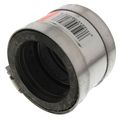
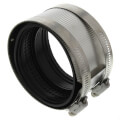
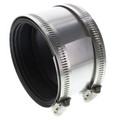
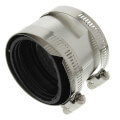
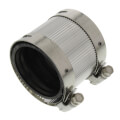
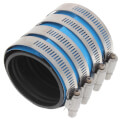
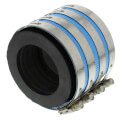
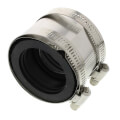
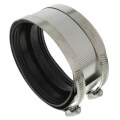
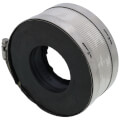
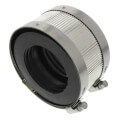
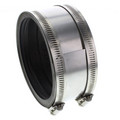
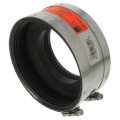
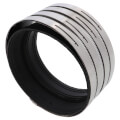
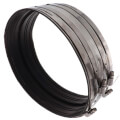
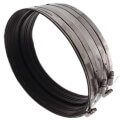

Mission Rubber traces its roots to 1958, when founder Ben Bryan Garrett built on his experience as a plumber and his work in underground utilities during the Great Depression to start the company. Garrett had already established Mission Clay Products in 1951 after converting a brick factory to extrude clay pipe. He went on to engineer the modern flexible sewer coupling together with a local rubber manufacturer.
Mission Rubber remains a family owned and operated business today, now in its third generation of leadership. Charlotte Garrett, Ben's daughter, led the company for four decades starting in 1971, carrying forward the manufacturing focus her father established. Products are made in the United States under the company's MISSIONMADE program, with primary manufacturing based in Corona, California.
Product Lines
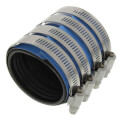
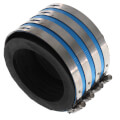
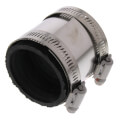
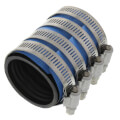
Mission Rubber's core product line covers rubber couplings for drain, waste, and vent applications both above and below grade. For cast iron pipe, the lineup includes HEAVYWEIGHT and NO HUB couplings along with SERVICE WEIGHT gaskets. Clay pipe installations use the MISSION STANDARD Calder-style and EASTERN STANDARD shielded and unshielded couplings and bushings.
Underground work also draws on the FLEX-SEAL series and compression joint sealers, plus lateral connection products such as POLLYTEE service connectors, T-FLEX sewer saddles, and TWISTEE tapping saddles. A separate hydrostatic testing line includes BAND-SEAL end caps, EZ-TEST couplings, T-CONE mechanical stoppers, and VENT CAP products. Residential plumbing rounds out the catalog with FLEX-SEAL DTC and TC series connectors. Flexible connectors for clothes washers, dishwashers, and shower drains are included, plus toilet flanges and fittings.
Why Contractors Specify Mission Rubber
Mission Rubber couplings carry ISO 9001 certification and meet ASTM International standards, giving contractors a documented basis for code compliance on inspected jobs. The coupling lines use materials such as neoprene, EPDM, and stainless steel. These are selected for resistance to chemical and soil conditions common in sewer and drain work.
Because the catalog spans cast iron, clay, and mixed-material connections, a contractor working across older and newer piping systems can source couplings for most joint configurations from one brand. Manufacturing in the United States under the MISSIONMADE program also supports consistent quality control across the coupling line.
How to Choose Mission Rubber Products
Matching the coupling to the pipe material is the starting point. Cast iron pipe calls for HEAVYWEIGHT or NO HUB couplings. Clay pipe calls for the MISSION STANDARD or EASTERN STANDARD lines. Jobs joining dissimilar pipe materials need a transition coupling rated for that combination.
Soil and site conditions matter for underground work. Corrosive, wet, or heavily aerated soils are a good fit for couplings with stainless steel band components, which resist the corrosion that plain steel bands face in those conditions. For hydrostatic testing on a new or repaired line, choose from the dedicated testing line, such as EZ-TEST couplings or T-CONE mechanical stoppers. This keeps the test setup separate from the permanent joint hardware.
Frequently Asked Questions
What is a no-hub coupling used for?
A no-hub coupling joins two lengths of cast iron pipe without the traditional bell-and-spigot hub, using a rubber sleeve and clamp band to form a sealed, code-compliant connection.
What is the difference between HEAVYWEIGHT and standard NO HUB couplings?
HEAVYWEIGHT couplings use additional stainless steel banding for higher shear and load resistance, which suits municipal or heavy-duty applications. Standard NO HUB couplings cover typical residential and commercial drain, waste, and vent connections.
What Mission Rubber products are used for underground work?
Underground work draws on the FLEX-SEAL series and compression joint sealers. Lateral connection products include POLLYTEE service connectors, T-FLEX sewer saddles, and TWISTEE tapping saddles.
What certifications do Mission Rubber products carry?
Mission Rubber holds ISO 9001 certification and manufactures to ASTM International standards.
What should I use to join dissimilar pipe materials?
Jobs joining dissimilar pipe materials need a transition coupling rated for that combination.
