



Modine


 --%3E %3Csvg version='1.1' id='No-RB' xmlns='http://www.w3.org/2000/svg' xmlns:xlink='http://www.w3.org/1999/xlink' x='0px' y='0px' viewBox='0 0 100 100' enable-background='new 0 0 100 100' xml:space='preserve'%3E %3Cpath fill='%23CECECE' d='M79.44,0.95H20.56C9.78,0.95,0.95,9.78,0.95,20.56v58.87c0,10.79,8.82,19.61,19.61,19.61h58.87 c10.79,0,19.61-8.83,19.61-19.61V20.56C99.05,9.78,90.22,0.95,79.44,0.95z M65.38,58.24l9.38,29.58L49.69,69.78L24.5,87.82 l9.34-29.6L8.8,39.6l30.73-0.17c0,0,6.98-19.61,10-28.93c0.54,1.36,9.88,29.1,9.88,29.1H91.2L65.38,58.24z'/%3E %3C/svg%3E)


 --%3E %3Csvg version='1.1' id='Fill' xmlns='http://www.w3.org/2000/svg' xmlns:xlink='http://www.w3.org/1999/xlink' x='0px' y='0px' viewBox='0 0 100 100' enable-background='new 0 0 100 100' xml:space='preserve'%3E %3Cpath fill='%23F15C02' d='M79.44,0.95H20.56C9.78,0.95,0.95,9.78,0.95,20.56v58.87c0,10.79,8.82,19.61,19.61,19.61h58.87 c10.79,0,19.61-8.83,19.61-19.61V20.56C99.05,9.78,90.22,0.95,79.44,0.95z M65.38,58.24l9.38,29.58L49.69,69.78L24.5,87.82 l9.34-29.6L8.8,39.6l30.73-0.17c0,0,6.98-19.61,10-28.93c0.54,1.36,9.88,29.1,9.88,29.1H91.2L65.38,58.24z'/%3E %3C/svg%3E)
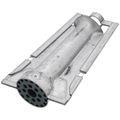
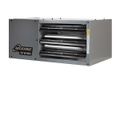
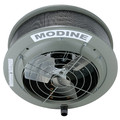

Arthur B. Modine founded Modine Manufacturing Company in 1916 in Racine, Wisconsin, starting with the Spirex radiator for farm tractors. Modine entered the HVAC space in 1922 with the invention of the hydronic unit heater, a product category the company still manufactures today. Over the following century, Modine expanded into aluminum heat exchanger production and grew into a thermal management manufacturer serving HVAC, transportation, and industrial markets.
Product Lines
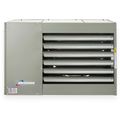
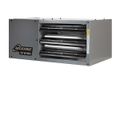
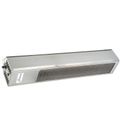
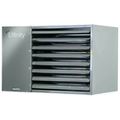
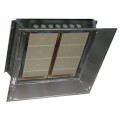
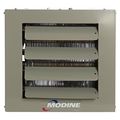
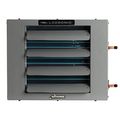
Modine's HVAC lineup centers on unit heaters for garages, workshops, warehouses, and light commercial spaces. The Hot Dawg series covers gas-fired, electric, and hydronic unit heaters, including the Hot Dawg H2O low-profile hydronic model built with a three-row coil and copper water pipe stub-outs for connection to an existing boiler or water heater. The Effinity commercial gas-fired unit heater line, including the PTC series, delivers condensing efficiency and vents with PVC or polypropylene pipe. The Lodronic line targets low-temperature hydronic applications paired with heat pumps or geothermal systems.
Why Contractors Specify Modine
A company history built on heat transfer engineering since 1922 gives installers confidence in how Modine unit heaters perform across residential garages and larger commercial floor space. The Effinity series' condensing design reaches thermal efficiency up to 97 percent, which matters on jobs where fuel cost reduction is part of the case made to the property owner. Hydronic options like the Hot Dawg H2O and Lodronic let contractors tie a unit heater into a boiler, water heater, or heat pump system that is already in place, avoiding a separate gas line installation.
How to Choose Modine Products
The heat source available at the job site narrows the decision first: gas-fired units need a gas line and venting, electric units need adequate amperage, and hydronic units need a boiler, water heater, or heat pump already supplying hot water. BTU output should match the space's heat loss calculation rather than the largest unit that fits. For commercial spaces with longer run times, the higher upfront efficiency tier in the Effinity series tends to pay back faster than a standard-efficiency gas unit heater.
Frequently Asked Questions
What is the difference between the Hot Dawg and Effinity unit heater lines?
Hot Dawg covers gas-fired, electric, and hydronic unit heaters sized for residential garages and light commercial spaces, while Effinity is a commercial gas-fired condensing line built for higher efficiency and larger heating loads.
Can a Modine hydronic unit heater connect to an existing boiler?
Yes, hydronic models like the Hot Dawg H2O are designed to connect with an existing boiler, water heater, or ground source heat pump rather than requiring a dedicated heat source.
What venting does the Effinity series require?
The Effinity condensing unit heaters vent with PVC or polypropylene pipe, which differs from the metal venting typically required by standard-efficiency gas unit heaters.
How is a Modine unit heater sized for a garage or workshop?
Sizing depends on the space's heat loss, driven by square footage, ceiling height, insulation level, and local climate, rather than a single rule of thumb across all buildings.
What is the Lodronic line designed for?
Lodronic unit heaters are built for low-temperature hydronic systems, making them suited to pairing with heat pumps or geothermal systems that supply lower water temperatures than a standard boiler.
