




Filters
SORT
Product Availability –
Brand –
Length (Inches) –
Teeth Per Inch –
Review Score –
 --%3E %3Csvg version='1.1' id='Fill' xmlns='http://www.w3.org/2000/svg' xmlns:xlink='http://www.w3.org/1999/xlink' x='0px' y='0px' viewBox='0 0 100 100' enable-background='new 0 0 100 100' xml:space='preserve'%3E %3Cpath fill='%23F15C02' d='M79.44,0.95H20.56C9.78,0.95,0.95,9.78,0.95,20.56v58.87c0,10.79,8.82,19.61,19.61,19.61h58.87 c10.79,0,19.61-8.83,19.61-19.61V20.56C99.05,9.78,90.22,0.95,79.44,0.95z M65.38,58.24l9.38,29.58L49.69,69.78L24.5,87.82 l9.34-29.6L8.8,39.6l30.73-0.17c0,0,6.98-19.61,10-28.93c0.54,1.36,9.88,29.1,9.88,29.1H91.2L65.38,58.24z'/%3E %3C/svg%3E)
 --%3E %3Csvg version='1.1' id='With-RB' xmlns='http://www.w3.org/2000/svg' xmlns:xlink='http://www.w3.org/1999/xlink' x='0px' y='0px' viewBox='0 0 100 100' enable-background='new 0 0 100 100' xml:space='preserve'%3E %3Cpath fill='%23FBC8B4' d='M79.44,0.95H20.56C9.78,0.95,0.95,9.78,0.95,20.56v58.87c0,10.79,8.82,19.61,19.61,19.61h58.87 c10.79,0,19.61-8.83,19.61-19.61V20.56C99.05,9.78,90.22,0.95,79.44,0.95z M65.38,58.24l9.38,29.58L49.69,69.78L24.5,87.82 l9.34-29.6L8.8,39.6l30.73-0.17c0,0,6.98-19.61,10-28.93c0.54,1.36,9.88,29.1,9.88,29.1H91.2L65.38,58.24z'/%3E %3C/svg%3E)
Price Range –
PVC/ABS Saws


 --%3E %3Csvg version='1.1' id='No-RB' xmlns='http://www.w3.org/2000/svg' xmlns:xlink='http://www.w3.org/1999/xlink' x='0px' y='0px' viewBox='0 0 100 100' enable-background='new 0 0 100 100' xml:space='preserve'%3E %3Cpath fill='%23CECECE' d='M79.44,0.95H20.56C9.78,0.95,0.95,9.78,0.95,20.56v58.87c0,10.79,8.82,19.61,19.61,19.61h58.87 c10.79,0,19.61-8.83,19.61-19.61V20.56C99.05,9.78,90.22,0.95,79.44,0.95z M65.38,58.24l9.38,29.58L49.69,69.78L24.5,87.82 l9.34-29.6L8.8,39.6l30.73-0.17c0,0,6.98-19.61,10-28.93c0.54,1.36,9.88,29.1,9.88,29.1H91.2L65.38,58.24z'/%3E %3C/svg%3E)



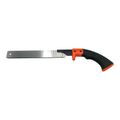


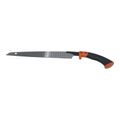

PVC/ABS saws are hand and power tool blades and saws built specifically to cut plastic pipe cleanly without cracking or chipping the material. A common manual option, the 12-inch PVC/ABS hand saw, uses a 10 TPI blade that cuts on the pull stroke rather than the push stroke for better control and safety. Plumbers and drain contractors use these saws on schedule 40 and schedule 80 pipe where a standard wood or metal blade would leave a rough, chattered edge that complicates fitting assembly. Choosing the right tooth count and saw style keeps cuts square and burr-free, which matters directly for how well a joint seals after gluing or fitting.
Subcategories
- Manual Pipe Saws: Manual pipe saws are hand-operated tools built with a fine-tooth blade designed to cut plastic pipe without chattering. A 12-inch manual PVC/ABS hand saw commonly uses a 10 TPI blade and cuts on the pull stroke for safer, more controlled cutting. Plumbers use manual saws for field repairs and tight spaces where a power tool isn't practical.
- Replacement Blades: Replacement blades are sold separately to fit manual pipe saws once the original blade dulls or breaks. Contractors keep spare blades on hand since plastic pipe cutting dulls teeth faster than cutting wood, especially on schedule 80 and heavier-wall pipe. Matching blade length and TPI to the saw body is necessary for the blade to seat and cut correctly.
- Power Saw Blades: Power saw blades are designed for use in reciprocating saws and other power tools to speed up plastic pipe cutting on larger jobs. A fine-tooth blade in the 10 to 14 TPI range is recommended for plastic to avoid the rough, chipped edges that coarser demolition blades leave behind. Installers doing high-volume cutting favor power blades to save time over manual saws, provided the tool is held steady to prevent cracking the pipe.
Buying Guide
Start by deciding between a manual saw and a power saw blade based on job volume. A manual PVC/ABS saw works well for occasional cuts, repairs, and tight spaces where a power tool is awkward to maneuver. For jobs requiring dozens or hundreds of cuts, a power saw blade sized for plastic saves significant time, though it takes a steady hand to avoid cracking the pipe edge.
Check tooth count next. Manual PVC/ABS saws commonly use a 10 TPI blade, which balances cutting speed with a clean, chatter-free edge on schedule 40 and schedule 80 pipe. For power tool blades, a range of 10 to 14 TPI is recommended for plastic pipe, since coarser blades built for wood or demolition work tend to chip and rough up the cut edge.
Consider the cut stroke direction on manual saws. Some PVC/ABS hand saws are designed to cut on the pull stroke rather than the push stroke, which gives better control and reduces the risk of the blade jumping off the pipe during the cut.
Finally, match the blade to pipe wall thickness. Thinner schedule 40 pipe cuts cleanly with a higher TPI blade, while thicker schedule 80 pipe cuts faster with a lower TPI blade that clears material more aggressively. Keeping a spare blade on hand is worth it since plastic pipe cutting dulls teeth faster than typical wood cutting.
Frequently Asked Questions
What TPI blade is best for cutting PVC and ABS pipe?
A fine-tooth blade in the 10 to 14 TPI range works well for plastic pipe, since it cuts cleanly without the chipping that coarser wood or demolition blades cause. A common manual PVC/ABS hand saw uses a 10 TPI blade for this reason.
Should I use a manual saw or a power saw for cutting plastic pipe?
A manual PVC/ABS saw is a solid choice for occasional cuts, tight spaces, and field repairs. For high-volume cutting, a power saw blade sized for plastic speeds up the job considerably, though it requires a steady hand to avoid cracking the pipe.
Why does a reciprocating saw leave rough edges on PVC pipe?
General-purpose reciprocating saw blades built for wood or demolition work are too coarse for plastic pipe, which causes chipping and rough, chattered edges. Switching to a fine-tooth blade in the 10 to 14 TPI range built for plastic solves this.
What does it mean when a pipe saw cuts on the pull stroke?
A saw that cuts on the pull stroke removes material as it's drawn back toward the user rather than pushed forward. This design improves control and reduces the chance of the blade skipping off round plastic pipe compared to a push-stroke saw.
How often do PVC/ABS saw blades need to be replaced?
Blade life depends on cutting volume and pipe wall thickness, since plastic pipe dulls teeth faster than typical wood cutting, especially on schedule 80 pipe. Keeping a spare replacement blade on hand avoids downtime once a blade starts leaving rough or dragging cuts.
