




Filters
SORT
Product Availability –
Brand –
Size –
Review Score –
 --%3E %3Csvg version='1.1' id='Fill' xmlns='http://www.w3.org/2000/svg' xmlns:xlink='http://www.w3.org/1999/xlink' x='0px' y='0px' viewBox='0 0 100 100' enable-background='new 0 0 100 100' xml:space='preserve'%3E %3Cpath fill='%23F15C02' d='M79.44,0.95H20.56C9.78,0.95,0.95,9.78,0.95,20.56v58.87c0,10.79,8.82,19.61,19.61,19.61h58.87 c10.79,0,19.61-8.83,19.61-19.61V20.56C99.05,9.78,90.22,0.95,79.44,0.95z M65.38,58.24l9.38,29.58L49.69,69.78L24.5,87.82 l9.34-29.6L8.8,39.6l30.73-0.17c0,0,6.98-19.61,10-28.93c0.54,1.36,9.88,29.1,9.88,29.1H91.2L65.38,58.24z'/%3E %3C/svg%3E)
 --%3E %3Csvg version='1.1' id='With-RB' xmlns='http://www.w3.org/2000/svg' xmlns:xlink='http://www.w3.org/1999/xlink' x='0px' y='0px' viewBox='0 0 100 100' enable-background='new 0 0 100 100' xml:space='preserve'%3E %3Cpath fill='%23FBC8B4' d='M79.44,0.95H20.56C9.78,0.95,0.95,9.78,0.95,20.56v58.87c0,10.79,8.82,19.61,19.61,19.61h58.87 c10.79,0,19.61-8.83,19.61-19.61V20.56C99.05,9.78,90.22,0.95,79.44,0.95z M65.38,58.24l9.38,29.58L49.69,69.78L24.5,87.82 l9.34-29.6L8.8,39.6l30.73-0.17c0,0,6.98-19.61,10-28.93c0.54,1.36,9.88,29.1,9.88,29.1H91.2L65.38,58.24z'/%3E %3C/svg%3E)
Price Range –
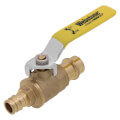
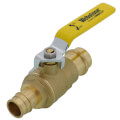
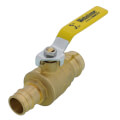
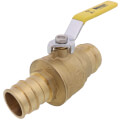
ProPEX x Copper Press Ball Valves

 --%3E %3Csvg version='1.1' id='Half' xmlns='http://www.w3.org/2000/svg' xmlns:xlink='http://www.w3.org/1999/xlink' x='0px' y='0px' viewBox='0 0 100 100' enable-background='new 0 0 100 100' xml:space='preserve'%3E %3Cg%3E %3Cpath fill='%23F15C02' d='M30.05,70.23l3.79-12.01L8.8,39.6l30.73-0.17c0,0,6.98-19.61,10-28.93c0.54,1.36,9.88,29.1,9.88,29.1h1.58 L93.71,7.18c-3.58-3.82-8.66-6.23-14.28-6.23H20.56C9.78,0.95,0.95,9.78,0.95,20.56v58.87c0,5.41,2.22,10.32,5.79,13.88 L30.05,70.23z'/%3E %3C/g%3E %3Cpath fill='%23FBC8B4' d='M93.71,7.18L60.98,39.6H91.2L65.38,58.24l9.38,29.58L49.69,69.78L24.5,87.82l5.55-17.59L6.75,93.32 c3.55,3.54,8.44,5.73,13.82,5.73h58.87c10.79,0,19.61-8.83,19.61-19.61V20.56C99.05,15.4,97.01,10.69,93.71,7.18z'/%3E %3C/svg%3E)

 --%3E %3Csvg version='1.1' id='No-RB' xmlns='http://www.w3.org/2000/svg' xmlns:xlink='http://www.w3.org/1999/xlink' x='0px' y='0px' viewBox='0 0 100 100' enable-background='new 0 0 100 100' xml:space='preserve'%3E %3Cpath fill='%23CECECE' d='M79.44,0.95H20.56C9.78,0.95,0.95,9.78,0.95,20.56v58.87c0,10.79,8.82,19.61,19.61,19.61h58.87 c10.79,0,19.61-8.83,19.61-19.61V20.56C99.05,9.78,90.22,0.95,79.44,0.95z M65.38,58.24l9.38,29.58L49.69,69.78L24.5,87.82 l9.34-29.6L8.8,39.6l30.73-0.17c0,0,6.98-19.61,10-28.93c0.54,1.36,9.88,29.1,9.88,29.1H91.2L65.38,58.24z'/%3E %3C/svg%3E)
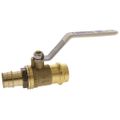
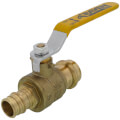
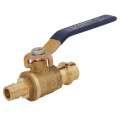

ProPEX x Copper Press Ball Valves are lead-free brass shutoff valves that transition a ProPEX expansion connection on one end to a copper press connection on the other, letting installers isolate a line without soldering near PEX tubing. The valves use a full-port design with a stainless-steel ball and stem, which keeps flow resistance low compared to a reduced-port valve. Sizes run from 1/2" up through 3", covering most residential and light commercial domestic water and hydronic runs. Installation requires a ProPEX expansion tool and rings on one side and a copper press tool on the other, so both trades on a job need the matching tooling before rough-in. Because the valve bridges two different connection methods in a single fitting, it cuts out an extra coupling and a potential leak point on jobs that mix PEX and copper piping, which matters most on renovation and service work where both materials already exist in the same system.
Subcategories
- Standard-Size Transition Valves: Covers the most common residential sizes, typically 1/2" through 1", used for branch lines, fixture shutoffs, and manifold connections. Installers reach for these when converting a copper supply stub to PEX or vice versa during a remodel. The full-port, lead-free brass body keeps these suitable for potable water service.
- Large-Diameter Transition Valves: Covers sizes from 1-1/4" up to 3", built for main distribution lines, commercial domestic water risers, and larger hydronic mechanical rooms. Contractors use these where a single trunk line needs isolation rather than individual branch shutoffs. The larger bodies still use the same full-port stainless-steel ball and stem construction as the smaller sizes.
- Hydronic and Glycol-Compatible Valves: Used on closed-loop heating or snowmelt systems where the fluid may include up to 50 percent propylene glycol. Installers select these when a job spec calls for freeze protection in a hydronic loop rather than a straight potable water run. The same ProPEX and copper press connection method applies, so no additional adapters are needed.
Buying Guide
Confirm pipe size first. ProPEX x Copper Press Ball Valves are available from 1/2" up to 3", and the valve has to match both the PEX tubing's expansion size and the copper pipe's outside diameter on the press side, since a mismatch means an extra reducing fitting and another joint to maintain. Next, check which tools are already on the truck. The ProPEX side needs an expansion tool and the correct size rings, while the copper press side needs a press tool with the matching jaw; a crew without both tools on hand should plan to rent or borrow before rough-in day rather than mid-install.
Think about where the valve sits in the system. For a straight domestic water isolation point, a standard lead-free brass full-port valve covers most jobs. For closed hydronic loops that carry glycol for freeze protection, confirm the valve is rated for glycol concentrations up to 50 percent before ordering, since not every transition fitting in a broader product line is rated the same way. Full-port design matters more on larger trunk lines where reduced-port resistance can show up as a measurable pressure drop; on short branch runs to a single fixture, the difference is usually negligible. Finally, factor insulation into the decision. On insulated piping runs, a stem extension kit keeps the valve handle accessible without cutting back the insulation, which is worth ordering at the same time as the valve rather than tracking it down later in the job.
Frequently Asked Questions
What tools are needed to install a ProPEX x copper press ball valve?
The ProPEX side needs a PEX expansion tool along with the correctly sized expansion rings, and the copper press side needs a press tool with a matching jaw. Both tools need to be on site before starting the connection, since the valve can't be soldered on the copper side. Crews that only have one of the two tools should source the other before beginning rough-in.
What sizes do ProPEX x copper press ball valves come in?
Sizes run from 1/2" up to 3", covering typical branch lines through larger trunk and riser connections. The size has to match both the PEX expansion diameter and the copper pipe's outside diameter on the press end. Choosing the correct size avoids the need for an additional reducing fitting.
Can a ProPEX x copper press ball valve be used on a glycol hydronic loop?
Certain ProPEX x copper press ball valves are rated for systems with up to 50 percent propylene glycol, which covers most freeze-protected hydronic and snowmelt loops. Checking the glycol rating before ordering matters since not every valve in the broader lineup carries the same rating. Straight potable water applications don't need this consideration.
Is the ProPEX x copper press ball valve full port?
Yes, these valves use a full-port design with a stainless-steel ball and stem, which keeps flow resistance close to that of the connected pipe. A full-port valve matters most on larger trunk lines where a reduced port could create a noticeable pressure drop. The construction is lead-free brass, suitable for potable water service.
Why use a ProPEX x copper press valve instead of a standard coupling and separate valve?
Combining the transition and the shutoff into one fitting removes an extra joint from the system, which means one less potential leak point on jobs where PEX and copper piping meet. It also saves space in tight mechanical rooms or wall cavities compared to running a separate adapter and valve. Service and renovation work, where existing copper often needs to tie into new PEX runs, benefits most from this combined fitting.
