




Filters
SORT
Product Availability –
Brand –
Voltage –
Review Score –
 --%3E %3Csvg version='1.1' id='Fill' xmlns='http://www.w3.org/2000/svg' xmlns:xlink='http://www.w3.org/1999/xlink' x='0px' y='0px' viewBox='0 0 100 100' enable-background='new 0 0 100 100' xml:space='preserve'%3E %3Cpath fill='%23F15C02' d='M79.44,0.95H20.56C9.78,0.95,0.95,9.78,0.95,20.56v58.87c0,10.79,8.82,19.61,19.61,19.61h58.87 c10.79,0,19.61-8.83,19.61-19.61V20.56C99.05,9.78,90.22,0.95,79.44,0.95z M65.38,58.24l9.38,29.58L49.69,69.78L24.5,87.82 l9.34-29.6L8.8,39.6l30.73-0.17c0,0,6.98-19.61,10-28.93c0.54,1.36,9.88,29.1,9.88,29.1H91.2L65.38,58.24z'/%3E %3C/svg%3E)
 --%3E %3Csvg version='1.1' id='With-RB' xmlns='http://www.w3.org/2000/svg' xmlns:xlink='http://www.w3.org/1999/xlink' x='0px' y='0px' viewBox='0 0 100 100' enable-background='new 0 0 100 100' xml:space='preserve'%3E %3Cpath fill='%23FBC8B4' d='M79.44,0.95H20.56C9.78,0.95,0.95,9.78,0.95,20.56v58.87c0,10.79,8.82,19.61,19.61,19.61h58.87 c10.79,0,19.61-8.83,19.61-19.61V20.56C99.05,9.78,90.22,0.95,79.44,0.95z M65.38,58.24l9.38,29.58L49.69,69.78L24.5,87.82 l9.34-29.6L8.8,39.6l30.73-0.17c0,0,6.98-19.61,10-28.93c0.54,1.36,9.88,29.1,9.88,29.1H91.2L65.38,58.24z'/%3E %3C/svg%3E)
Price Range –
QMark Electric Baseboard Heater Thermostats

 --%3E %3Csvg version='1.1' id='Half' xmlns='http://www.w3.org/2000/svg' xmlns:xlink='http://www.w3.org/1999/xlink' x='0px' y='0px' viewBox='0 0 100 100' enable-background='new 0 0 100 100' xml:space='preserve'%3E %3Cg%3E %3Cpath fill='%23F15C02' d='M30.05,70.23l3.79-12.01L8.8,39.6l30.73-0.17c0,0,6.98-19.61,10-28.93c0.54,1.36,9.88,29.1,9.88,29.1h1.58 L93.71,7.18c-3.58-3.82-8.66-6.23-14.28-6.23H20.56C9.78,0.95,0.95,9.78,0.95,20.56v58.87c0,5.41,2.22,10.32,5.79,13.88 L30.05,70.23z'/%3E %3C/g%3E %3Cpath fill='%23FBC8B4' d='M93.71,7.18L60.98,39.6H91.2L65.38,58.24l9.38,29.58L49.69,69.78L24.5,87.82l5.55-17.59L6.75,93.32 c3.55,3.54,8.44,5.73,13.82,5.73h58.87c10.79,0,19.61-8.83,19.61-19.61V20.56C99.05,15.4,97.01,10.69,93.71,7.18z'/%3E %3C/svg%3E)


 --%3E %3Csvg version='1.1' id='No-RB' xmlns='http://www.w3.org/2000/svg' xmlns:xlink='http://www.w3.org/1999/xlink' x='0px' y='0px' viewBox='0 0 100 100' enable-background='new 0 0 100 100' xml:space='preserve'%3E %3Cpath fill='%23CECECE' d='M79.44,0.95H20.56C9.78,0.95,0.95,9.78,0.95,20.56v58.87c0,10.79,8.82,19.61,19.61,19.61h58.87 c10.79,0,19.61-8.83,19.61-19.61V20.56C99.05,9.78,90.22,0.95,79.44,0.95z M65.38,58.24l9.38,29.58L49.69,69.78L24.5,87.82 l9.34-29.6L8.8,39.6l30.73-0.17c0,0,6.98-19.61,10-28.93c0.54,1.36,9.88,29.1,9.88,29.1H91.2L65.38,58.24z'/%3E %3C/svg%3E)
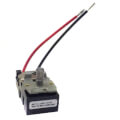
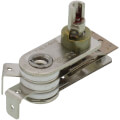

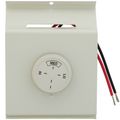
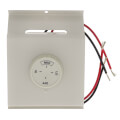
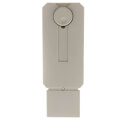
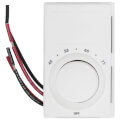
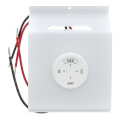
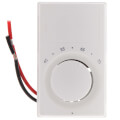
QMark Electric Baseboard Heater Thermostats are wall-mounted line-voltage controls built by Marley Engineered Products to pair with QMark baseboard and cove heaters. The standard single-pole and double-pole models, such as the TA1AW and TA2AW, are rated 22A at 120-277V, covering the voltage range used across residential and light commercial installations. Tamper-resistant versions of both pole configurations are also available for classrooms, healthcare facilities, and other spaces where occupants shouldn't adjust the setpoint directly. Electricians and HVAC contractors installing or replacing QMark baseboard heat select the pole configuration and voltage rating to match the heater circuit exactly, since mismatched amperage or voltage ratings create a safety issue rather than a simple performance shortfall. Choosing the correct thermostat during installation keeps the heating circuit within its rated load and avoids a callback.
Subcategories
- Single-Pole Thermostats: Single-pole thermostats like the TA1AW switch one leg of the circuit and are rated 22A at 120-277V. Installers use single-pole models on smaller baseboard heater circuits where a single-pole disconnect meets code. These are the more common choice for single-room residential installations.
- Double-Pole Thermostats: Double-pole thermostats like the TA2AW switch both legs of the circuit simultaneously and carry the same 22A at 120-277V rating as the single-pole version. Many jurisdictions and heater manufacturers require double-pole switching on larger heaters or multi-heater circuits for full disconnect capability. Electricians should check the heater's installation instructions to confirm which pole configuration is required.
- Tamper-Resistant Thermostats: Tamper-resistant thermostats, such as the TA1TPAW and TA2TPAW, carry the same electrical ratings as their standard counterparts but add a locking or restricted-access cover. Facility managers in schools, healthcare settings, and rental properties specify these to prevent occupants from changing the setpoint. The tamper-resistant feature doesn't change the amperage or voltage rating of the thermostat itself.
Buying Guide
Match the thermostat's amperage rating to the connected heater load before anything else, since standard QMark Electric Baseboard Heater Thermostats are rated 22A at 120-277V and exceeding that rating on a larger heater bank requires a relay or contactor rather than a direct thermostat connection. Confirm whether the heater or the electrical code requires single-pole or double-pole switching; double-pole models disconnect both legs of the circuit and are often specified for larger heaters or where full disconnect is required. Decide whether a standard or tamper-resistant cover is needed based on where the thermostat will be installed, since schools, healthcare facilities, and multi-tenant properties frequently specify tamper-resistant models to prevent unauthorized setpoint changes. Verify the supply voltage on site, whether 120V, 208V, 240V, or 277V, matches what the thermostat is rated to switch, since QMark heaters themselves are available across that same voltage range. For larger commercial installations with multiple heaters on one thermostat, check whether a load transfer switch or power relay is needed to stay within the thermostat's rated amperage rather than wiring heaters directly in excess of that rating. Buying the thermostat and heater from the same product line simplifies wiring since terminal configurations and mounting are designed to match.
Frequently Asked Questions
What voltage range do QMark baseboard heater thermostats cover?
Standard QMark thermostats like the TA1AW and TA2AW are rated for 120-277V, which covers the voltage range used across most residential and commercial QMark baseboard heater models. Confirm the specific supply voltage at the installation site before wiring. The 22A amperage rating applies across that entire voltage range.
What's the difference between single-pole and double-pole QMark thermostats?
A single-pole thermostat switches only one leg of the circuit, while a double-pole thermostat switches both legs for a full disconnect. Larger heaters or certain code requirements call for double-pole switching. Both configurations carry the same 22A at 120-277V rating.
When should a tamper-resistant thermostat be used?
Tamper-resistant thermostats are typically specified for schools, healthcare facilities, and rental properties where occupants shouldn't be able to change the setpoint directly. They carry the same electrical rating as standard models but add a restricted-access cover. Facility managers usually drive this decision rather than the electrical contractor.
Can one thermostat control multiple baseboard heaters?
A single thermostat can control multiple heaters only if the combined load stays within the thermostat's rated amperage, which is 22A on standard QMark models. Larger commercial installations with multiple heaters typically need a load transfer switch or power relay to stay within that rating. Exceeding the rated amperage directly on the thermostat is not a safe installation.
Are QMark thermostats compatible with heaters from other brands?
QMark thermostats are designed to pair with QMark and Marley Engineered Products baseboard and cove heaters, and installers should confirm compatibility with the specific heater model before mixing brands. Terminal wiring and mounting are built around the QMark product line. Checking the heater's installation instructions for approved thermostat pairings is the safest approach.
