




Filters
SORT
Product Availability –
Stages –
Voltage –
Review Score –
 --%3E %3Csvg version='1.1' id='Fill' xmlns='http://www.w3.org/2000/svg' xmlns:xlink='http://www.w3.org/1999/xlink' x='0px' y='0px' viewBox='0 0 100 100' enable-background='new 0 0 100 100' xml:space='preserve'%3E %3Cpath fill='%23F15C02' d='M79.44,0.95H20.56C9.78,0.95,0.95,9.78,0.95,20.56v58.87c0,10.79,8.82,19.61,19.61,19.61h58.87 c10.79,0,19.61-8.83,19.61-19.61V20.56C99.05,9.78,90.22,0.95,79.44,0.95z M65.38,58.24l9.38,29.58L49.69,69.78L24.5,87.82 l9.34-29.6L8.8,39.6l30.73-0.17c0,0,6.98-19.61,10-28.93c0.54,1.36,9.88,29.1,9.88,29.1H91.2L65.38,58.24z'/%3E %3C/svg%3E)
 --%3E %3Csvg version='1.1' id='With-RB' xmlns='http://www.w3.org/2000/svg' xmlns:xlink='http://www.w3.org/1999/xlink' x='0px' y='0px' viewBox='0 0 100 100' enable-background='new 0 0 100 100' xml:space='preserve'%3E %3Cpath fill='%23FBC8B4' d='M79.44,0.95H20.56C9.78,0.95,0.95,9.78,0.95,20.56v58.87c0,10.79,8.82,19.61,19.61,19.61h58.87 c10.79,0,19.61-8.83,19.61-19.61V20.56C99.05,9.78,90.22,0.95,79.44,0.95z M65.38,58.24l9.38,29.58L49.69,69.78L24.5,87.82 l9.34-29.6L8.8,39.6l30.73-0.17c0,0,6.98-19.61,10-28.93c0.54,1.36,9.88,29.1,9.88,29.1H91.2L65.38,58.24z'/%3E %3C/svg%3E)
Price Range –
Ranco ETC Controls


 --%3E %3Csvg version='1.1' id='No-RB' xmlns='http://www.w3.org/2000/svg' xmlns:xlink='http://www.w3.org/1999/xlink' x='0px' y='0px' viewBox='0 0 100 100' enable-background='new 0 0 100 100' xml:space='preserve'%3E %3Cpath fill='%23CECECE' d='M79.44,0.95H20.56C9.78,0.95,0.95,9.78,0.95,20.56v58.87c0,10.79,8.82,19.61,19.61,19.61h58.87 c10.79,0,19.61-8.83,19.61-19.61V20.56C99.05,9.78,90.22,0.95,79.44,0.95z M65.38,58.24l9.38,29.58L49.69,69.78L24.5,87.82 l9.34-29.6L8.8,39.6l30.73-0.17c0,0,6.98-19.61,10-28.93c0.54,1.36,9.88,29.1,9.88,29.1H91.2L65.38,58.24z'/%3E %3C/svg%3E)
 --%3E %3Csvg version='1.1' id='Half' xmlns='http://www.w3.org/2000/svg' xmlns:xlink='http://www.w3.org/1999/xlink' x='0px' y='0px' viewBox='0 0 100 100' enable-background='new 0 0 100 100' xml:space='preserve'%3E %3Cg%3E %3Cpath fill='%23F15C02' d='M30.05,70.23l3.79-12.01L8.8,39.6l30.73-0.17c0,0,6.98-19.61,10-28.93c0.54,1.36,9.88,29.1,9.88,29.1h1.58 L93.71,7.18c-3.58-3.82-8.66-6.23-14.28-6.23H20.56C9.78,0.95,0.95,9.78,0.95,20.56v58.87c0,5.41,2.22,10.32,5.79,13.88 L30.05,70.23z'/%3E %3C/g%3E %3Cpath fill='%23FBC8B4' d='M93.71,7.18L60.98,39.6H91.2L65.38,58.24l9.38,29.58L49.69,69.78L24.5,87.82l5.55-17.59L6.75,93.32 c3.55,3.54,8.44,5.73,13.82,5.73h58.87c10.79,0,19.61-8.83,19.61-19.61V20.56C99.05,15.4,97.01,10.69,93.71,7.18z'/%3E %3C/svg%3E)
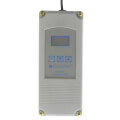
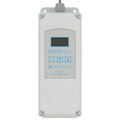
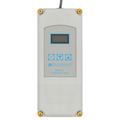
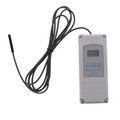
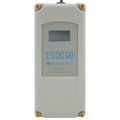
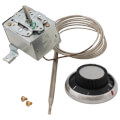
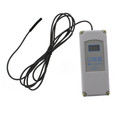
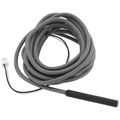


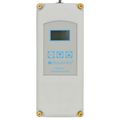
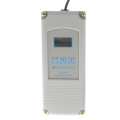
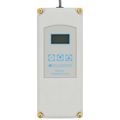
Ranco ETC Controls are electronic temperature controllers used in refrigeration and HVAC equipment to switch a compressor, fan, or defrost circuit on and off based on a sensed temperature. A technician installs or replaces one of these controls when a walk-in cooler, reach-in refrigeration unit, or similar temperature-controlled system runs too warm, too cold, or cycles erratically because the original mechanical or electronic control has failed.
Because these controllers manage temperature setpoints, differentials, and sometimes defrost timing electronically, confirming the replacement control's setpoint range and output configuration matches the equipment's original design keeps the refrigeration or heating cycle behaving the way it did before the failure.
Subcategories
- Single-Stage Temperature Controls: These controllers switch a single output, typically a compressor or fan, based on one temperature setpoint and differential. They're common on simpler refrigeration units without a separate defrost cycle.
- Dual-Stage Temperature Controls: Dual-stage controls manage two separate outputs, such as cooling and defrost, from a single controller. Technicians use these on equipment that needs coordinated switching between two functions.
- Digital Display Controls: Digital controllers show the sensed temperature and setpoint on a readable display, making it easier for a technician to verify operation and adjust settings without a separate thermometer.
- Replacement Temperature Sensors and Probes: The sensor or probe that feeds temperature data to the controller is a common failure point on its own, and replacing just the sensor can resolve an erratic reading without swapping the entire control.
Buying Guide
Selecting the right unit from Ranco ETC Controls starts with confirming the equipment's required setpoint and differential range, since a controller with too narrow or too wide a range won't maintain the temperature the equipment was designed for.
Check how many outputs the application needs. A straightforward refrigeration unit with only a compressor to switch can use a single-stage control, while equipment with a separate defrost cycle or fan control needs a control with multiple outputs.
Confirm the sensor type and probe length match what the equipment's wiring and mounting location expect, since a mismatched sensor won't read accurately even if the controller itself is otherwise correct for the application.
Voltage and current ratings on the control's output relays need to match or exceed what the compressor, fan, or other load draws, since an undersized relay can fail prematurely under repeated cycling.
For applications where a technician needs to verify settings without opening the enclosure, a digital display model makes routine checks and adjustments faster than a control with only a dial or switch.
Frequently Asked Questions
How do I know if a temperature control has failed versus a sensor?
If the controller's display or setpoint appears normal but the equipment still runs at the wrong temperature, the sensor or probe is often the culprit. Testing the sensor's resistance at a known temperature can help confirm which component has failed.
Can I replace a mechanical control with an electronic one?
In many cases yes, but the replacement needs to match the original's output configuration, voltage rating, and sensor type, so reviewing the equipment's wiring diagram before swapping control types is recommended.
What does differential mean on a temperature control?
Differential is the gap between the temperature that turns a load on and the temperature that turns it off. A wider differential means fewer cycles but more temperature swing, while a narrower differential holds a tighter temperature but cycles more often.
Do these controls work on both refrigeration and heating applications?
Many electronic temperature controls can be configured for either cooling or heating logic depending on the model and how the outputs are wired, so checking the control's documentation for supported modes is important before installation.
How long do these controls typically last?
Service life varies with duty cycle, environment, and installation quality, so following the manufacturer's mounting and wiring guidance helps the control reach its expected working life.
