




Filters
SORT
Product Availability –
Used With –
Review Score –
 --%3E %3Csvg version='1.1' id='Fill' xmlns='http://www.w3.org/2000/svg' xmlns:xlink='http://www.w3.org/1999/xlink' x='0px' y='0px' viewBox='0 0 100 100' enable-background='new 0 0 100 100' xml:space='preserve'%3E %3Cpath fill='%23F15C02' d='M79.44,0.95H20.56C9.78,0.95,0.95,9.78,0.95,20.56v58.87c0,10.79,8.82,19.61,19.61,19.61h58.87 c10.79,0,19.61-8.83,19.61-19.61V20.56C99.05,9.78,90.22,0.95,79.44,0.95z M65.38,58.24l9.38,29.58L49.69,69.78L24.5,87.82 l9.34-29.6L8.8,39.6l30.73-0.17c0,0,6.98-19.61,10-28.93c0.54,1.36,9.88,29.1,9.88,29.1H91.2L65.38,58.24z'/%3E %3C/svg%3E)
 --%3E %3Csvg version='1.1' id='With-RB' xmlns='http://www.w3.org/2000/svg' xmlns:xlink='http://www.w3.org/1999/xlink' x='0px' y='0px' viewBox='0 0 100 100' enable-background='new 0 0 100 100' xml:space='preserve'%3E %3Cpath fill='%23FBC8B4' d='M79.44,0.95H20.56C9.78,0.95,0.95,9.78,0.95,20.56v58.87c0,10.79,8.82,19.61,19.61,19.61h58.87 c10.79,0,19.61-8.83,19.61-19.61V20.56C99.05,9.78,90.22,0.95,79.44,0.95z M65.38,58.24l9.38,29.58L49.69,69.78L24.5,87.82 l9.34-29.6L8.8,39.6l30.73-0.17c0,0,6.98-19.61,10-28.93c0.54,1.36,9.88,29.1,9.88,29.1H91.2L65.38,58.24z'/%3E %3C/svg%3E)
Price Range –
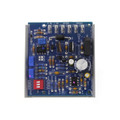
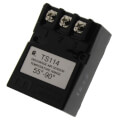
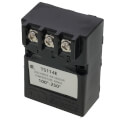
Selectra Series 14


 --%3E %3Csvg version='1.1' id='No-RB' xmlns='http://www.w3.org/2000/svg' xmlns:xlink='http://www.w3.org/1999/xlink' x='0px' y='0px' viewBox='0 0 100 100' enable-background='new 0 0 100 100' xml:space='preserve'%3E %3Cpath fill='%23CECECE' d='M79.44,0.95H20.56C9.78,0.95,0.95,9.78,0.95,20.56v58.87c0,10.79,8.82,19.61,19.61,19.61h58.87 c10.79,0,19.61-8.83,19.61-19.61V20.56C99.05,9.78,90.22,0.95,79.44,0.95z M65.38,58.24l9.38,29.58L49.69,69.78L24.5,87.82 l9.34-29.6L8.8,39.6l30.73-0.17c0,0,6.98-19.61,10-28.93c0.54,1.36,9.88,29.1,9.88,29.1H91.2L65.38,58.24z'/%3E %3C/svg%3E)
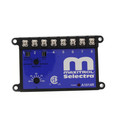
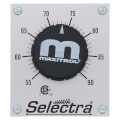
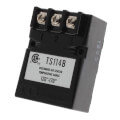
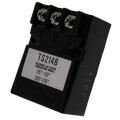


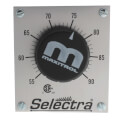
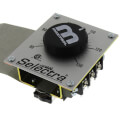
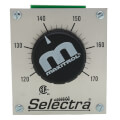
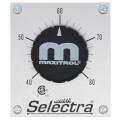
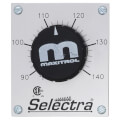

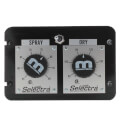
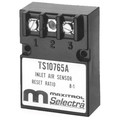
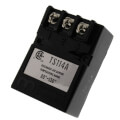
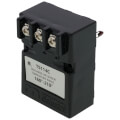
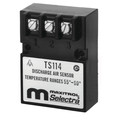
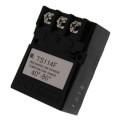
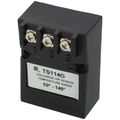
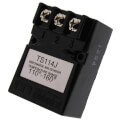
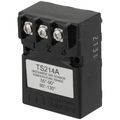
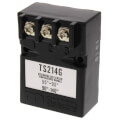

Selectra Series 14 systems are electronic gas control platforms built for make-up air heating on direct-fired equipment. The lineup pairs a Modulator or Modulator-Regulator valve with discharge air temperature sensors, giving continual, instantaneous adjustment of gas flow rather than the step changes typical of mechanical controls. Remote temperature selectors let an installer set a target discharge range, with dedicated models covering bands such as 80 to 130 degrees Fahrenheit up through 160 to 210 degrees Fahrenheit depending on the application. Signal conditioners in the line accept 4 to 20 milliamp or 0 to 10 volt inputs, allowing the system to work alongside existing building automation without a separate controller. Options like a room override thermostat and an inlet air sensor extend the base platform for specific jobsite conditions, such as door heaters or paint spray booths. For contractors servicing commercial make-up air units, Selectra Series 14 components let a single platform cover a wide range of discharge temperature requirements without swapping the core valve.
Subcategories
- Discharge Air Temperature Sensors: Discharge air temperature sensors measure the conditioned air leaving a direct-fired make-up air unit and feed that reading back to the Modulator valve. Technicians select a sensor based on the target discharge range, with models covering bands like 80 to 130 degrees Fahrenheit for standard comfort heating applications. Sensor placement directly downstream of the burner keeps the reading accurate during rapid load changes. Replacing a failed sensor restores closed-loop control without touching the valve or burner assembly.
- Remote Temperature Selectors: Remote temperature selectors give an operator a dial or setpoint device to adjust discharge air temperature from outside the unit cabinet. The line covers several ranges, including 120 to 170 degrees Fahrenheit and 160 to 210 degrees Fahrenheit models, so installers match the selector to the heating load of the space served. Some selectors add a dual-temperature function for applications like door heaters or paint spray booths that need two setpoints. Wall or panel mounting keeps the control accessible to building staff without opening the unit.
- Modulator and Modulator-Regulator Valves: Modulator and Modulator-Regulator valves form the core gas control component in a Selectra Series 14 system, adjusting flow continually rather than cycling on and off. Modulator-Regulator versions combine the modulating function with pressure regulation in a single body, reducing the number of components in the gas train. Instantaneous response to the temperature sensor keeps discharge air stable even as outdoor conditions swing. Contractors size the valve to match the burner's gas input requirements.
- Signal Conditioners: Signal conditioners translate a building automation signal into a command the Modulator valve can use, accepting 4 to 20 milliamp or 0 to 10 volt inputs. The SC11-B model is a common choice for jobs where a building management system needs to set discharge temperature remotely. Wiring a signal conditioner into the control loop removes the need for a dedicated local thermostat. Technicians confirm input range compatibility with the existing automation panel before installation.
Buying Guide
Selecting the right components starts with the discharge temperature range the application requires. A standard comfort heating job might call for the 80 to 130 degree Fahrenheit sensor, while process applications like drying or a paint booth often need the 160 to 210 degree Fahrenheit range instead. Match the sensor and remote selector to the same band, since pairing mismatched ranges leaves the operator unable to reach the setpoint the process actually needs. Next, decide whether the job needs local control only or a tie-in to building automation. A straightforward make-up air unit with a wall-mounted selector rarely needs anything beyond the Modulator valve and matching sensor. A job where the building management system needs to reset the discharge temperature remotely calls for a signal conditioner accepting the automation system's 4 to 20 milliamp or 0 to 10 volt output. Selectra Series 14 parts are largely modular, so replacing a single failed sensor or selector doesn't require swapping the valve. Check whether the application needs a single setpoint or two, since door heaters and paint spray booths commonly run dual-temperature selectors rather than the standard single-range model. Finally, confirm the valve size against the burner's rated gas input before ordering, since an undersized valve restricts modulation range and an oversized one hunts around the setpoint instead of holding steady.
Frequently Asked Questions
What is a Selectra Series 14 system used for?
Selectra Series 14 components control gas flow on direct-fired make-up air equipment, keeping discharge air temperature stable as outdoor conditions change. The system pairs a Modulator or Modulator-Regulator valve with a discharge air temperature sensor for continual adjustment. Building owners rely on it for consistent comfort heating in commercial and industrial spaces.
What is the difference between a Modulator and a Modulator-Regulator valve?
A Modulator valve adjusts gas flow based on the temperature sensor signal alone. A Modulator-Regulator valve adds pressure regulation in the same body, reducing the number of separate components needed in the gas train. Contractors choose the Modulator-Regulator version when the job doesn't already have a dedicated pressure regulator upstream.
Which temperature range should a discharge air sensor cover?
Sensor range depends on the process, with standard comfort heating typically falling in the 80 to 130 degree Fahrenheit band. Higher-temperature applications like drying or paint spray booths often need a 160 to 210 degree Fahrenheit sensor instead. Matching the sensor and remote selector to the same range keeps the control loop functional.
Can a Selectra system connect to a building automation system?
A signal conditioner in the Selectra Series 14 lineup accepts a 4 to 20 milliamp or 0 to 10 volt input from a building management system. That input lets the automation system reset the discharge temperature setpoint remotely instead of relying on a local selector. Wiring the conditioner into the existing control loop removes the need for a separate local thermostat.
What is a dual-temperature selector used for?
A dual-temperature selector gives an operator two setpoints instead of one, switching between them based on the process running. Door heaters and paint spray booths commonly use this option since each has two distinct operating conditions. Selecting the dual-temperature version in advance avoids adding a second standalone selector later.
