




Filters
SORT
Product Availability –
Brand –
Application –
Programmability –
Options –
Review Score –
 --%3E %3Csvg version='1.1' id='Fill' xmlns='http://www.w3.org/2000/svg' xmlns:xlink='http://www.w3.org/1999/xlink' x='0px' y='0px' viewBox='0 0 100 100' enable-background='new 0 0 100 100' xml:space='preserve'%3E %3Cpath fill='%23F15C02' d='M79.44,0.95H20.56C9.78,0.95,0.95,9.78,0.95,20.56v58.87c0,10.79,8.82,19.61,19.61,19.61h58.87 c10.79,0,19.61-8.83,19.61-19.61V20.56C99.05,9.78,90.22,0.95,79.44,0.95z M65.38,58.24l9.38,29.58L49.69,69.78L24.5,87.82 l9.34-29.6L8.8,39.6l30.73-0.17c0,0,6.98-19.61,10-28.93c0.54,1.36,9.88,29.1,9.88,29.1H91.2L65.38,58.24z'/%3E %3C/svg%3E)
 --%3E %3Csvg version='1.1' id='With-RB' xmlns='http://www.w3.org/2000/svg' xmlns:xlink='http://www.w3.org/1999/xlink' x='0px' y='0px' viewBox='0 0 100 100' enable-background='new 0 0 100 100' xml:space='preserve'%3E %3Cpath fill='%23FBC8B4' d='M79.44,0.95H20.56C9.78,0.95,0.95,9.78,0.95,20.56v58.87c0,10.79,8.82,19.61,19.61,19.61h58.87 c10.79,0,19.61-8.83,19.61-19.61V20.56C99.05,9.78,90.22,0.95,79.44,0.95z M65.38,58.24l9.38,29.58L49.69,69.78L24.5,87.82 l9.34-29.6L8.8,39.6l30.73-0.17c0,0,6.98-19.61,10-28.93c0.54,1.36,9.88,29.1,9.88,29.1H91.2L65.38,58.24z'/%3E %3C/svg%3E)
Price Range –
SetPoint Controllers

 --%3E %3Csvg version='1.1' id='Half' xmlns='http://www.w3.org/2000/svg' xmlns:xlink='http://www.w3.org/1999/xlink' x='0px' y='0px' viewBox='0 0 100 100' enable-background='new 0 0 100 100' xml:space='preserve'%3E %3Cg%3E %3Cpath fill='%23F15C02' d='M30.05,70.23l3.79-12.01L8.8,39.6l30.73-0.17c0,0,6.98-19.61,10-28.93c0.54,1.36,9.88,29.1,9.88,29.1h1.58 L93.71,7.18c-3.58-3.82-8.66-6.23-14.28-6.23H20.56C9.78,0.95,0.95,9.78,0.95,20.56v58.87c0,5.41,2.22,10.32,5.79,13.88 L30.05,70.23z'/%3E %3C/g%3E %3Cpath fill='%23FBC8B4' d='M93.71,7.18L60.98,39.6H91.2L65.38,58.24l9.38,29.58L49.69,69.78L24.5,87.82l5.55-17.59L6.75,93.32 c3.55,3.54,8.44,5.73,13.82,5.73h58.87c10.79,0,19.61-8.83,19.61-19.61V20.56C99.05,15.4,97.01,10.69,93.71,7.18z'/%3E %3C/svg%3E)



 --%3E %3Csvg version='1.1' id='No-RB' xmlns='http://www.w3.org/2000/svg' xmlns:xlink='http://www.w3.org/1999/xlink' x='0px' y='0px' viewBox='0 0 100 100' enable-background='new 0 0 100 100' xml:space='preserve'%3E %3Cpath fill='%23CECECE' d='M79.44,0.95H20.56C9.78,0.95,0.95,9.78,0.95,20.56v58.87c0,10.79,8.82,19.61,19.61,19.61h58.87 c10.79,0,19.61-8.83,19.61-19.61V20.56C99.05,9.78,90.22,0.95,79.44,0.95z M65.38,58.24l9.38,29.58L49.69,69.78L24.5,87.82 l9.34-29.6L8.8,39.6l30.73-0.17c0,0,6.98-19.61,10-28.93c0.54,1.36,9.88,29.1,9.88,29.1H91.2L65.38,58.24z'/%3E %3C/svg%3E)


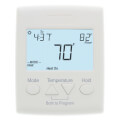
SetPoint Controllers are hydronic zone controls from Uponor's Wirsbo line, used to regulate radiant heating and cooling systems by cycling a circulator or zone valve based on a target air or floor temperature. The SetPoint 501 operates as a single-stage, non-programmable controller that senses air temperature only, while the 501s adds a floor sensor and lets the installer choose air, floor, or a blended sensing point as the primary control input. Radiant heating installers specify these controllers on projects where a simple, line-powered thermostat needs to interface directly with a zone circulator rather than a forced-air system's low-voltage transformer setup. Because the SetPoint line is purpose-built for radiant applications rather than adapted from a standard forced-air thermostat, it handles the slower response time of floor and slab heating without the short-cycling problems a standard thermostat can cause on a radiant zone.
Subcategories
- Non-Programmable Air-Sensing Controllers (SetPoint 501): The SetPoint 501 is a single-stage, non-programmable controller that senses air temperature only, giving installers a straightforward on-off zone control without floor sensing. Radiant heating contractors specify this model on straightforward residential zones where a simple, set-and-forget thermostat covers the application. It requires line power rather than battery operation, matching the wiring already run to most zone control locations. The 501 works as a direct upgrade from a standard low-voltage thermostat on radiant zones that don't need floor temperature limiting.
- Non-Programmable Air/Floor Controllers (SetPoint 501s): The SetPoint 501s adds a floor sensor to the same single-stage, non-programmable platform as the 501, letting installers choose air, floor, or a blended sensing point as the primary control input. A two-wire floor sensor ships included with the controller, saving a separate purchase on new installations. Contractors use this model on tiled bathroom floors or other radiant zones where floor temperature limiting protects finished flooring from overheating. Choosing floor as the primary sensing point keeps slab temperature within a safe range regardless of room air temperature swings.
- Programmable Controllers with Floor Sensor (SetPoint 511s): The SetPoint 511s is a single-stage, programmable controller with a seven-day, 24-hour schedule and an included floor sensor, adding setback scheduling to the same air/floor sensing flexibility as the 501s. Intelligent setback recovery calculates when to begin ramping the zone back to the occupied setpoint so the space reaches temperature on schedule despite radiant heating's slower response time. Homeowners and facility managers use this model on zones where a daily schedule saves energy without sacrificing comfort. Like other SetPoint controllers, the 511s requires line power and cannot run on batteries.
- Two-Stage Programmable Controllers (SetPoint 512): The SetPoint 512 extends the 511s's programmable, floor-sensing platform to two-stage operation, controlling two separate heat sources or heat output levels from a single controller. Contractors specify this model on zones served by a dual-stage boiler or a combination of radiant and supplemental heat sources. It shares the same seven-day, 24-hour scheduling and intelligent setback recovery features as the 511s. Two-stage control lets the system modulate output rather than simply cycling a single stage on and off.
Buying Guide
Start by deciding whether the zone needs floor temperature sensing, since that determines the choice between the 501 and 501s platforms. Air-only sensing suits a simple living space zone, while floor sensing protects finished flooring, such as tile over a radiant slab, from overheating regardless of room air temperature. SetPoint Controllers split next along programmability: the 501 and 501s operate as straightforward on-off controllers without a schedule, while the 511s and 512 add seven-day, 24-hour programming with intelligent setback recovery that accounts for radiant heating's slower response time. Contractors serving budget-conscious residential zones often specify the non-programmable 501 or 501s, while zones where scheduled setback saves meaningful energy, such as bedrooms with predictable occupancy patterns, call for the programmable 511s. Stage count is the next decision: single-stage controllers like the 501, 501s, and 511s handle one heat source or one output level, while the two-stage 512 controls two separate heat sources or output levels from a single controller, suited to dual-stage boilers or combination heating setups. Power requirements apply across the entire line, since every SetPoint controller requires line power rather than battery operation, so confirming wiring is already run to the mounting location matters before specifying a model. Mounting location also affects sensing accuracy: air-sensing controllers need placement on an interior wall at standard thermostat height, clear of drafts, direct sunlight, supply registers, and exterior walls, for an accurate reading of room temperature.
Frequently Asked Questions
What's the difference between the SetPoint 501 and 501s?
The SetPoint 501 senses air temperature only, while the 501s adds a floor sensor and lets the installer select air, floor, or a blended reading as the primary control input. Both models are single-stage and non-programmable, operating as straightforward on-off zone controls without a weekly schedule. The 501s suits zones like tiled bathroom floors where floor temperature limiting matters, while the 501 fits simpler living space zones.
Can a SetPoint controller run on batteries?
SetPoint controllers require line power and cannot operate on batteries, so wiring needs to reach the mounting location before installation. The line-power requirement applies across the 501, 501s, 511s, and 512 models, since all four are designed as hardwired zone controls rather than portable thermostats. Confirming power availability at the intended mounting location is a necessary step before specifying any SetPoint model.
What does intelligent setback recovery do on the SetPoint 511s?
Intelligent setback recovery on the SetPoint 511s calculates when to begin raising the zone temperature ahead of a scheduled occupied period, accounting for radiant heating's slower response time compared to forced air. The calculation helps the space reach its target temperature by the scheduled time rather than lagging behind a standard programmable thermostat's fixed start time. The feature works alongside the controller's seven-day, 24-hour scheduling and included floor sensor.
When should a two-stage SetPoint 512 be used instead of a single-stage model?
The SetPoint 512 suits zones served by a dual-stage boiler or a combination of two separate heat sources, since it controls two stages or output levels from a single controller. Single-stage models like the 501, 501s, and 511s work for zones with one heat source or one output level, which covers most straightforward residential radiant zones. Matching stage count to the actual heating equipment in the zone determines which model applies.
Does a SetPoint controller replace a standard forced-air thermostat on a radiant zone?
SetPoint controllers are purpose-built for radiant heating and cooling zones and account for the slower response time of floor and slab heating, which a standard forced-air thermostat isn't designed to handle. Installing a standard thermostat on a radiant zone can cause short cycling since the thermostat expects the faster temperature response of forced air. SetPoint controllers interface directly with a zone circulator or valve rather than the low-voltage transformer setup typical of forced-air thermostats.
