




Filters
SORT
Product Availability –
Brand –
Size –
Review Score –
 --%3E %3Csvg version='1.1' id='Fill' xmlns='http://www.w3.org/2000/svg' xmlns:xlink='http://www.w3.org/1999/xlink' x='0px' y='0px' viewBox='0 0 100 100' enable-background='new 0 0 100 100' xml:space='preserve'%3E %3Cpath fill='%23F15C02' d='M79.44,0.95H20.56C9.78,0.95,0.95,9.78,0.95,20.56v58.87c0,10.79,8.82,19.61,19.61,19.61h58.87 c10.79,0,19.61-8.83,19.61-19.61V20.56C99.05,9.78,90.22,0.95,79.44,0.95z M65.38,58.24l9.38,29.58L49.69,69.78L24.5,87.82 l9.34-29.6L8.8,39.6l30.73-0.17c0,0,6.98-19.61,10-28.93c0.54,1.36,9.88,29.1,9.88,29.1H91.2L65.38,58.24z'/%3E %3C/svg%3E)
Price Range –
Spade Drill Bits


 --%3E %3Csvg version='1.1' id='No-RB' xmlns='http://www.w3.org/2000/svg' xmlns:xlink='http://www.w3.org/1999/xlink' x='0px' y='0px' viewBox='0 0 100 100' enable-background='new 0 0 100 100' xml:space='preserve'%3E %3Cpath fill='%23CECECE' d='M79.44,0.95H20.56C9.78,0.95,0.95,9.78,0.95,20.56v58.87c0,10.79,8.82,19.61,19.61,19.61h58.87 c10.79,0,19.61-8.83,19.61-19.61V20.56C99.05,9.78,90.22,0.95,79.44,0.95z M65.38,58.24l9.38,29.58L49.69,69.78L24.5,87.82 l9.34-29.6L8.8,39.6l30.73-0.17c0,0,6.98-19.61,10-28.93c0.54,1.36,9.88,29.1,9.88,29.1H91.2L65.38,58.24z'/%3E %3C/svg%3E)



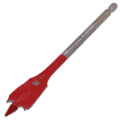

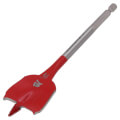
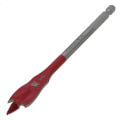
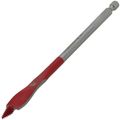
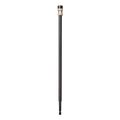
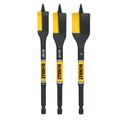
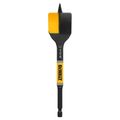
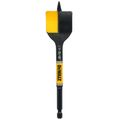
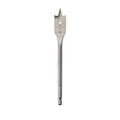
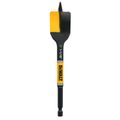
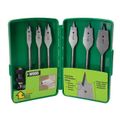
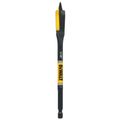
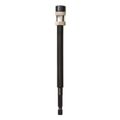
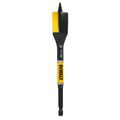
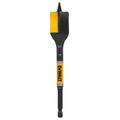
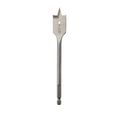
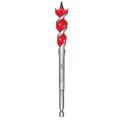
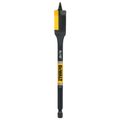
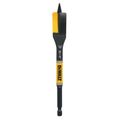
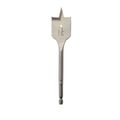
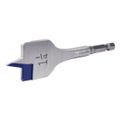
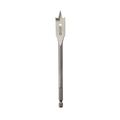
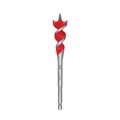
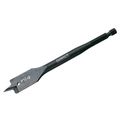
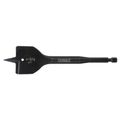
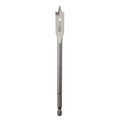
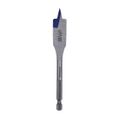
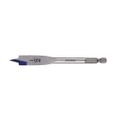
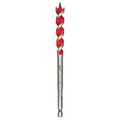
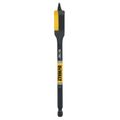
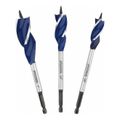
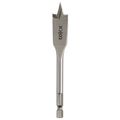
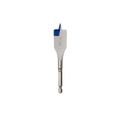
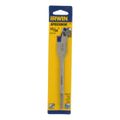

Spade drill bits are flat-bladed, wide-tipped bits designed for fast, rough boring through wood, and they're a staple for electricians, plumbers, and HVAC crews running cable or pipe through framing. A common configuration uses a 1/4-inch quick-change hex shank, letting a bit swap directly into an impact driver or drill without a separate chuck key. Sizes typically range from 1/4 inch up to 1-1/2 inches in diameter, covering everything from small conduit holes to clearance holes for 1-inch copper or PVC drain pipe. The wide flat blade and center point guide the bit through the workpiece, cutting a rough but oversized hole quickly compared to twist bits or hole saws. Choosing the right spade bit for the job means matching blade width to the pipe, cable, or conduit that needs to pass through the framing member.
Subcategories
- Standard Spade Bits: Standard spade bits cover the common 1/4-inch to 1-1/2-inch diameter range and use a hex shank sized to the bit's diameter. Electricians and HVAC installers reach for these on everyday rough-in work drilling through studs and joists for wire and small-diameter tubing. A center point on the tip keeps the bit from wandering when starting a hole in dense lumber. They're sold individually or in multi-size sets covering the most requested diameters.
- Quick-Change Spade Bits: Quick-change spade bits use a 1/4-inch hex shank across the bit's size range, letting a single quick-change adapter accept multiple bit diameters without swapping chucks. Contractors moving between several hole sizes on the same job favor this style to save time on ladders or in crawlspaces. The uniform shank also works directly in impact drivers rated for hex bits. It's a common choice for production framing and rough-in crews.
- Extra-Length Spade Bits: Extra-length spade bits extend the standard bit body to reach through thick wall assemblies, double joists, or engineered lumber where a standard-length bit won't clear both sides. Plumbers and HVAC techs use the added length to drill completely through a wall cavity in one pass instead of drilling from both sides. The longer shaft keeps the same blade geometry as standard spade bits for consistent cutting action. It's suited to remodel work where wall depth is greater than typical new construction framing.
- Spade Bit Extensions: Spade bit extensions attach to a standard spade bit's hex shank to add reach for boring through deep wall cavities, double top plates, or floor systems from a single access point. Installers use extensions when a fixed-length bit can't reach a stud bay or joist bay from the available access hole. The extension locks onto the standard 1/4-inch hex shank shared across most spade bit sizes. It's a common accessory for whole-house rough-in work where drilling positions are limited.
Buying Guide
Match spade bit diameter to what's actually passing through the hole. Standard rough-in work for wiring commonly calls for smaller diameters in the 3/8-inch to 3/4-inch range, while clearance holes for 1-inch copper or PVC drain pipe typically call for a 1-3/8-inch to 1-1/2-inch bit, so check the pipe or cable outer diameter before picking a size. Shank style matters for how the bit fits the driver on hand. A 1/4-inch quick-change hex shank works directly in impact drivers and quick-change chucks, which speeds up repetitive drilling across a job site compared to bits that require a standard chuck. Spade Drill Bits are built for rough, fast holes rather than clean finished cuts, so they're best suited to framing, subfloor, and rough-in work rather than finish carpentry where hole appearance matters. For jobs with limited access, such as drilling through a double top plate or a deep wall cavity, look at extra-length bits or a separate extension rather than forcing a standard-length bit to reach from an awkward angle. Buying a multi-size set covers the common diameters used across electrical, plumbing, and HVAC rough-in in one purchase, while single bits make more sense when a job calls for repeated use of one specific size.
Frequently Asked Questions
What size spade bit is needed for 1-inch copper or PVC pipe?
A 1-3/8-inch or 1-1/2-inch spade bit typically provides enough clearance for 1-inch copper or PVC drain pipe to pass through framing. The exact size needed depends on the pipe's actual outer diameter plus a small margin for movement. Checking pipe OD against the bit's listed diameter before drilling avoids an undersized hole.
Do spade bits work in an impact driver?
Spade bits with a 1/4-inch hex shank are designed to work in impact drivers as well as standard drills. The hex shank seats directly into a quick-change chuck without needing an adapter. This shank style is common across most spade bit sizes from 1/4 inch up through 1-1/2 inches.
How is a spade bit different from an auger bit?
Spade bits use a flat blade with a center point for fast, rough boring, while auger bits use a screw-tip design that pulls the bit through the wood for a cleaner, straighter hole. Spade bits generally cut faster but leave a rougher hole edge. Auger bits tend to hold a straighter path through thick or knotty lumber.
What diameter range do standard spade bits cover?
Standard spade bits typically range from 1/4 inch up to 1-1/2 inches in diameter, covering most rough-in needs for wiring, small conduit, and drain pipe clearance holes. Larger diameters in that range are commonly used for plumbing and HVAC penetrations. Smaller diameters suit electrical cable runs.
When should an extension be used with a spade bit?
A spade bit extension helps reach through deep wall cavities, double top plates, or floor assemblies where a standard-length bit can't clear both sides from one access point. It attaches to the bit's existing hex shank rather than replacing the bit itself. This setup is common in remodel work where wall depth exceeds typical new construction dimensions.
