




Stainless Steel Insert Male Adapters

 --%3E %3Csvg version='1.1' id='Fill' xmlns='http://www.w3.org/2000/svg' xmlns:xlink='http://www.w3.org/1999/xlink' x='0px' y='0px' viewBox='0 0 100 100' enable-background='new 0 0 100 100' xml:space='preserve'%3E %3Cpath fill='%23F15C02' d='M79.44,0.95H20.56C9.78,0.95,0.95,9.78,0.95,20.56v58.87c0,10.79,8.82,19.61,19.61,19.61h58.87 c10.79,0,19.61-8.83,19.61-19.61V20.56C99.05,9.78,90.22,0.95,79.44,0.95z M65.38,58.24l9.38,29.58L49.69,69.78L24.5,87.82 l9.34-29.6L8.8,39.6l30.73-0.17c0,0,6.98-19.61,10-28.93c0.54,1.36,9.88,29.1,9.88,29.1H91.2L65.38,58.24z'/%3E %3C/svg%3E)

 --%3E %3Csvg version='1.1' id='No-RB' xmlns='http://www.w3.org/2000/svg' xmlns:xlink='http://www.w3.org/1999/xlink' x='0px' y='0px' viewBox='0 0 100 100' enable-background='new 0 0 100 100' xml:space='preserve'%3E %3Cpath fill='%23CECECE' d='M79.44,0.95H20.56C9.78,0.95,0.95,9.78,0.95,20.56v58.87c0,10.79,8.82,19.61,19.61,19.61h58.87 c10.79,0,19.61-8.83,19.61-19.61V20.56C99.05,9.78,90.22,0.95,79.44,0.95z M65.38,58.24l9.38,29.58L49.69,69.78L24.5,87.82 l9.34-29.6L8.8,39.6l30.73-0.17c0,0,6.98-19.61,10-28.93c0.54,1.36,9.88,29.1,9.88,29.1H91.2L65.38,58.24z'/%3E %3C/svg%3E)
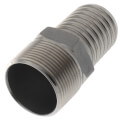
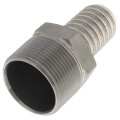
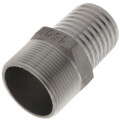
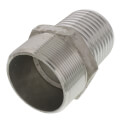
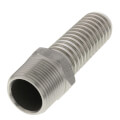
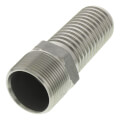
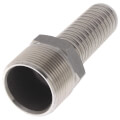

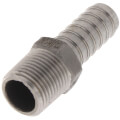
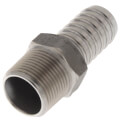
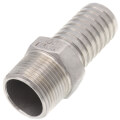
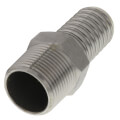
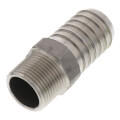
Stainless Steel Insert Male Adapters connect flexible or corrugated plastic pipe to male iron pipe (MIP) threaded fittings, valves, and pumps. Merrill Manufacturing builds this style in sizes from 1/2 inch to 2 inches, with a hex-shaped insert end that grips the pipe and MIP threads on the opposite end that thread straight into a female fitting. Stainless steel construction resists the corrosion that brass and galvanized adapters develop over time in well water and other mineral-heavy supply lines. Water well contractors and irrigation installers reach for these adapters most often, since well casing and submersible pump drop pipe are usually corrugated plastic that needs a reliable transition to threaded components. An extra-long hex version is also available for jobs where a standard-length adapter doesn't give enough thread engagement or clearance inside a tight fitting. Selecting the correct adapter means matching pipe size and insert style to the existing plastic pipe on site.
Subcategories
- Small-Diameter Insert Male Adapters: Small-diameter insert male adapters cover the 1/2-inch through 1-inch range most common on residential well and irrigation lines. Plumbers and well drillers use this size range to transition corrugated drop pipe onto a submersible pump or a threaded check valve. Stainless steel construction handles the corrosive water conditions typical of private wells better than brass over the long term.
- Large-Diameter Insert Male Adapters: Large-diameter insert male adapters run from 1-1/4 inch through 2 inches for higher-flow well and irrigation systems. Contractors working on agricultural or commercial well setups use this range when larger casing or drop pipe needs a threaded transition. The same corrosion-resistant stainless steel body carries over from the smaller sizes.
- Standard-Length Hex Adapters: Standard-length hex adapters are the everyday version stocked for most well and plumbing repair calls. A hex shoulder molded into the insert end gives a wrench grip for tightening without damaging the plastic pipe. Sizes span 1/2 inch to 2 inches to match common corrugated pipe diameters.
- Extra-Long Hex Adapters: Extra-long hex adapters add length to the insert barb for jobs that need deeper thread engagement or extra clearance inside a fitting body. Well contractors use this version when a standard adapter doesn't seat fully or when vibration on a submersible pump line calls for more grip surface. It uses the same stainless steel construction and MIP threading as the standard-length version.
Buying Guide
Matching pipe size comes first when choosing an insert male adapter. Measure the outside diameter of the existing corrugated or flexible plastic pipe, then pick the adapter sized for that pipe rather than the nominal thread size, since insert fittings are sized to the pipe's actual bore. Stainless Steel Insert Male Adapters resist corrosion better than brass in well water with high mineral content or dissolved iron, which is why well drillers and irrigation contractors favor them over standard brass insert adapters on repeat service calls. Confirm the MIP thread size needed on the mating fitting, valve, or pump housing before ordering, since a mismatched thread pitch won't seal even with tape or pipe dope. On tight fittings or where a submersible pump vibrates the connection, an extra-long hex adapter gives more thread engagement and a firmer grip than the standard length. Always use a hose clamp rated for the pipe material and system pressure, since the adapter's insert barb depends on the clamp to hold the seal rather than the adapter alone. For larger commercial or agricultural wells, choose the 1-1/4 inch through 2-inch range instead of combining smaller adapters, which keeps flow restriction and pressure drop to a minimum. Stock a few sizes of both standard and extra-long versions on the truck, since well service calls rarely arrive with the pipe size confirmed in advance.
Frequently Asked Questions
What's the difference between insert male adapters and standard MIP adapters?
Insert male adapters have a ribbed or barbed end designed to grip the inside of flexible or corrugated plastic pipe under a hose clamp. Standard MIP adapters thread onto rigid pipe instead. Insert-style adapters are the correct choice whenever the existing pipe is corrugated or flexible rather than rigid schedule pipe.
Why choose stainless steel over brass for well applications?
Stainless steel resists the corrosion that brass and galvanized fittings develop over time in mineral-heavy or acidic well water. Well drillers and irrigation contractors use stainless adapters on repeat service calls specifically to reduce corrosion-related failures. Brass still works in less aggressive water conditions, but stainless steel lasts longer where water chemistry is a known problem.
What sizes are available?
Stainless Steel Insert Male Adapters come in sizes from 1/2 inch through 2 inches to match common corrugated and flexible plastic pipe diameters. Both standard-length and extra-long hex versions are available in most sizes. Matching the adapter to the pipe's actual outside diameter, not just the nominal size, keeps the fit tight.
When does an extra-long hex adapter make more sense than a standard one?
An extra-long hex adapter gives added thread engagement and a larger wrench grip surface. It's useful on submersible pump lines where vibration can work a fitting loose over time, or in fittings that need extra clearance to seat properly. Standard-length adapters handle most everyday connections without an issue.
Does the pipe still need a hose clamp with these adapters?
Yes, a hose clamp or crimp sleeve rated for the pipe material and system pressure is still required. The adapter's barbed insert end creates the grip surface, but the clamp is what holds the seal under pressure. Skipping the clamp risks a connection that leaks or blows off the pipe under flow.
